

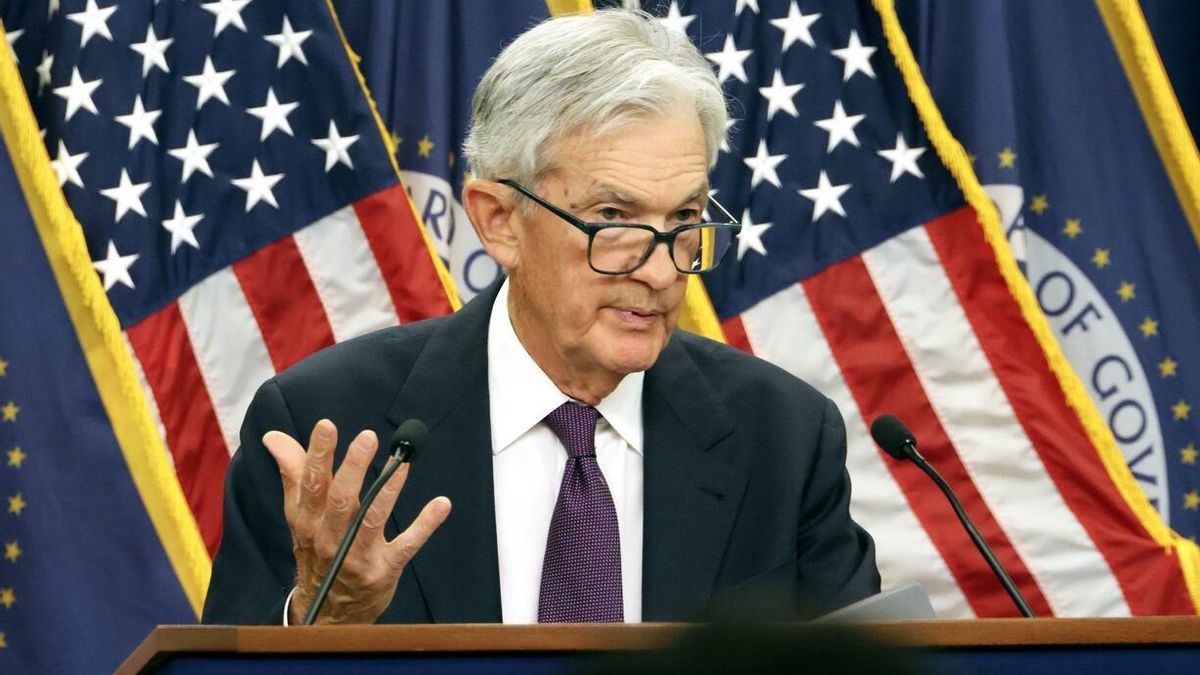


JAKARTA - Jerome Powell has not really left the Fed. His term as chairman of the US central bank ends on May 15, but he has chosen to remain a member of the board of governors for "some time".
Launching a report by Kyodo News, Thursday, April 30, Powell's decision came as the Fed maintained its benchmark interest rate in the range of 3.50-3.75 percent. The US central bank held interest because the Iran war raised energy prices and the outlook for inflation was more difficult to read.
Powell said his decision to stay was also prompted by concerns over "legal attacks" from the administration of President Donald Trump against the Fed. He said the pressure had never been seen in the 113-year history of the institution.
"I am concerned that these attacks undermine institutions and jeopardize the ability to conduct monetary policy without considering political factors," Powell said, quoted by Kyodo News.
One of the things Powell highlighted was the US Justice Department's investigation of him regarding the cost of renovating the Fed's headquarters. Powell said he would only leave after the investigation was completely and transparently completed.
"I will step down when I judge it is appropriate," he said.
Trump has been pushing the Fed to lower borrowing costs. On Wednesday, he again said it was "the right time" to cut rates as the U.S. economy was strong.
However, the Fed is not willing to take risks. In its statement, the Federal Open Market Committee or FOMC said inflation is still high, among other things due to rising global energy prices. The turmoil in the Middle East also makes the economic outlook more uncertain.
The latest data showed that US consumer prices in March rose 3.3 percent year-on-year. The figure rose by almost 1 percentage point from February and was the highest since May 2024.
The Fed's decision this time was not unanimous. Stephen Miran, a Trump ally who joined the board last year, again asked for a quarter-point interest rate cut.
Three other members of the FOMC supported keeping interest rates. However, they rejected the sentence in the official statement that indicated the Fed was beginning to lean toward easing policy.
The last time four dissenting opinions in a single FOMC meeting occurred in October 1992. This shows that the world's most influential central bank is not completely compact ahead of the leadership change.
Powell's decision to stay makes Trump temporarily unable to appoint a new Fed governor. Trump's three choices on the board remain a minority.
Meanwhile, Kevin Warsh, a former Fed governor, is close to replacing Powell. The Senate Banking Committee has approved his nomination by a 13-11 vote, with all Republican members supporting Warsh.
Senator Thom Tillis, a Republican on the committee, had previously boycotted the vote. He refused to vote as long as the Department of Justice was conducting a criminal investigation into Powell.
Last week, the Justice Department halted the investigation. Tillis and many critics saw the investigation as a threat to the Fed's independence.
Powell promised to keep a "low profile" as governor and not interfere with the new Fed chair. He said he would try to be heard, continue to cooperate, and support the new chair if possible.
The Fed is now facing inflationary pressures, uncertainty from the Iran war, and political tug-of-war ahead of a leadership change.
The English, Chinese, Japanese, Arabic, and French versions are automatically generated by the AI. So there may still be inaccuracies in translating, please always see Indonesian as our main language. (system supported by DigitalSiber.id)
Popular


