
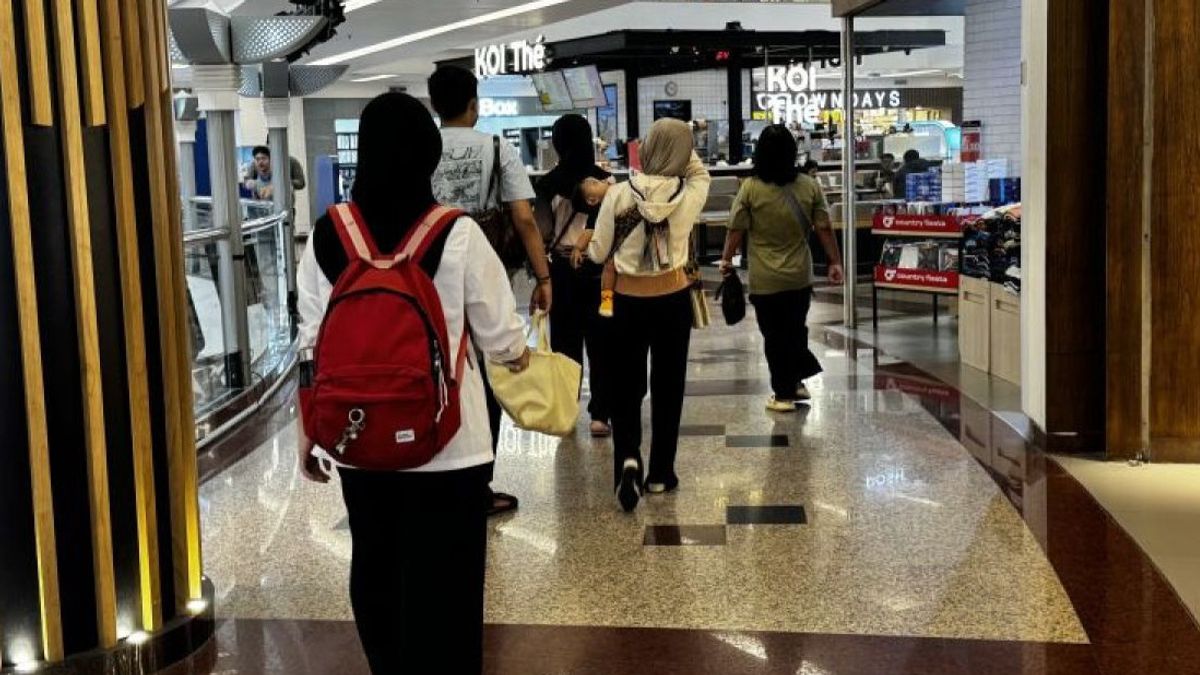


JAKARTA - Community consumption activities continue to show resilience amid global dynamics, reflected by increased spending during the Ramadan to Idulfitri 2026 period. Consumption levels during this period were recorded as higher than the same period in the previous two years.
Mandiri Institute noted that the Mandiri Spending Index (MSI) grew 2.9 percent compared to the pre-Ramadan period, higher than the growth of previous years of 2.8 percent. This reflects the increase in people's spending activities which are more solid throughout Ramadan to Lebaran this year.
The strengthening of consumption is mainly supported by the middle class which recorded growth of 4.1%, higher than the lower (2.1%) and upper (2.6%) groups. This data confirms the strategic role of the middle class in maintaining the momentum of domestic consumption.
Bank Mandiri Chief Economist Andry Asmoro said that the growth in spending by the middle group was recorded 1.4 to 2 times higher than that of other groups. This condition shows the significant contribution of the middle class as the main driver of consumption, especially during the period of disbursement of holiday allowances (THR).
"The middle class is the main driver of accelerated spending, especially during the THR period, so it contributes greatly to strengthening overall consumption," said Asmo, a nickname for Andry Asmoro, in an official statement, quoted Thursday, April 16.
If viewed based on age, consumption is mainly driven by the young generation group. Mandiri Institute noted that the consumption rate of Gen Z grew by 4.4 percent, higher than the age group of Millennials (3 percent) and Gen X (1.4 percent).
In terms of types of spending, spending growth was dominated by non-essential sectors such as fashion (6.4 percent), beauty care (4.9 percent), and electronics (4.7 percent). This is different from the 2025 Ramadan-Lebaran period, where daily needs became one of the highest growth spending.
"The increase in this category reflects the increase in people's confidence in making discretionary consumption during the 2026 Ramadan-Lebaran period," said Asmo.
Overall, the strengthening of domestic consumption confirms the role of domestic demand as the main support for national economic growth. This success is inseparable from the effectiveness of government policies and integrated synergy across sectors in maintaining people's purchasing power, including through the THR distribution mechanism which runs smoothly and on time this year.
Looking ahead, the Bank Mandiri Economic Team considers this momentum as a strong foundation for the sustainability of domestic consumption growth. With the support of a measured fiscal policy and the strengthening of the digital payment ecosystem, the purchasing power of the community, especially the middle class, is projected to remain as the main driver of the national economy amid global economic fluctuations.
The English, Chinese, Japanese, Arabic, and French versions are automatically generated by the AI. So there may still be inaccuracies in translating, please always see Indonesian as our main language. (system supported by DigitalSiber.id)


