



JAKARTA - The Ministry of Energy and Mineral Resources (ESDM) targets that Waste Power Plants (PLTSa) will start operating in 2027.
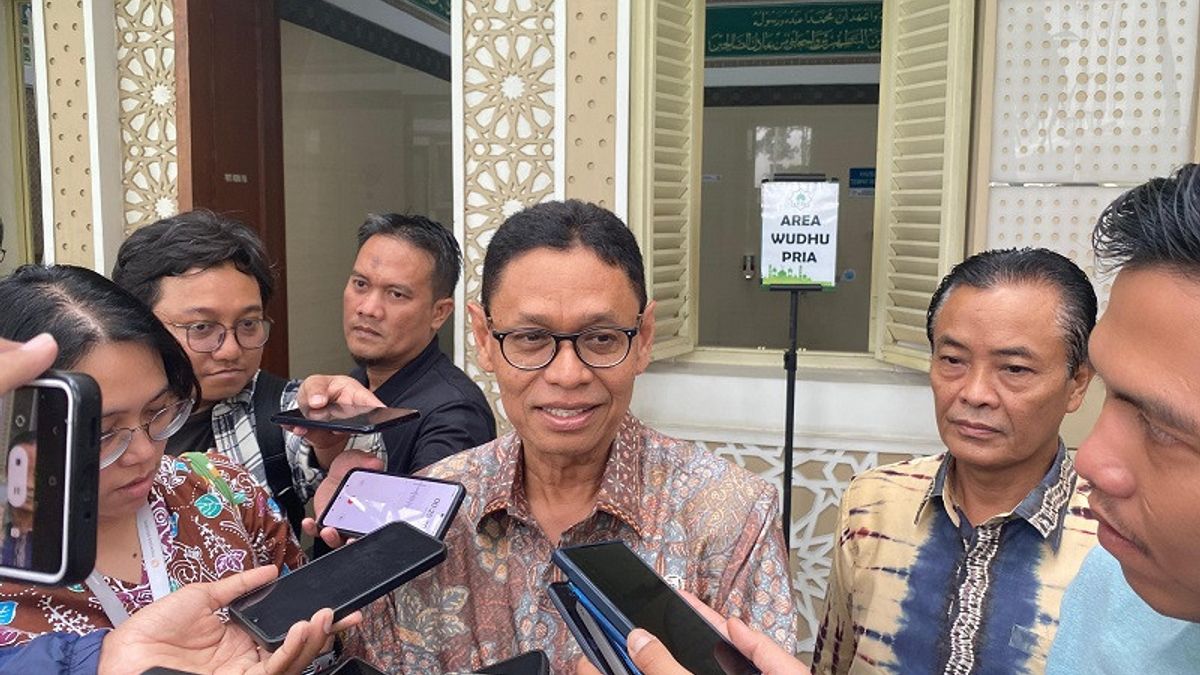
Deputy Minister of Energy and Mineral Resources Yuliot Tanjung said that in the roadmap of the Ministry of Energy and Mineral Resources, the PSEL project or Waste Energy Power Plant (PLTSa) is targeted to have a significant installed capacity as part of the Renewable Energy Mix (EBT). Although the target for full operation is gradual until 2034, Yuliot ensures that the initial steps will begin immediately in 2026.
"From the groundbreaking, it usually takes about 1.5 to 2 years to adjust if the land is available. Hopefully, it will be around 2027 that there will be (PSEL) that will start operating," he said, quoted Wednesday, February 4.
He added that the regulation of Presidential Regulation Number 109 of 2025 which regulates the handling of urban waste through waste processing into renewable energy based on environmentally friendly technology is considered as an instrument to break the deadlock of waste management which has only accumulated in the Final Disposal Site (TPA).
To ensure that this project runs, Yuliot explained that one of the crucial points in this Presidential Decree is the certainty of the financial mechanism. This includes the amount of waste processing service fees (tipping fee) and the selling price of electricity that has been adjusted to the current market conditions to attract investors.
"Yes, the selling price of electricity has increased, it is around 20 cents per dollar," explained Yuliot, indicating a tariff incentive that is much more competitive compared to the previous regulation.
Apart from tariff adjustments, the government has also prepared a subsidy scheme to cover the difference between the cost of providing (BPP) generation and the economic price of the PSEL project. Yuliot ensures that this subsidy calculation will be carried out carefully so as not to burden the state budget but still guarantee the business feasibility of the project.
"This is for subsidies, we have to calculate again, how much capacity is available, then from the HPP, how much PLN, then the difference will be calculated as a subsidy," he added.
Previously, President Prabowo highlighted the importance of serious and integrated national waste management. In his briefing at the 2026 National Coordination Meeting (Rakornas) of the Central and Regional Governments, the President conveyed the plan to launch the Indonesian ASRI Movement (safe, healthy, secure, beautiful) as a national movement to create a clean and orderly environment.
The issue of waste, according to Prabowo, has become a crucial problem in various regions. In his briefing, the Head of State explained that almost all landfills (TPA) in Indonesia are projected to experience excess capacity by 2028.
"This garbage is a problem, it is projected that almost all waste landfills will experience overcapacity by 2028, even sooner," he said.
To answer this challenge, the government will soon start building 34 waste to energy projects in 34 cities this year. In addition to project development, the President emphasized the importance of synergy between all stakeholders, both at the central and regional levels, to address the waste problem.
The English, Chinese, Japanese, Arabic, and French versions are automatically generated by the AI. So there may still be inaccuracies in translating, please always see Indonesian as our main language. (system supported by DigitalSiber.id)
Most Popular Tags
#Prabowo Subianto #donald trump #2026 World Cup #Febrie Adriansyah #8791Popular


