

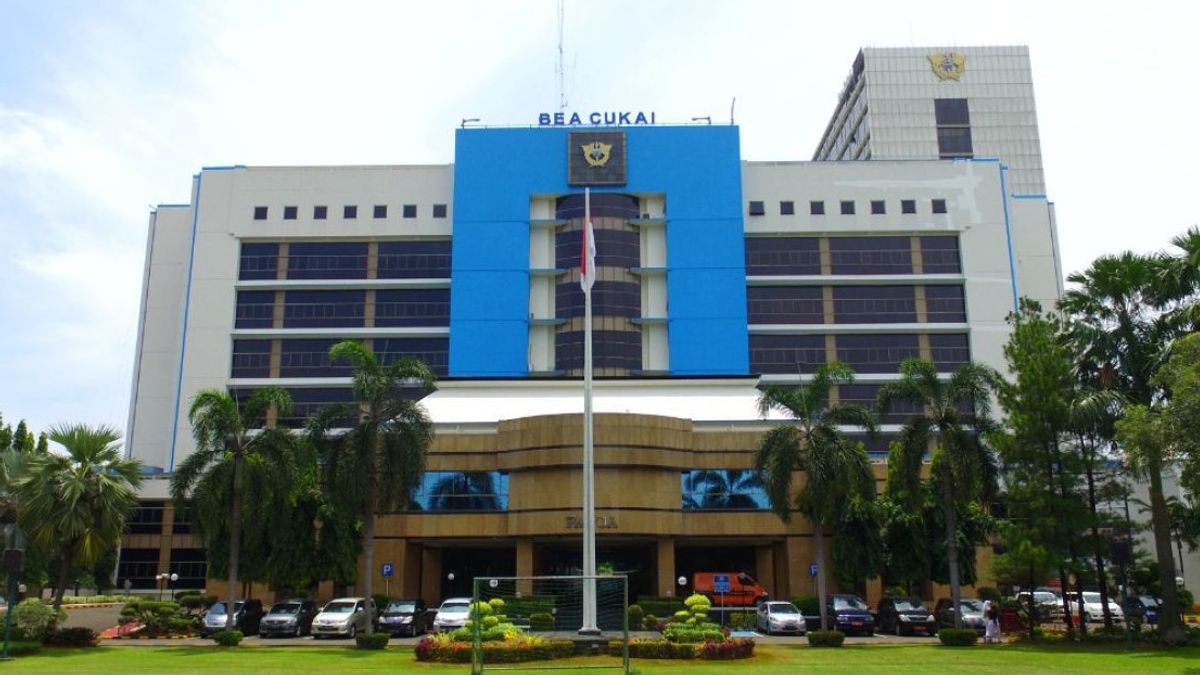


The Directorate General of Customs and Excise (DJBC) of the Ministry of Finance stated that data integration with various ministries and institutions has been running, especially in export-import services.
Director of Communication and Guidance for Customs and Excise Service Users, Nirwala Dwi Heryanto, said that this process was carried out through the National Single Window Institute (LNSW) which manages the Indonesia National Single Window (SINSW) System.
"Through SINSW, the Customs and Excise system is directly connected to various technical Ministries / Agencies that issue export and import permits," he said in his statement, Friday, November 14.
He added, whenever a business actor submits a customs document, it will be automatically verified to ensure that all licensing requirements have been met and documents are in accordance with the provisions.
According to him, this integration allows services and supervision to be faster, more transparent, and accurate, while reducing potential errors and increasing the level of compliance of service users.
In principle, he said, excise duty is an objective tax imposed on goods that meet certain criteria, such as consumption that needs to be controlled, circulation that requires supervision, negative impacts on society or the environment, and the feasibility to be collected for the sake of justice and balance.
In addition, the Ministry of Finance plans to impose excise duty on disposable diapers (diapers) and wet wipes.
The plan is stated in the Minister of Finance Regulation (PMK) Number 70 of 2025 concerning the Strategic Plan of the Ministry of Finance 2025'2029.
Nirwala said that the discussion regarding the possibility of imposing excise on these products is currently still at the scientific study stage.
According to him, this step was taken as a form of transparency and accountability of the government.
"The discussion on the imposition of excise on products is still at the scientific study stage (policy review) as a form of transparency and accountability of the government," he said.
In principle, excise duty is an objective tax imposed on goods that meet certain criteria, such as consumption that needs to be controlled, circulation that requires supervision, negative impact on society or the environment, and the feasibility to be collected for justice and balance.
SEE ALSO:
-
 | EKONOMI
Purbaya Ungkap Ada Rp3,5 Triliun Anggaran yang Dikembalikan Kementerian dan Lembaga
14 November 2025, 20:32
Nirwala menambahkan, kajian tersebut merupakan tindak lanjut dari program penanganan sampah laut dalam Peraturan Pemerintah (PP) Nomor 83 Tahun 2028, serta menindaklanjuti masukan DPR pada tahun 2020 agar pembahasan cukai plastik tidak terbatas pada kantong plastik, tetapi juga mencakup produk plastik sekali pakai lainnya.
"Menindaklanjuti itu, tahun 2021 dilakukan kajian atas diapers, tisu basah, dan alat makan sekali pakai untuk memetakan opsi produk yang secara teoritis dapat memenuhi kriteria Barang Kena Cukai (BKC),"ucapnya.
Dia menegaskan, karena prosesnya masih berada pada tahap kajian ilmiah, pemerintah belum menetapkan target penerimaan negara terkait wacana pengenaan cukai tersebut.
SEE ALSO:
-
| EKONOMI
Purbaya Ungkap Ada Rp3,5 Triliun Anggaran yang Dikembalikan Kementerian dan Lembaga
14 November 2025, 20:32
Nirwala added that the study was a follow-up to the marine waste management program in Government Regulation (PP) Number 83 of 2028, and followed up on the DPR's input in 2020 so that the discussion of plastic excise was not limited to plastic bags, but also included other disposable plastic products.
"Following up on that, in 2021 a study will be conducted on diapers, wet tissue, and disposable food utensils to map out product options that theoretically can meet the criteria for Excise Goods (BKC)," he said.
He emphasized that because the process was still at the scientific study stage, the government had not set a state revenue target regarding the discourse on the imposition of excise.
The English, Chinese, Japanese, Arabic, and French versions are automatically generated by the AI. So there may still be inaccuracies in translating, please always see Indonesian as our main language. (system supported by DigitalSiber.id)
Most Popular Tags
#Prabowo Subianto #donald trump #2026 World Cup #venezuela #konflik timur tengahPopular


