

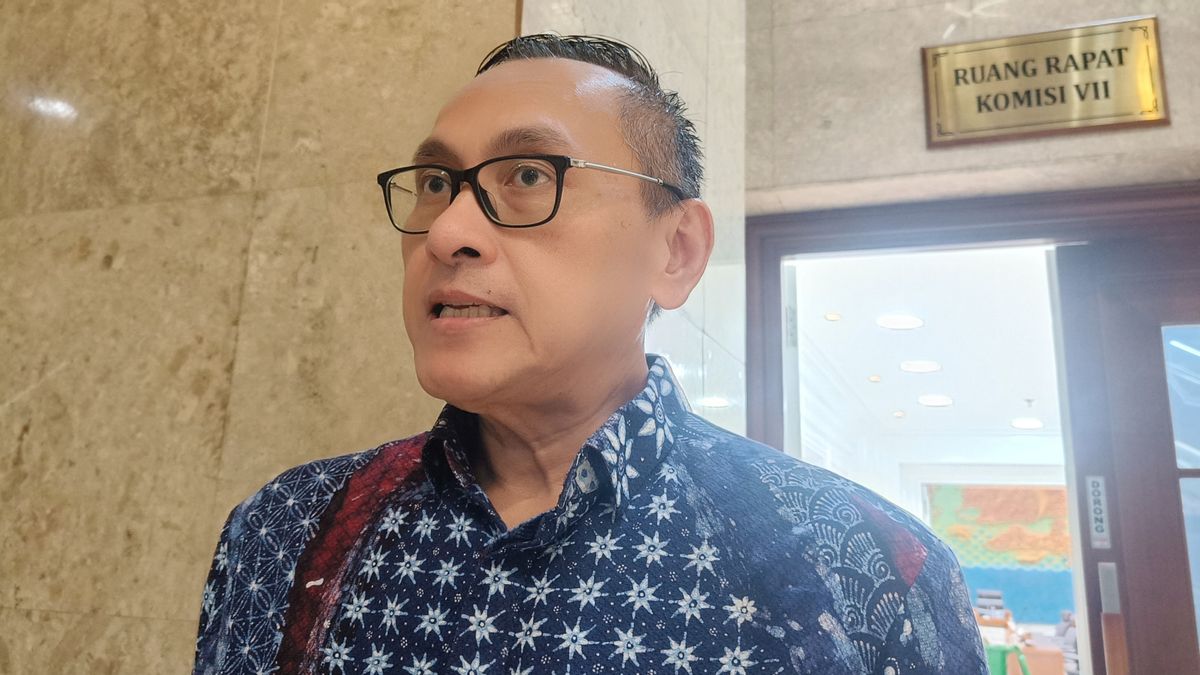


JAKARTA - The Indonesian Iron and Steel Association (IISIA) proposes that the installation of a radiation detector or radiation portal monitor (RPM) be carried out in border borders or border areas under the supervision of the Directorate General of Customs and Excise of the Ministry of Finance (Financial).
The proposal was submitted following a government policy requiring metal smelting industry players to install radioactive detection devices in each business facility.
IISIA Executive Director Harry Warganegara said the government's steps to tighten the supervision of metal raw materials, especially imported screens, could actually be understood.
However, he said, the installation of detection tools should be carried out at the entry point of goods, not in industrial areas.
"We are ready to install the detection tool. However, this should have been installed in the border, so if there is anything, it is found that radioactive can be re-exported," said Harry at the Commission VII DPR RI Hearing Meeting with the Directorate General of Metal, Machinery, Transportation Equipment and Electronics (ILMATE) Ministry of Industry at the Parliament Complex, Senayan, Jakarta, Wednesday, November 12.
Harry explained that the need for raw materials is a major challenge for the national steel industry to lead to green steel production.
Indonesia currently imports around 1.2 million tons of screens every year, while domestic supplies are only able to meet 30-40 percent of the needs.
However, the supply of imported screens was hampered after the findings of radioactive material at one of the merger companies in Cikande, Banten, namely PT Peter Metal Technology (PMT).
As a result, the import of the script was immediately suspended for a while.
"We understand that there is a situation going on in Cikande and the result is that the script has been stopped. We have sent a letter to the Ministry of Industry, Ministry of Environment and Trade, which has been responded to. We have been given three months to install RPM on CEMS, namely a tool to detect radioactiveity," he said.
Even so, Harry emphasized, the process of procuring these tools takes time.
According to him, his party did not refuse to install the detection tool.
However, over time, installation in industrial areas is considered to be too late if radioactive elements are found after the swab arrives in the industrial area.
According to Harry, this condition prevented the company from re-exporting contaminated materials.
"If the radioactive is found in our member factory, it cannot be re-exported. The solution is to bury it. If it is buried, it means that radioactive is planted in Indonesia, not returned to the country of origin. This is what we are worried about," he said.
SEE ALSO:
-
 | EKONOMI
Satgas Cs-137 Sebut Produk Alas Kaki Terkontaminasi Radioaktif Sejak Mei 2025
12 November 2025, 22:06 -
 | EKONOMI
Penyelidikan Biang Kerok Kontaminasi Cs-137 Buntu, Satgas Ungkap Alasannya
12 November 2025, 22:23
Harry bilang, sebenarnya Bea Cukai telah memiliki alat pendeteksi radioaktif di Pelabuhan Tanjung Priok.
Namun, fasilitas itu dinilai belum mencukupi karena belum tersedia di seluruh pelabuhan tempat scrap impor masuk.
"Bea Cukai memang punya di Priok, tapi apakah alat itu aktif 24 jam dan apakah semua scrap diperiksa? Karena scrap tidak hanya masuk lewat Priok, ada pelabuhan lain belum punya alat itu," pungkasnya.
SEE ALSO:
-
| EKONOMI
Satgas Cs-137 Sebut Produk Alas Kaki Terkontaminasi Radioaktif Sejak Mei 2025
12 November 2025, 22:06 -
| EKONOMI
Penyelidikan Biang Kerok Kontaminasi Cs-137 Buntu, Satgas Ungkap Alasannya
12 November 2025, 22:23
Harry said, actually Customs and Excise already has a radioactive detection device at Tanjung Priok Port.
However, the facility is considered insufficient because it is not yet available in all ports where import screens are imported.
"Customs do have in Priok, but is the tool active 24 hours and is all the scripts checked? Because the script does not only enter through Priok, there is another port that does not yet have the tool," he concluded.
The English, Chinese, Japanese, Arabic, and French versions are automatically generated by the AI. So there may still be inaccuracies in translating, please always see Indonesian as our main language. (system supported by DigitalSiber.id)
Most Popular Tags
#Prabowo Subianto #donald trump #2026 World Cup #Febrie Adriansyah #8791Popular


