


JAKARTA - The industrial confidence index (IKI) for the textile sub-sector was recorded at 49.74 percent in October 2025. This means that the performance of the industry has decreased.
The Ministry of Industry (Kemenperin) also revealed the cause of the decline in the performance of the sub-sector.
Director of Textile, Skin and Footwear Industry of the Directorate General of Metal, Machinery, Transportation Equipment and Electronics (ILMATE) of the Ministry of Industry Rizky Aditya Wijaya said the performance of the textile industry was declining due to changes in the dynamics of global trade and the cycle of demand for international textiles.
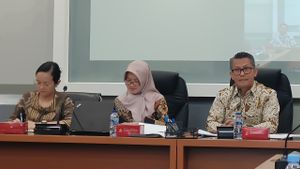
This was conveyed by Rizky in the release of IKI October 2025 at the Ministry of Industry Building, Jakarta, Thursday, October 30.
"In October 2025, IKI for the textile or KBLI 13 sector was at a level below expansive or 49.74 percent. The slowdown mainly occurred in new orders influenced by stock adjustments in export destination countries, such as America and Europe after a large expansionary period at the beginning of the year," said Rizky.
The slowdown in the textile industry's performance is also due to a change in fashion mode. According to Rizky, other major textile producing countries have experienced the same thing.
"It is also added because of the change in fashion mode. A similar phenomenon is also experienced by other major producing countries, such as China, India or Vietnam, which are currently balancing the delivery cycle and optimizing the efficiency of global supply chains," he said.
In a global context, said Rizky, the Ministry of Industry will adjust the purchase pattern in the future. "We adjusted the purchase pattern through the short term buying system to avoid overstock ahead of the 2026 production season," he explained.
On the other hand, Rizky continued, Indonesian textile producers have actually managed to adjust by diverting some of their production capacity to the domestic market. So, currently the national clothing industry is at an expansive level.
"This step was also helped by the Permendag policy Number 17 of 2025 which began to control the flow of imported finished clothes, thus increasing the absorption of raw materials from within the country," he explained.
According to Rizky, the current condition is a consolidation phase towards efficiency and sustainability.
SEE ALSO:
-
 | EKONOMI
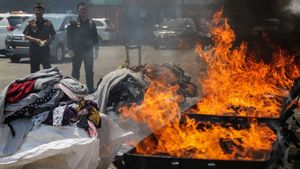
Kemendag Berhasil Tindak 21.054 Bal Pakaian Bekas Impor Ilegal Senilai Rp120,65 Miliar
29 Oktober 2025, 22:54 -
 | EKONOMI
Tingkatkan Nilai Tambah, Kemenperin Bersama ITB Kembangkan Pemurnian Silika dan Grafit
29 Oktober 2025, 09:23
"Our textile industry is transforming into a high-valued product, such as functional textiles, recycling and also technical textiles that are in line with the direction of green industry and circular economy," he said.
In the future, said Rizky, the government will continue to strengthen the synergy of industrial and trade policies, ensure the availability of raw materials and expand the export and domestic market so that the competitiveness of the national industry remains strong.
"So, with IKI results for the textile industry sector in October, we need to interpret them as indicators of global adjustment, not meaning weakening. We are optimistic that entering the end of 2025, the Indonesian textile industry will move back to a stronger expansionary phase," he concluded.
The English, Chinese, Japanese, Arabic, and French versions are automatically generated by the AI. So there may still be inaccuracies in translating, please always see Indonesian as our main language. (system supported by DigitalSiber.id)


