




JAKARTA - The Indonesian Economics Bachelors Association (ISEI) views that Indonesia needs to achieve economic growth of 6-7 percent per year until 2045 to become a high-income country.
This, according to ISEI, can only be achieved through structural changes based on increased productivity and the need for collaboration between academics, business people, and the government to create a strong, independent, and prosperous economy.
Chairman of the ISEI Central Executive, Perry Warjiyo, said that the contribution of ISEI's thoughts to the government and society was realized through a study on economic transformation.
This study emphasized the importance of inclusive, equitable, efficient, and sustainable growth. The results are contained in the 6.0 volume Public Policy Study (KKP) document.
Perry added that this thought is in line with the idea of Begawan Ekonomi Indonesia, namely Prof. Soemitro Djojohadikoesoemo, who believes that economic independence and nationalism is very important.
"The ultimate goal of development is the welfare of the people, not just the growth of macroeconomic numbers," Perry said, quoting Antara.
ISEI also emphasizes the importance of downstreaming strategies to increase added value and strengthen the economic structure. However, downstreaming must be directed to be more inclusive, especially in the mineral and agricultural sectors, through the end-to-end food downstream model.
On the other hand, digital economy and finance are seen as new sources of growth. Digitalization has the potential to become the main engine of sustainable growth because it is able to expand inclusiveness, increase efficiency, and encourage productivity, which is crucial to avoid middle income traps.
In addition, financing plays an important role, both through the expansion of the role of financing institutions in the housing sector, as well as an adaptive and diversified approach to MSMEs.
Meanwhile, the housing sector is positioned as the main driver of economic growth through job creation and increased domestic demand.
ISEI affirms its commitment to strengthening the role of the country in national economic development amid global uncertainty.
SEE ALSO:
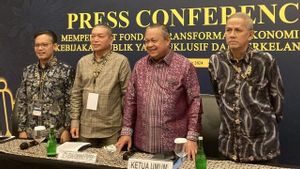
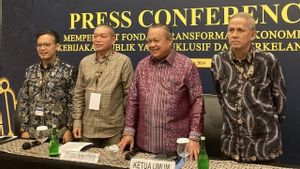
This is the main discussion in the Plenary Session of ISEI XXIV and the 2025 National Seminar in Manado, North Sulawesi, on September 18-19 2025.
The organization, which consists of scholars and professionals in the economic sector, has set five main pillars as the direction of the work program for 2024-2027.
The five pillars include economic and financial stabilization, downstreaming and industrialization, food security, digital transformation, and improving the quality of human resources (HR).
ISEI is also committed to continuing to make a real contribution to the welfare of the people and the progress of the Indonesian economy. This commitment is reflected in the development of economic science through research and publications, as well as the delivery of economic thinking according to the Pancasila philosophy.
In addition, ISEI also supports government programs such as Asta Cita and economic downstreaming, as well as acts as government strategic partners in development planning.
The English, Chinese, Japanese, Arabic, and French versions are automatically generated by the AI. So there may still be inaccuracies in translating, please always see Indonesian as our main language. (system supported by DigitalSiber.id)
Most Popular Tags
#Prabowo Subianto #donald trump #Febrie Adriansyah #8791 #giias 2026Popular


