


JAKARTA - Member of Commission IV DPR RI, Slamet revealed, currently many rice business actors are holding back production because they are worried that the practice of mixing rice that they have been doing so far is actually criminalized. In fact, according to him, this practice is commonly carried out to maintain the consistency of product quality in the market.
"Without clear rules, business actors are hesitant to distribute stocks. This is very risky. If it is allowed to drag on, we can face a rice stock vacancy in the retail market, especially in big cities. As a result, it is not just a supply chain disruption, but it can trigger panic and price spikes at the consumer level," he said in his official statement. quoted from the website of the DPR RI, Friday, August 8.
Therefore, he encouraged the active involvement of the Coordinating Ministry for Economic Affairs, the National Food Agency (Bapanas), the Ministry of Trade, and the Ministry of Agriculture to immediately sit together to fix the rice trading system as a whole.
Slamet also advised the government to involve milling entrepreneur associations, farmer cooperatives, and consumer protection agencies, so that the resulting policies truly reflect justice.
"The government needs to immediately formulate an operational definition of mixed rice, including its limits. We have to clearly distinguish which ones are quality optimization and which are fraud. Don't generalize everything and eventually scare business actors who are actually maintaining national food availability," he said.
Rice Not In Accordance With Quality Standards Effects On Health
Meanwhile, Member of Commission IV DPR RI, Rokhmin Da'uri, assessed that the practice of mixing rice not only caused economic losses, but also had an impact on the public health aspect.
"The impact is not only the economy. Consumers are harmed because they buy rice that should be in the medium class, but are labeled premium. In terms of price, they pay more expensive than the quality obtained," said Rokhmin.
Health, continued Rokhmin, mixed rice can endanger the community. This is because there are certain quality standards that must be met in the classification of premium rice, such as water levels of a maximum of 14 percent and limits on broken rice grains of no more than 9 percent.
If the rice does not meet these standards but is still sold with a premium label, it has the potential to harm consumers from the nutritional and food safety aspects.
"Talking about food sovereignty, it's not only about production quantities, but also about quality and security. This concerns nutrition that people consume," he said.
SEE ALSO:

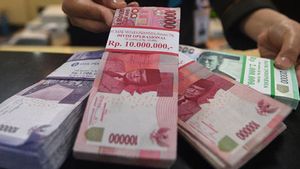

On the other hand, he highlighted the impact of rice not according to this quality standard on farmers. For him, this practice does not make farmers enjoy profits from the price margins drawn from consumers. Because the price of unhulled rice remains reduced at IDR 6,500 per kilogram, while the price of rice in the market continues to soar.
"Farmers are still disadvantaged. Even though the government claims Bulog's rice stock has been highest in the last 57 years, but why is the price in the market still rising? This is strange and must be a concern," said Rokhmin.
Recently, the National Police's Food Task Force has named suspects in cases of rice not according to the quality standards circulating in the market. The suspects from these two rice producer companies were also subject to legal entanglement in the Consumer Protection Law and the Money Laundering or TPPU Law with a maximum of 20 years in prison and a fine of Rp. 10 billion.
The English, Chinese, Japanese, Arabic, and French versions are automatically generated by the AI. So there may still be inaccuracies in translating, please always see Indonesian as our main language. (system supported by DigitalSiber.id)
Most Popular Tags
#Prabowo Subianto #donald trump #Febrie Adriansyah #8791 #giias 2026Popular


