


JAKARTA - Kijing Terminal, in Mempawah, has grown more than just a port. Since it was officially managed by PT Pelabuhan Tanjung Priok (PTP Non-Perpetikes) Pontianak Branch in August 2022, the terminal has now transformed into the backbone of non-packaging cargo services in West Kalimantan.
Kijing Terminal is one of the strategic international logistics nodes because it borders directly on the main trade route of the Malacca Strait, thus playing an important role in strengthening connectivity and encouraging export-imports, especially West Kalimantan.
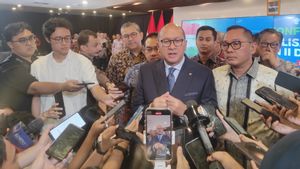
President Director of PTP Nonpetikemas Indra Hidayat Sani said, Kijing Terminal is capable of serving up to 15 ships at once, including large ships up to 100,000 DWT due to drafts of up to 15 meters and the length of the pier which reaches more than 1,900 meters.
"No less than 84 oil palm plantations, 132 CPO industrial companies, and 42 special terminals support this commodity ecosystem in the region, so that Kijing Terminal becomes the lifeblood of West Kalimantan's economy," he said at Tanjung Priok Port, Jakarta, Friday, August 1.
Indra said Kijing Terminal is the main export gateway for palm oil derivative products, supported by modern loading and unloading facilities such as harbour mobile cranes, excavators, wheel loads, mobile conveyors, flexible houses, and portable filling stations.
"A number of other commodities such as coal, fertilizer, palm kernel, bauxite, and heavy cargo are also part of this terminal service," he said.
With modern infrastructure and qualified loading and unloading facilities, continued Indra, Kijing Terminal is now playing an important role in supporting the flow of goods, especially for infrastructure projects in the western region of Indonesia. Not only encouraging exports, Kijing is also an important part in maintaining the resilience of the national supply chain.
"As a new international port in West Kalimantan, Terminal Kijing is positioned as the driving force for regional exports as well as a catalyst for national economic growth," he said.
In the future, continued Indra, this port is prepared to support the downstream program that is being intensified by the government and to serve various kinds of cargo, both non-packaging and containers to strengthen the supply chain, especially in the western region of Indonesia.
For your information, PTP Non-Certimas recorded an increase in throughput from year to year with an achievement of 2.27 million tons in 2023, increasing to 3.09 million tons in 2024, and in 2025 it is targeted to reach 3.3 million tons.
The largest contribution comes from liquid bulk (1.9 million tons), dry bulk 761,000, tons and general cargo 456,000 tons.
As of June 2025, the total volume of loading and unloading or throughput was recorded at 2 million tons, with dry bulk being the largest contributor of 965,000 tons, followed by liquid bulk of 759,000 tons, and general cargo of 328,000 tons. Throughout 2025, throughput is projected to penetrate 3.3 million tons.
SEE ALSO:
-
 | EKONOMI
BPOM Hentikan Peredaran 34 Kosmetik Berbahaya, Ini Daftar Produknya
01 Agustus 2025, 21:05
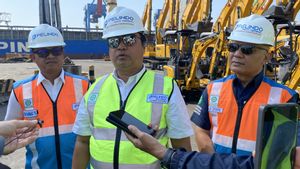
Hingga semester I-2025, kinerja pengoperasian PTP Nonpetikemas Cabang Pontianak Terminal Kijing untuk komoditas curah kering mencatat pertumbuhan signifikan sebesar 225 persen dibandingkan periode yang sama tahun sebelumnya.
Rata-rata throughput mencapai 2.716 ton per ship per day (T/S/D), melonjak tajam dari 836 T/S/D pada semester I 2024.
PTP Nonpetikemas Cabang Pontianak beroperasi di Kalimantan Barat dengan mengelola empat area terminal nonpetikemas, yaitu Kawasan Dwikora, Pelabuhan Perintis Sintete, Ketapang, dan Kawasan Kijing. Pelabuhan ini juga menangani berbagai komoditas general cargo seperti karet, bungkil, dan plywood.
Terminal Kijing sendiri melayani aneka kargo nonpetikemas, antara lain CPO dan turunannya, batu bara, pupuk, palm kernel, karung beras, serta produk perkayuan. Didukung oleh Kalimantan Barat sebagai salah satu sentra produksi CPO nasional, wilayah ini memiliki hinterland yang kuat bagi pertumbuhan volume kargo.
SEE ALSO:
-
| EKONOMI
BPOM Hentikan Peredaran 34 Kosmetik Berbahaya, Ini Daftar Produknya
01 Agustus 2025, 21:05
Until the first semester of 2025, the performance of the operation of the Pontianak Terminal Kijing Branch of PTP for dry bulk commodities recorded a significant growth of 225 percent compared to the same period the previous year.
The average throughput reaches 2,716 tons per ship per day (T/S/D), soaring sharply from 836 T/S/D in the first semester of 2024.
PTP Non-Census Pontianak Branch operates in West Kalimantan by managing four terminal areas of non-Census, namely the Dwikora Area, Perintis Sinte Port, Ketapang, and Kijing Area. This port also handles various general cargo commodities such as rubber, mangkil, and plywood.
Kijing Terminal itself serves a variety of non-packaging cargo, including CPO and its derivatives, coal, fertilizers, palm kernels, rice sacks, and perkayuan products. Supported by West Kalimantan as one of the national CPO production centers, this region has a strong hinterland for the growth of cargo volume.
The English, Chinese, Japanese, Arabic, and French versions are automatically generated by the AI. So there may still be inaccuracies in translating, please always see Indonesian as our main language. (system supported by DigitalSiber.id)
Most Popular Tags
#Prabowo Subianto #donald trump #firearm #8791 #giias 2026Popular


