

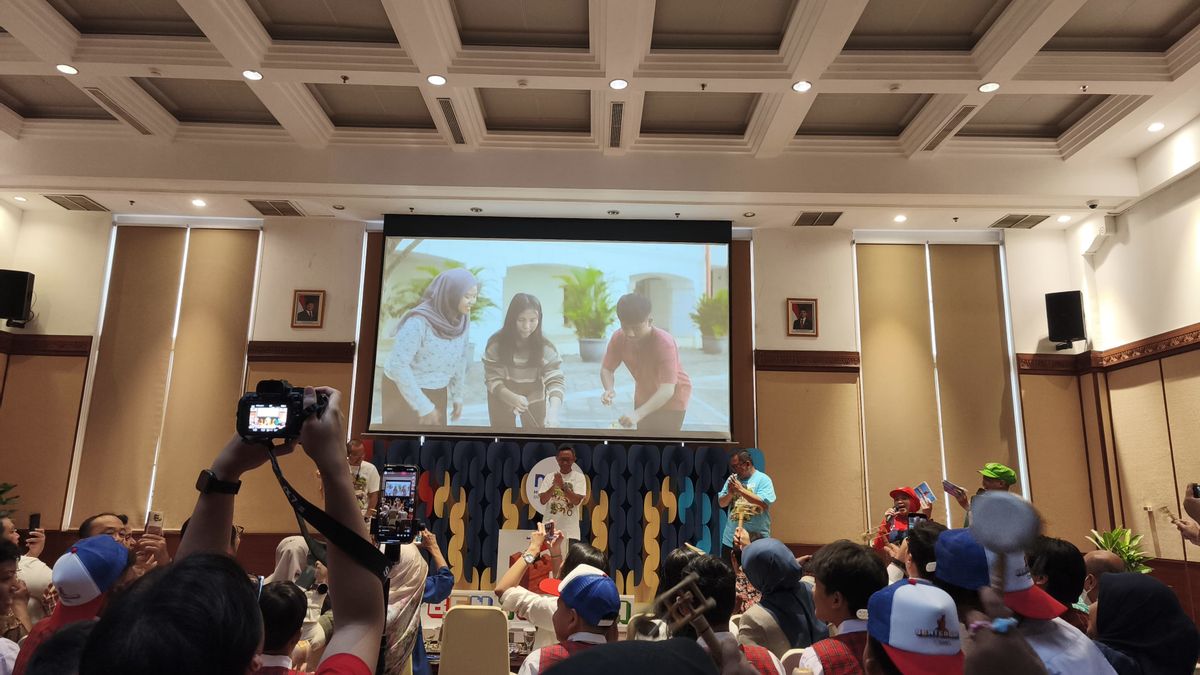


JAKARTA - Bank Indonesia (BI) is again holding a temporary exhibition with the theme 'Playing (Playing and Tracing Money Through Children's Stories) at the Bank Indonesia Museum (MuBI) which will take place from July 15 to September 14, 2025.
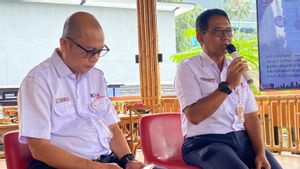
Director of the Communication Department of Bank Indonesia (BI) Junanto Herdiawan said that this activity aims to educate the public about the journey of money in transactions carried out by children from time to time which is represented through children's play.
Through this exhibition, he hopes to revive the spirit of playing together in the surrounding environment, as well as introduce financial literacy in a fun way in the midst of the widespread use of gadgets and the internet among children.
"Why (choose the theme) of children, because more than 51 percent to 60 percent of visitors to this museum are children," he told the media crew, Monday, July 14.
He explained that this exhibition not only displays the evolution of children's play, but also how the payment system changes over time.
So if all of my friends look here, see how every toy has money next to it. That's the money that happened when the game was there. There was Rp100 with a picture of a rhino, there was Rp500 orangutan in cash," he added.
To note, the fort exhibition will feature several numerical and numerical collections packaged with the story framework 'Playing and Tracing Money Through Children' Stories'.
This exhibition was compiled in four main zones describing the journey of children's games in Indonesia on time track, associated with the development of money as a means of transaction.
1. Digital zone (2000-present)
This era shows how children are now starting to lose space to play together physically and prefer individual games.
The presence of internet technology makes it easier for them to play anywhere and anytime and with anyone without space and time restrictions. This makes the consumption of games in gadgets soar and eliminates philosophy which is the initial goal of children's games in the previous era
Ease of transactions through the use of electronic money has increased the volume of the game through purchasing game features. The collection will feature the latest money (2000 - now) which is a transaction tool for children at this time and various non-cash transaction options such as QRIS, e-wallet, and payment tools using a card (APMK).
2. Analog Zone (1979-1990s)
This era shows how children still have a lot of room to move to play together physically in certain areas. But at the same time, technology is also starting to come into children's play.
At this time, children used a lot of cash to buy toys and some savings products were issued by the government called Tabanas (National Development Savings). The collection will display money from the 1970-1990s which depicts children and is used as a means of transaction in buying games at that time.
3. Traditional Zone (1945-1969)
This era shows how children do a lot of playing activities together in open spaces. They are looking for and making their own toys from materials available in the surrounding environment. Children's games are also commonly done in pavilions or fields that are also commonly used as dance studios and other activities. Many of the games that were done at that time had their own philosophy of teaching positive moral messages to children. The collection will display money from 1945-1969 and a collection of stamps used in communicating at that era.
SEE ALSO:
4. Koda Zone
This zone will be the final conclusion of an exhibition featuring the numerical collection of Bank Indonesia representing children, such as the money series for the 1999 edition of The Children of The World and the 75-year edition of the Special Rupiah Rp75,000 edition of Indonesian Independence.
This shows how Bl has long cared for children in money in his policies. This zone is also a conclusion zone that reminds children and parents to return to playing in the neighborhood together and reduce the use of gadgets to prevent negative impacts from the internet.
The English, Chinese, Japanese, Arabic, and French versions are automatically generated by the AI. So there may still be inaccuracies in translating, please always see Indonesian as our main language. (system supported by DigitalSiber.id)
Popular


