
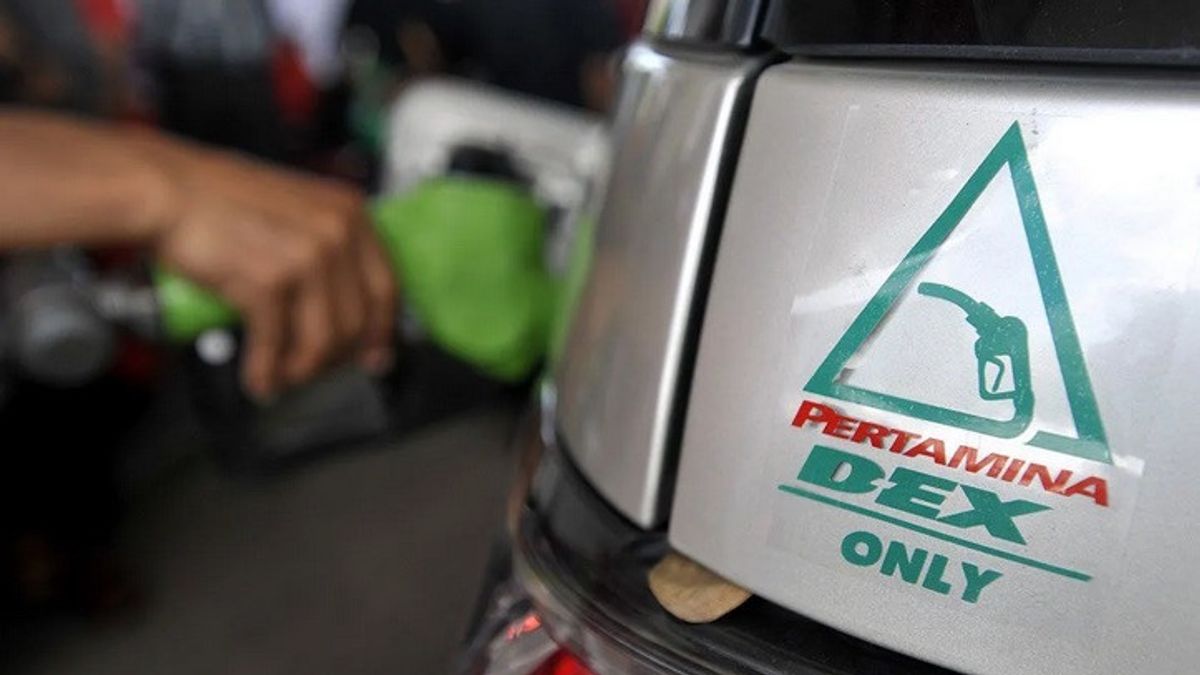


JAKARTA - The sudden increase in the price of non-subsidized fuel oil (BBM) has become a spotlight. Economic observers consider the increase in the price of non-subsidized fuel oil to be reasonable because it follows the global crude oil price.
The government finally raised the price of non-subsidized fuel as of April 18, 2026. Citing the MyPertamina page, Pertamax Turbo increased from Rp. 13,100 per liter to Rp. 19,400, while Dexlite increased to Rp. 23,600 per liter from the previous Rp. 14,200.
Pertamina Dex prices are now also sold at Rp23,900 per liter from the previous Rp14,500. Even so, the government has not raised the price of subsidized fuels and several other non-subsidized fuels, including Pertamax (RON 92) remain at Rp12,300 and Pertamax Green Rp12,900. This is done as an effort to maintain people's purchasing power in the midst of global pressure.
The increase in the price of non-subsidized fuel had sparked controversy among the public. In addition to the sudden increase, the decision was also feared to have an impact on the price of other goods. However, Executive Economist at the Center of Economic and Law Studies (CELIOS) Nailul Huda said that the increase in fuel prices is an inevitability, amid the current geopolitical turmoil.
Before the announcement of the increase in the price of non-subsidized fuel, the issue had spread widely at the end of March. A document claiming the increase in the Retail Selling Price (HJE) of several types of fuel was circulating, but at that time, Pertamina denied the information.
As happened in the previous moment, the increase in fuel prices often triggers a significant inflation spike, which causes an increase in the price of other goods.
However, after the increase in the price of non-subsidized fuel oil now, a number of circles consider this to be a natural thing because it follows the trend of global crude oil prices. Executive Director of the Center of Reform of Economics (CORE) Indonesia Mohammad Faisal said the increase in the price of non-subsidized fuel oil was the right decision, amid the recent geopolitical turmoil. He also believes that the increase in the price of non-subsidized fuel oil will not have a significant impact on the inflation rate.
"Every price increase must contribute to inflation, even though the contribution of non-subsidized fuel to total inflation is much less than the contribution of subsidized fuel," said Faisal.
The increase in the price of non-subsidized fuel, said Faisal, contributed to inflation at a relatively low level. This is because non-subsidized fuel targets the middle and upper middle classes.
Similarly, CELIOS economist Nailul Huda said the increase in the price of non-subsidized fuel was a natural thing because it followed the global crude oil trend. In addition, the effect on inflation is also relatively limited because the portion of non-subsidized fuel consumption is not as large as subsidized fuel, and is not the main fuel for public transportation and distribution of goods.
"The effect on inflation is relatively limited because the share of non-subsidized fuel consumption is not as large as subsidized fuel, and is not the main fuel for public transportation and distribution of goods," said Huda.
Need Government SupervisionMeanwhile, CELIOS Executive Director Bhima Yudhistira saw a number of risks that might arise following the increase in the price of non-subsidized fuel while the subsidized fuel price remained unchanged. Without adequate supervision, Bhima is worried that there will be a shift in consumption to use subsidized fuel whose price does not rise.
Bhima explained, so far Pertamina Dex consumers, one type of non-subsidized fuel whose price has increased, are not only middle and upper class vehicles.
"But also industrial machines, heavy equipment in the mining sector, in the palm oil sector, many also buy Pertamina Dex," said Bhima, quoting Antara.
If there is a shift in consumption to subsidized solar, Bhima continued, there is a concern that the fuel supply will not be able to meet the surge in demand and it is not ruled out that there will be shortages.
For this reason, he hopes that supervision of subsidized solar fuel will be strict, especially outside Java Island, both for logistics and for heavy equipment in the mining and plantation sectors.
Even so, he suspected that the increase in the price of non-subsidized fuel by the government was only temporary following the price of oil, which tends to fall due to the escalation of the Iran-United States-Israel war.
Therefore, Bhima suggested that in addition to conducting stricter supervision, incentives were also needed for business actors who buy non-subsidized fuel. Because, the cost burden of industrial production will increase if you buy non-subsidized fuel.
"Then it may also have to be given some kind of incentive (for the industry) to ease production costs because the burden of production costs can increase if they continue to buy non-subsidized fuels such as Pertamina Dex, so that the increase in production cost burden does not occur. efficiency or layoffs," he said.
The English, Chinese, Japanese, Arabic, and French versions are automatically generated by the AI. So there may still be inaccuracies in translating, please always see Indonesian as our main language. (system supported by DigitalSiber.id)
Most Popular Tags
#Prabowo Subianto #donald trump #firearm #8791 #giias 2026Popular


