
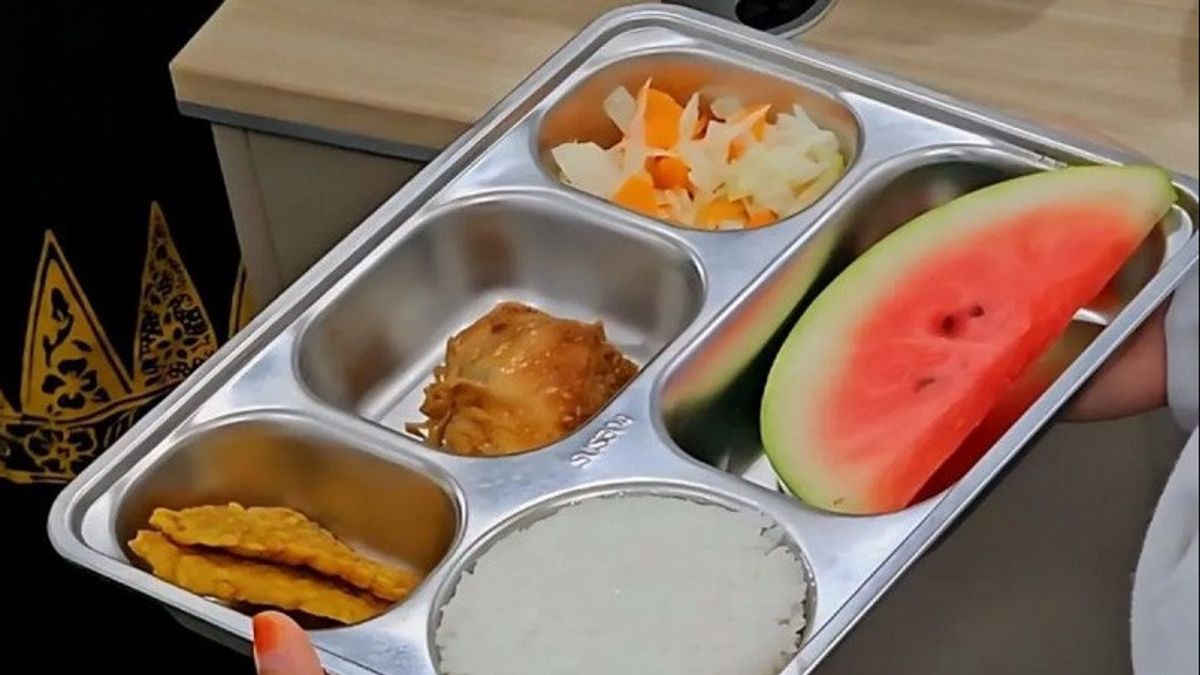


JAKARTA The public has been busy questioning the statement of Deputy Minister of Higher Education, Science and Technology Stella Christie linking free nutritious eating programs or MBG, and school children's learning skills.
In his statement, Stella said, "With the MBG program, children not only get good nutrition, but also learn to calculate and recognize English through food types".
He made this claim when he visited the booth of the National Nutrition Agency (BGN) on the second day of the 2025 Indonesian Science, Technology and Industry Convention (KSTI) at the Bandung Institute of Technology, West Java.
Stella's statement was enough to steal the attention of the public who questioned the claim. Some agree with the statement of the woman who graduated from Harvard University and Northwestern University, but some doubt it.
Since it first started on January 6, 2025, the MBG program has often attracted public attention. Not only because it costs a very large budget, but this program often encounters a number of obstacles.
Starting from the poisoning cases experienced in a number of schools, the rejection of this program, such as what happened in Papua, to the presence of MBG kitchen partners that were not paid by the foundation. So it's not surprising, when the Deputy Minister of Education, Saintek Stella Christie made a statement linking the MBG program by increasing students' math and English skills, this claim was also in the spotlight.
Indeed, a number of studies explain the existence of positive correlations between the two. But whether specifically can increase the skills of these two lessons still needs to be studied more deeply.
The MBG program initiated by President Prabowo Subianto basically imitates similar programs abroad. Case studies from several countries show that the lunch program provided at schools has a positive relationship with student academic achievements, including increased cognitive function and learning motivation.
Citing Kompas, the research conducted by Marina Roberts and his friends in the journal Nutrients in 2022 shows that nutritional interventions, such as iron, double micronutrients, and fish consumption have a positive impact on the cognitive results of preschoolers.
"The fulfillment of children's nutritional needs is closely related to the level of child intelligence, especially during the growth period. In the critical period 0-2 years or the first 1,000 days of life, the fulfillment of nutritional needs will greatly affect the formation and development of the brain," he said.
If the nutritional needs during the first 1,000 days of life are not sufficient, the level of child intelligence in the long term will be affected. Fulfillment of malnutrition can even have the potential to cause conditions to fail to grow or tengkes.
Lecturer of the Department of Health Nutrition at Gadjah Mada University (UGM) Toto Sudargo said the MBG program has great potential to increase the cognitive function capacity of students if managed properly. However, this must also be balanced with the nutrition processing of the food menu.
The consumption of nutritious food, such as protein from eggs, is very important to support brain development. However, the presentation must also be considered so that children are interested in consuming it," said Toto.
Meanwhile, UIN Public Health Study Program Lecturer Syarif Hidayatullah Jakarta, Narila Mutia Nasir explained, several studies conducted in various countries such as China, Denmark, Finland, and Norway showed that nutrition intervention in schools had a good impact on students' cognitive aspects. However, Narila emphasized that the results of the study varied and did not always produce consistent findings.
Narila also explains that the brain biologically needs sufficient energy intake to function optimally. About 20 percent of the total daily calories consumed by a person are used by the brain to concentrate.
SEE ALSO:
-
 | BERNAS
Koruptor Divonis Berat, Lantas Bebas Cepat: Pemerintah Tak Serius Berantas Korupsi
22 Agustus 2025, 11:00 -
 | BERNAS
Penurunan Angka Pengangguran Tak Berarti Menunjukkan Masyarakat Sejahtera
21 Agustus 2025, 12:00 -
 | BERNAS
Mempertanyakan Kepatutan Tunjangan Rumah Anggota DPR Rp50 Juta di Tengah Kesulitan Warga
21 Agustus 2025, 07:02
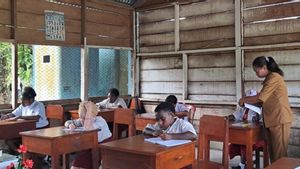

When children come to school hungry or malnourished, their cognitive abilities and concentrations can drastically decrease. In this context, the provision of MBG does have the potential to support increasing children's cognitive energy and capacity during the learning process. But Narila emphasized that there are 'requisites and provisions' that apply or there are other factors that must also be supported.
So that the impact of MBG on academic achievements is really felt, it is not enough just to provide food. In terms of cognitive ability, the quality of the food nutrition provided needs to be considered, especially in terms of important micronutrient content (iron, zinc, folic acid, vitamin B12, iodine, and essential fatty acids).
Narila's conclusion states that MBG has an impact on academic achievement does have a scientific basis, but the results of the study are also caused by a number of factors, such as program duration, design and program quality, as well as the socio-economic status of food recipients.
On the other hand, educational expert Rakhmat Hidayat assessed Stella Christie's claim that MBG has the potential to improve math and English skills is still premature. This is because the program has only been running for a few months.
According to him, a public policy that has not yet reached one year of implementation cannot be evaluated thoroughly. In addition to the issue of implementation time which is still too early, Rakhmat also highlighted the implementation in the field following the many confusions that occurred.
Rakhmat then tells the story of a postdoctoral study he conducted in Finland in 2019. He observed how the country has implemented comprehensive education reforms since 1970, including providing free lunch for all students at school.
Children, he said, since then have lunch in the canteen together with the best health standards such as fish, vegetables, and added yogurt, cheese, milk, and fruits.
The significant impact of policies in Finland only began to be seen in the early 2000s, when the country was recognized internationally as one of the countries with the best education systems. Its PISA score is classified as very high in science, mathematics, and literacy.
"The impact of the free feeding policy was only felt how many decades later. In early 2000 and it was recognized by the international community," said Rakhmat.
Rakhmat admits that there is indeed a connection between the quality of nutrition and children's education. When children are used to eating nutritious food, of course it will form a prime body condition. However, to conclude that the MBG program has an impact on increasing the skills of mathematics and English cannot be done in a short time this program is running.
In addition, the nutritional standards in the food provided also need to be considered, such as iron, zinc, folic acid, vitamin B12, and others. Evidence-based monitoring and evaluation also needs to be done to see if there is a correct increase, such as Wamendikti Saintek Stella Christie's claim.
The English, Chinese, Japanese, Arabic, and French versions are automatically generated by the AI. So there may still be inaccuracies in translating, please always see Indonesian as our main language. (system supported by DigitalSiber.id)
Popular


