

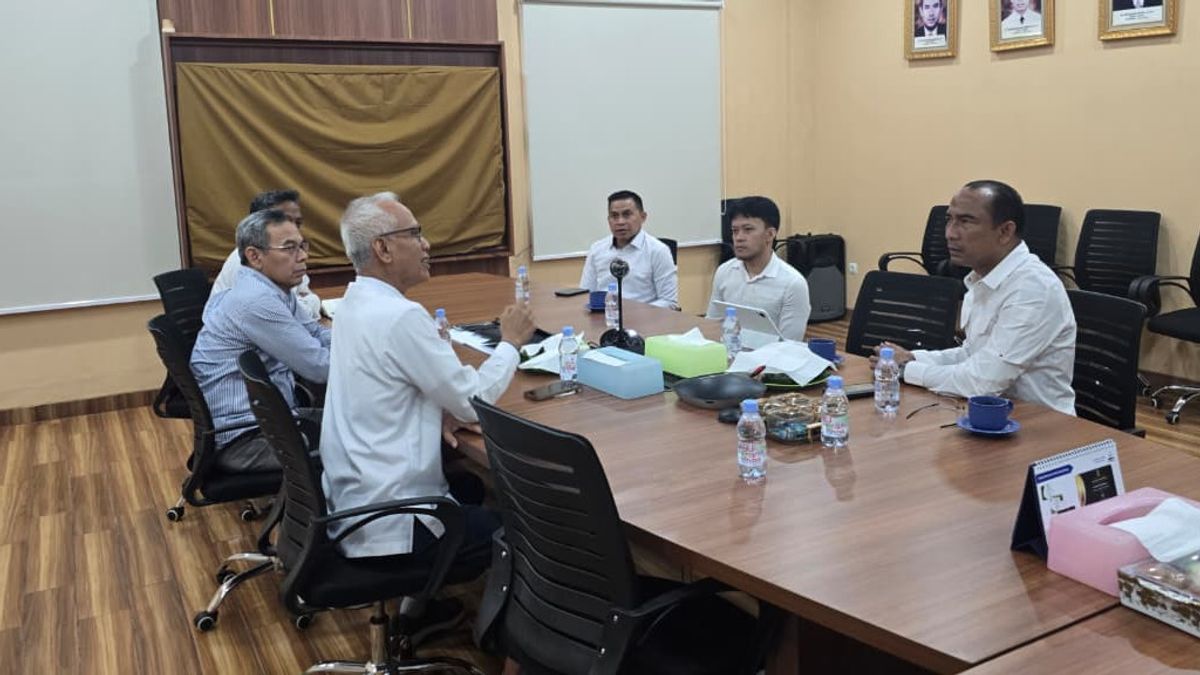


JAKARTA - The Indonesian Electrical and Mechanical Contractors Association (AKLI) expressed full support for the government's program in accelerating the development and development of the national electricity energy sector.
AKLI Chairman Puji Muhardi said that the support includes strategic programs such as increasing the national electrification ratio, building an electricity distribution network, building a main substation, strengthening the transmission system, and leveling access to electricity to remote areas and new industrial areas.
"The government's steps to strengthen the electricity sector are strategic policies. Not only to maintain national energy resilience, but also to be the main driving force for economic growth, investment, and the competitiveness of national industries," said Puji Muhardi in a written statement, Wednesday (27/5/2026).
As an organization that oversees electrical and mechanical contractors in Indonesia, AKLI emphasizes its commitment to continue supporting government and PT PLN (Persero) strategic programs. According to Puji, the development of national electricity infrastructure has a vital role in supporting the industrialization, downstream, and development of economic areas in various regions.
Therefore, he assessed that the synergy between the government, PLN, associations, and business actors was an important factor for all electricity projects to run effectively, on target, and completed according to target.
However, in the midst of this support commitment, AKLI asked the government and PLN to evaluate and review the implementation of the Board of Directors of PT PLN (Persero) Number 0620.K/DIR/2013 concerning General Guidelines for the Procurement of Goods and Services.
Puji explained that the procurement mechanism of materials that were all prepared by PLN in the field still posed technical obstacles that directly impacted the progress of the project. The obstacles include delays in the distribution of materials, non-compliance with specifications of goods, to the incompleteness of materials during the work.
"This condition makes it difficult for contractors to complete work according to the contract schedule. Not a few projects have experienced delays because the main materials are not yet available in full in the field," said Puji.
For this reason, AKLI proposes a change in the pattern of procurement of materials by giving flexibility to the implementing contractor to carry out direct procurement of certain materials according to technical needs in the field.
This scheme is considered to be able to accelerate work, increase operational efficiency, minimize delays, and strengthen quality control of materials.
AKLI also emphasized that the granting of this authority would not reduce the principles of transparency and accountability as long as it was still supervised according to PLN standards. This mechanism is even considered to be able to create a work system that is more adaptive to the dynamics of the needs of strategic projects with a high level of urgency.
Furthermore, Puji hopes that the government together with PLN will open a more intensive dialogue space with associations and business actors to formulate more effective and efficient policies for the procurement of goods and services.
"This input is not to hinder government programs or PLN, but rather a constructive contribution from business actors so that the project implementation system is more optimal and sustainable," he concluded.
The English, Chinese, Japanese, Arabic, and French versions are automatically generated by the AI. So there may still be inaccuracies in translating, please always see Indonesian as our main language. (system supported by DigitalSiber.id)
Most Popular Tags
#Prabowo Subianto #donald trump #2026 World Cup #Febrie Adriansyah #8791Popular


