


JAKARTA - All forms of arrangements in the Strait of Hormuz must be in line with the United Nations Convention on the Law of the Sea (UNCLOS), with provisions for arrangements that must be obeyed by all countries and become international customary law.
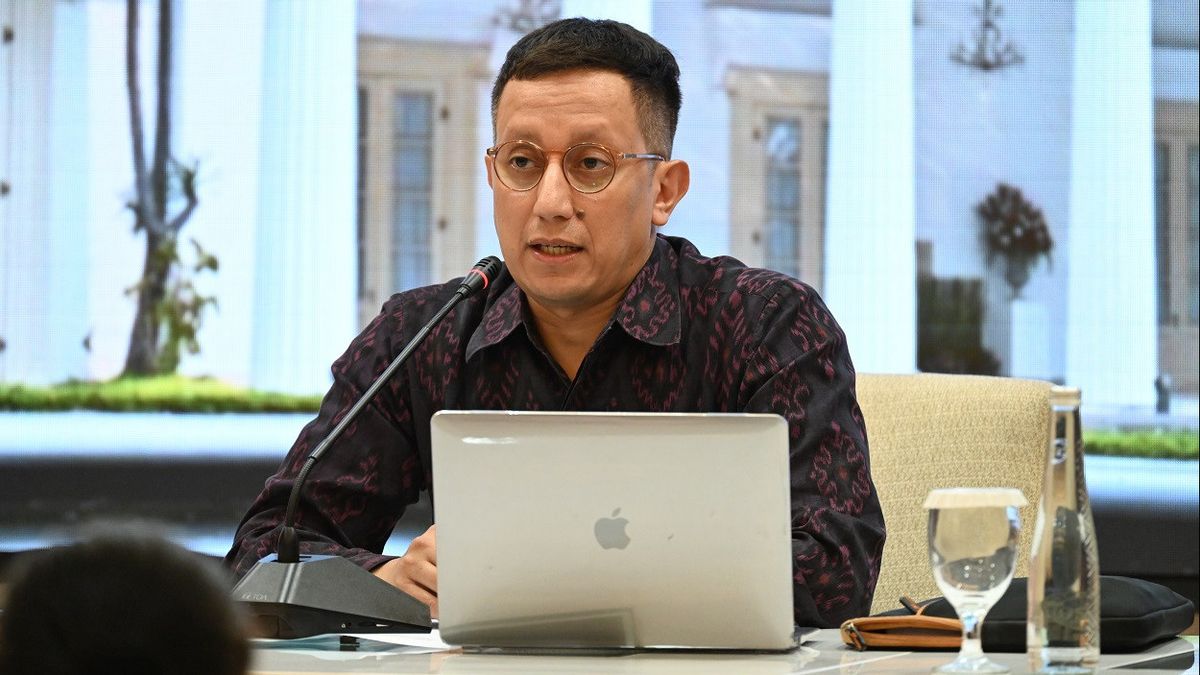
This was conveyed by the Spokesperson II of the Indonesian Ministry of Foreign Affairs, Vahd Nabyl A. Mulachela, when asked about the new arrangements made by Iran regarding the Strait of Hormuz.
"Regarding this arrangement, we are looking at it. In principle, any arrangement must be in line with UNCLOS," said Nabyl at the Indonesian Ministry of Foreign Affairs, Jakarta, Thursday (21/5).
Previously, Iran's supreme security body on Monday announced the formation of a new body to manage the Strait of Hormuz, which has effectively been tightened and wants to charge ships that pass through it, CNA reported.
In a post on its official X account, the Supreme National Security Council shared a post for the Persian Gulf Strait Authority (PGSA) stating that the body would provide "real-time updates on #Hormuz Strait operations and the latest developments".
The Iranian Revolutionary Guard Corps (IRGC) naval account also shared the same post.
It is not clear what the new body will do, but earlier this month, Iran's English-language television station, Press TV, said the body is a "system to exercise sovereignty over the Strait of Hormuz" and ships passing through the strait are sent "regulations" from [email protected].
The Strait of Hormuz was affected by the escalation along with the attacks of the United States and Israel on Tehran and a number of other cities in Iran on February 28.
Iran retaliated by carrying out attacks on Israeli territory and US-related facilities in neighboring countries in the region.
Tensions eased with a two-week ceasefire announced on April 8 and then extended by US President Donald Trump indefinitely hours before the first deal expired.
The escalation affects the Strait of Hormuz, which is used by one-fifth of the world's oil and gas traffic, which shakes the global market, in addition to a number of other important commodities, including fertilizer.
In the wake of the latest conflict, Iran has repeatedly said traffic in the strait will not be the same as before. Last month, they announced they had received their first revenue from tolls on the waterway.
Last Saturday, the head of the Iranian Parliament's National Security Commission, Ebrahim Azizi, said the Mullah State "has prepared a professional mechanism to manage traffic" in the strait and will be announced soon.
The spokesperson for the Indonesian Ministry of Foreign Affairs reminded, "in UNCLOS there are already articles that regulate the right of transit that must be considered and respected."
"That applies to all countries, not only countries that are parties to UNCLOS," explained Nabyl.
"Because there is a practice that has become customary international law (or) international custom that has been going on, so it needs to be respected by all countries, including Iran," he said.
Iran is not a party to the 1982 UN Convention on the Law of the Sea. Therefore, it is not bound by its treaty-based provisions.
As the main coastal State within whose territorial sea the Strait of Hormuz lies, Iran has the legitimate and legal right to take necessary and…
— I.R.IRAN Mission to UN, NY (@Iran_UN) April 28, 2026
Meanwhile, Iran's Mission to the United Nations in New York said in an April post on the X social media, "Iran is not a party to the 1982 United Nations Convention on the Law of the Sea. Therefore, Iran is not bound by the provisions contained in the agreement."
"As a major coastal country whose territorial sea includes the Strait of Hormuz, Iran has a legitimate and legal right to take necessary and proportionate measures to address emerging security threats, ensure safe navigation, and prevent the misuse of the Strait of Hormuz for hostile or military purposes," the mission tweeted.
To note, Articles 37 and 38 of UNCLOS 1982 regulate transit traffic in straits used for international navigation.
International custom is recognized as a source of international law, as stated in Article 38 (1) point (B) of the Charter of the International Court of Justice (ICJ).
The English, Chinese, Japanese, Arabic, and French versions are automatically generated by the AI. So there may still be inaccuracies in translating, please always see Indonesian as our main language. (system supported by DigitalSiber.id)
Most Popular Tags
#Prabowo Subianto #donald trump #2026 World Cup #Febrie Adriansyah #8791Popular


