
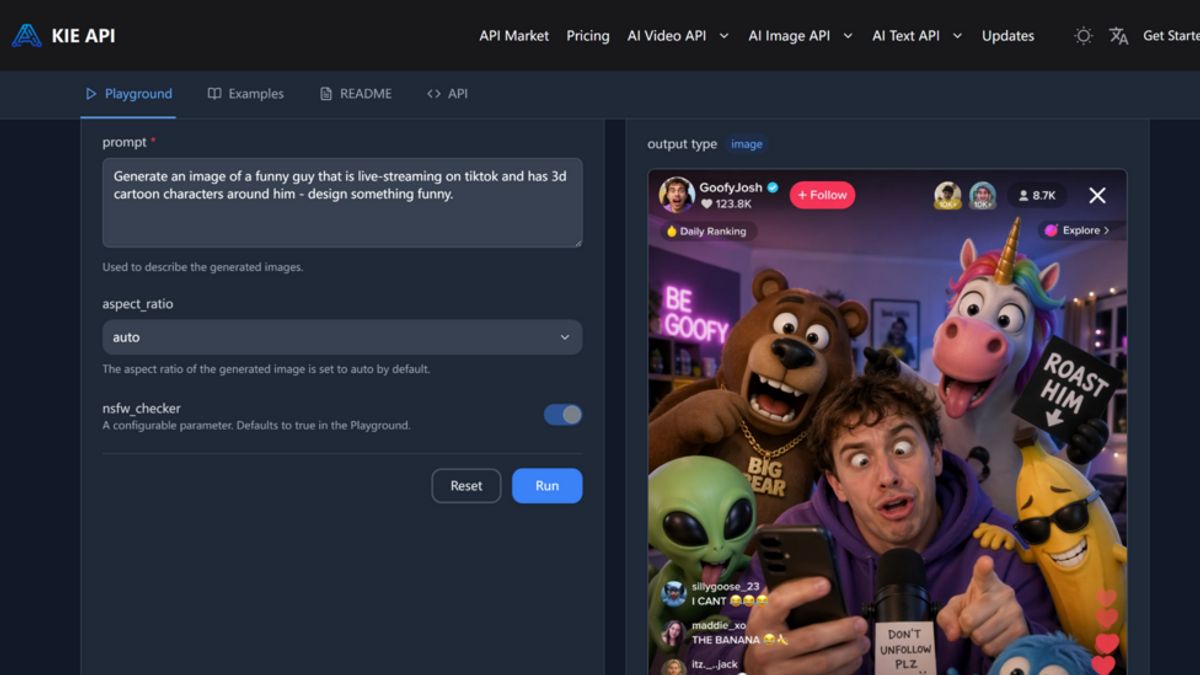


JAKARTA - The digital asset production pipeline is undergoing a fundamental shift toward programmatic automation. For engineering teams and platform developers, the challenge is no longer just generating a single visual, but building scalable, repeatable workflows. With the transition toward new generation models, the focus has moved to precision, reliability, and the ability to handle complex GPT Image 2.0 API integrations within existing enterprise infrastructures.
This guide provides a technical overview of how to integrate these capabilities into a professional production environment, emphasizing systematic implementation over manual creative processes.
Technical Advantages of the GPT Image 2 API
Before diving into the integration process, it is essential to understand the architectural improvements that make current generation APIs suitable for enterprise-level tasks.
Enhanced Semantic Alignment in ChatGPT Images 2.0 API
Modern frameworks mark a significant change in how models handle spatial coherence. Unlike earlier iterations that relied on broader semantic guesses, the ChatGPT Images 2.0 architecture better aligns visual output with multi-layered textual instructions. This reduces the frequency of artifacts and ensures that the generated assets meet professional standards.
Programmatic Consistency via API
The core advantage of an API-driven approach is the elimination of the "black box" nature of standard chat interfaces. By utilizing a dedicated GPT Image 2 API, developers can standardize the environment where parameters—such as resolution, aspect ratio, and seeds—are controlled via structured payloads. This ensures consistent output across high-volume requests.
Scalable Computational Efficiency
By offloading image generation to dedicated cloud environments, teams can maintain high-speed local application performance. This allows for concurrent processing of hundreds of visual assets without taxing internal hardware, a key benefit when deploying ChatGPT Images 2.0 API at scale.
Step-by-Step Implementation of GPT Image 2 API for Technical Teams
Integrating a high-performance image API into a team’s workflow requires a structured approach to request orchestration and task management.
Step 1: Initializing the Task Pipeline
The integration begins with the task creation endpoint. Developers must establish a secure connection to the backend service, typically involving a POST request to the designated job creation path. Authentication is managed through a secure token system in the request header, ensuring that all ChatGPT Images 2.0 API generation tasks are authenticated within a controlled CI/CD pipeline.
Step 2: Configuring Input Parameters and Specifications
To ensure the output meets specific design requirements, the request must be precisely structured. Within the input configuration, developers define the textual prompt, which supports extensive character limits for detailed scene description. Furthermore, the GPT Image 2 API allows for granular control over the physical properties of the output, such as selecting between various aspect ratios and resolution tiers ranging from standard definitions to high-clarity 4K outputs.
Step 3: Efficient Result Retrieval and Callbacks
For production environments, relying on manual status checks is inefficient. The system supports a callback mechanism where the API pushes completion notifications directly to a specified server URL. This asynchronous approach allows the ChatGPT Images 2.0 engine to process complex visual tasks while the client-side application remains free to handle other operations, only acting once the final asset is ready.
Real-World Applications of ChatGPT Images 2.0 for Engineering Teams
The primary value of API-driven generation is found in large-scale, automated environments:
Dynamic Content Infrastructure: Developers can build CMS plugins that leverage the GPT Image 2 API to automatically generate contextually relevant featured images for articles based on headline analysis.
Automated Marketing Engineering: Technical teams can integrate these capabilities into CRM systems to generate personalized visual content for massive user bases, leveraging the high-fidelity output of ChatGPT Images 2.0 API.
Prototyping at Scale: Engineering teams can use these tools to populate new layouts with thousands of unique, high-fidelity placeholders to test UI/UX responsiveness under different visual loads.
Conclusion
Integrating advanced image generation into a professional workflow is a strategic engineering decision aimed at increasing systemic efficiency. By leveraging the programmatic strengths of the GPT Image 2 API, development teams can move away from manual asset creation and toward a future of automated, intelligent visual production. As the ecosystem continues to mature, mastering the implementation of ChatGPT Images 2.0 API will remain a critical skill for building the next generation of digital infrastructure.
The English, Chinese, Japanese, Arabic, and French versions are automatically generated by the AI. So there may still be inaccuracies in translating, please always see Indonesian as our main language. (system supported by DigitalSiber.id)
Most Popular Tags
#Prabowo Subianto #donald trump #Febrie Adriansyah #8791 #giias 2026Popular


