
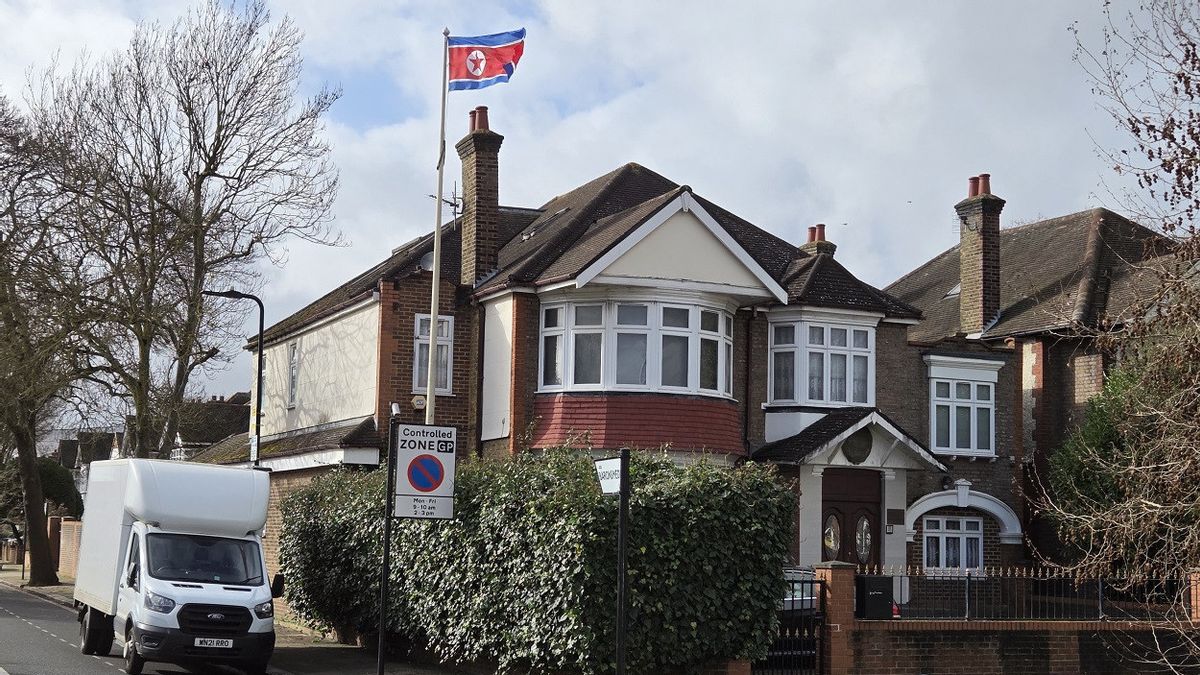


North Korea has carried out a change of a number of ambassadors who have served for a decade in various countries in a diplomatic overhaul, which analysts say is designed to project the image of a "normal country" and diversify its foreign relations beyond its heavy reliance on China and Russia.
The measures include a series of appointments announced in succession. On April 7, Pyongyang appointed Song Se-il as ambassador to Brazil, followed by Ji Kyoung-su to Belarus on April 12.
On April 18, Jo Yong-sam was appointed as Ambassador to Nigeria, then Hong Kwang-il was appointed as Ambassador to Indonesia and Mun Myong-sin to the United Kingdom on April 21.
Most recently, Kim Chol-hae was appointed as Ambassador to Sweden on Saturday.
The appointment in Great Britain is one of the most significant. Mun will take over a crucial strategic mission dealing with North Korea's relations with the West, replacing Choe Il, who has held the post since 2016.
Mun is reported to have served as the Second Secretary at the North Korean Embassy in London alongside Thae Yong-ho - a notorious defector to South Korea and former People's Power Party lawmaker, who was then serving as deputy ambassador at the British mission.
The reshuffle appears to be aimed at prioritizing North Korea's national interests and diversifying its diplomatic portfolio beyond its current heavy reliance on China and Russia.
Over the past few years, Pyongyang has moved quickly to normalize relations with its two most important partners while quietly maintaining ties with Southeast Asian countries.
North Korean leader Kim Jong Un hinted at a change in diplomacy in his speech to party members in March, which was later published on the Foreign Ministry's website on April 24.
"We must continue to improve and strengthen, from the perspective of development, relations with countries that have traditional friendly relations with us in accordance with the demands of the new era, and at the same time adjust and redefine diplomatic preferences and deftly translate them into practice by prioritizing our national interests based on the principle of ensuring medium- and long-term and strategic national interests," said Leader Kim according to the ministry, as reported by The Korea Times (27/4).
"We must get rid of diplomatic practices that have been adjusted to old standards and benchmarks in the past in order to be able to face rapidly changing situations and unpredictable geopolitical realities with full preparation and using tactics and methods of diplomatic external activities that are in line with the new status and prestige of the State," he said.
Meanwhile, analysts said the appointment reflected both the resumption of normal embassy activities post-pandemic and long-term strategic focus.
"It seems that North Korea is resuming embassy activities that were suspended due to the COVID-19 pandemic. It may be difficult to actively expand relations, but they will seek external activities as a normal country under a global multipolar system," said Kim Jong-won, a researcher at the National Security Strategy Institute.
He added that Pyongyang was seeking to broaden its diplomatic options at a time when it had severed ties with Seoul and faced uncertainty in its relations with Beijing and Moscow.
Kim believes North Korea excels at risky diplomacy and will likely pursue its foreign policy in the same opportunistic way, as it did with non-bloc countries during the Cold War.
Meanwhile, Yang Moo-jin, a professor and former president of the University of North Korean Studies, sees these measures as rooted in North Korea's confidence as a nuclear-armed state.
"More broadly, North Korea's diplomatic efforts are based on the confidence to see itself as a nuclear-armed state and aim to achieve its ambition to be treated as a normal country. This also indicates that Pyongyang is willing to cooperate with any country that respects its regime and its value system," said Yang.
The English, Chinese, Japanese, Arabic, and French versions are automatically generated by the AI. So there may still be inaccuracies in translating, please always see Indonesian as our main language. (system supported by DigitalSiber.id)
Most Popular Tags
#Prabowo Subianto #donald trump #Febrie Adriansyah #8791 #giias 2026Popular


