

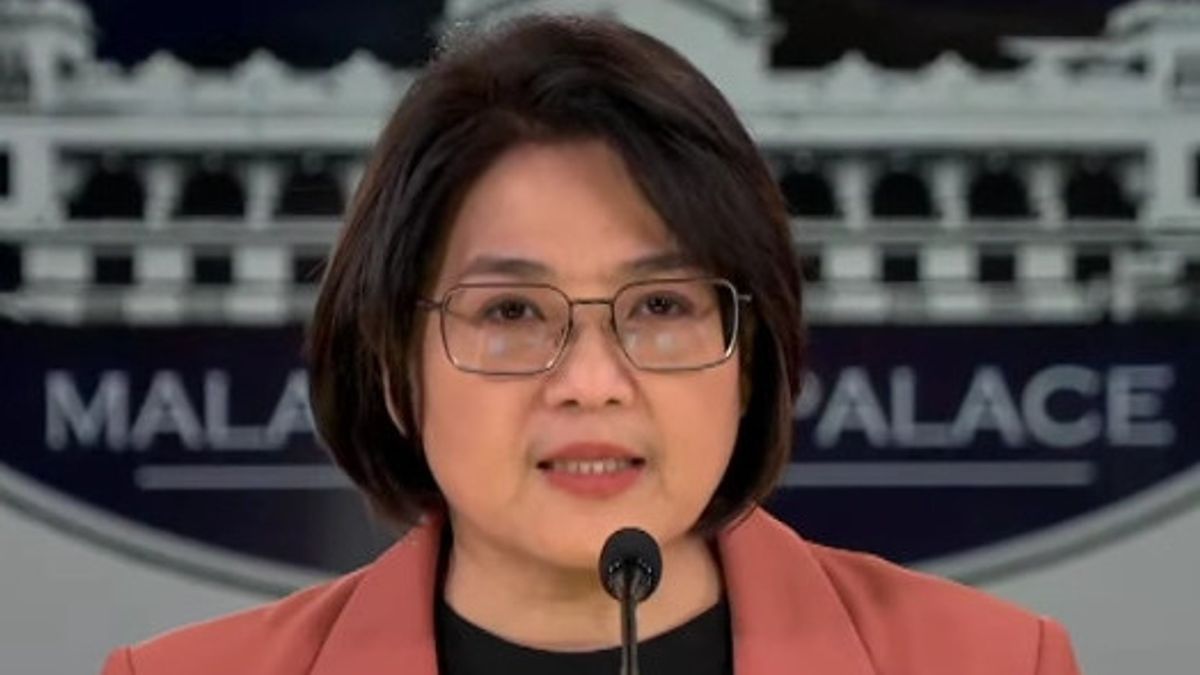


JAKARTA - The failure of the ceasefire negotiations between the United States and Iran has begun to trigger concerns in the Philippines. According to a report by the Philippine News Agency (PNA) quoted on Monday, April 13, the Malacanang Palace assessed that the development was not good news because it could prolong tensions in the Middle East and have an impact on the supply and price of world oil.
Palace Press Spokesperson Claire Castro said the Philippines hoped the conflict in the region would really stop. "This is not good news because what we want is a permanent cessation of conflict in the Middle East," Castro said Monday.
US-Iranian negotiations reportedly failed after high-level negotiations in Pakistan. The failure has made the chances of a quick de-escalation in one of the most important energy regions in the world shrinking.
For the Philippines, the impact can be felt immediately, especially on oil prices. The country is a net oil importer, so that prolonged turmoil in the Middle East could also affect petroleum products in the country. Castro said that if this situation continues, the impact will still be felt in the energy sector. "If this continues, it will certainly affect petroleum products," he said.
In the midst of this situation, Malacañang said the Philippines remained in a "non-hostile" position with Iran. This attitude is considered to help reduce the potential for disruption.
According to PNA, this development will be discussed in the next meeting of the Committee for a Unified Package for Livelihoods, Industry, Food, and Transport, the agency leading the Philippine government's response to the energy crisis due to global turmoil.
The English, Chinese, Japanese, Arabic, and French versions are automatically generated by the AI. So there may still be inaccuracies in translating, please always see Indonesian as our main language. (system supported by DigitalSiber.id)
Most Popular Tags
#Prabowo Subianto #donald trump #2026 World Cup #Febrie Adriansyah #8791Popular


