



JAKARTA - The Chinese Foreign Ministry explained the reason for the veto against the draft resolution of the UN Security Council regarding the Strait of Hormuz submitted by Bahrain, by assessing that the move risked triggering an escalation of the conflict.
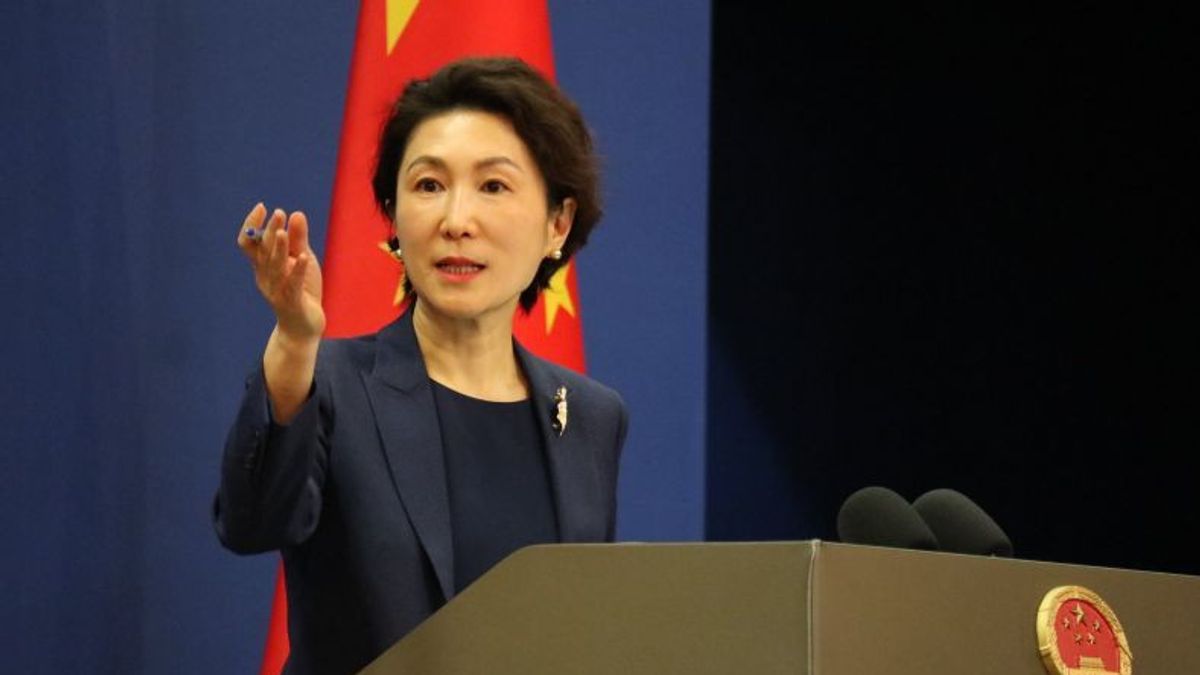
"The main cause of the disruption in the Strait of Hormuz is the illegal military operations of the US and Israel against Iran. The Council's actions should not legitimize the use of force, let alone complicate the situation," said Chinese Foreign Ministry Spokesperson Mao Ning at a press conference in Beijing, Wednesday, April 8. reported by ANTARA.
Russia and China vetoed the draft resolution in Tuesday's vote (7/4). A total of 11 UN Security Council members supported, two rejected, and two abstained, including Pakistan, which served as a mediator between the US and Iran.
The draft resolution was proposed by Bahrain with the support of Gulf countries and the US, and has undergone at least five revisions before being submitted.
The redaction of the draft was also softened, from originally allowing the use of offensive force to only defensive measures to open shipping lanes. Bahrain is the only Arab League member in the UN Security Council and holds the presidency of the Council this month.
"China insists that the sovereignty, security, and territorial integrity of the Gulf countries must be fully respected, and the safety of shipping lanes and energy infrastructure must be maintained," said Mao Ning.
According to him, the fundamental solution to ensure the safety of navigation in the Strait of Hormuz is to immediately end the conflict.
"The Council's actions must de-escalate the situation, not provide a legal basis for illegitimate military operations," he said.
Mao said China's position in the vote was objective and impartial, and would be judged by history.
He added that China and Russia had circulated a counter-resolution draft that emphasized de-escalation, dialogue, and respect for freedom of navigation.
According to Mao, the draft also reflects the aspirations of the international community.
"China is ready to work with all parties to promote de-escalation and restore stability in the Strait of Hormuz and the Middle East region," he said.
He also assessed that the current global energy crisis was triggered by the Iran conflict, while stressing China's rejection of unilateral sanctions that have no international legal basis.
"The Strait of Hormuz is a vital global trade route. Maintaining its stability is a common interest," he said.
Iran is known to restrict oil transit since the conflict with the US and Israel broke out on February 28, 2026, triggering a surge in global energy prices.
Iran's parliament also approved draft rules that include transit fees in the rial currency, a ban on US and Israeli ships, and restrictions on countries imposing sanctions on Iran.
The English, Chinese, Japanese, Arabic, and French versions are automatically generated by the AI. So there may still be inaccuracies in translating, please always see Indonesian as our main language. (system supported by DigitalSiber.id)
Most Popular Tags
#Prabowo Subianto #donald trump #2026 World Cup #Febrie Adriansyah #8791Popular


