
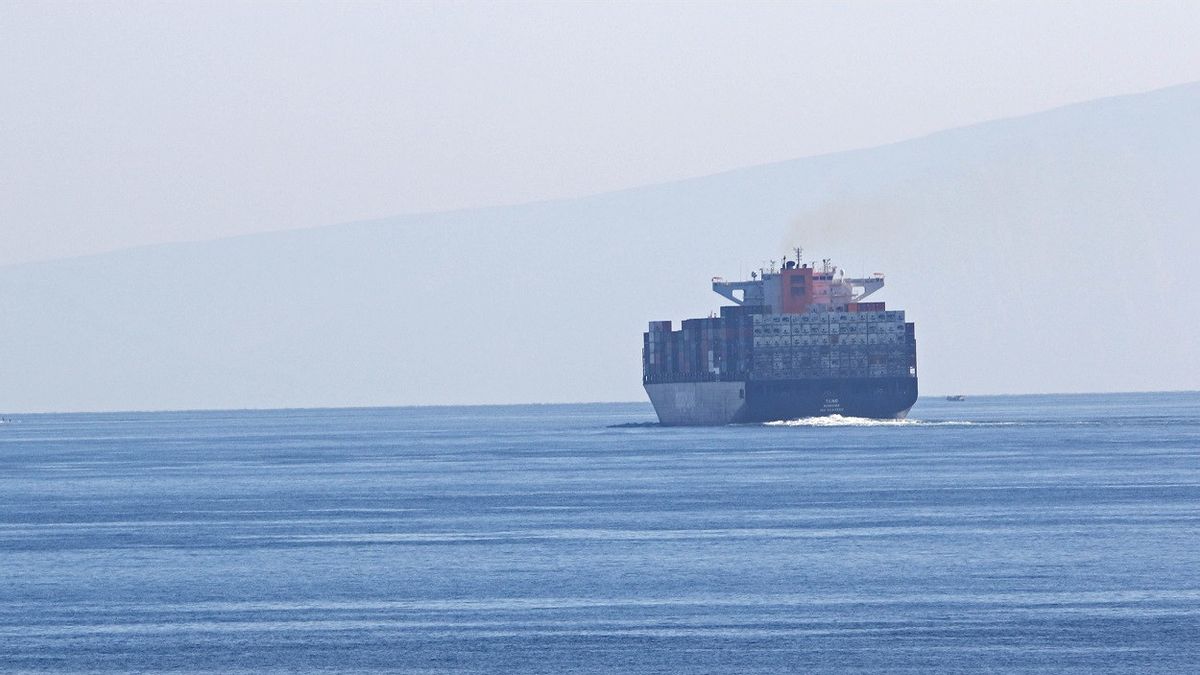


JAKARTA - Foreign Minister Abbas Araghchi said Iran is ready to negotiate with countries that want their ships to cross the Strait of Hormuz safely.
The Strait of Hormuz connects the Arabian Gulf with the Gulf of Oman for ships that want to travel to the Arabian Sea or Indian Ocean.
The strait, which is part of the world's oil and gas supply traffic, has been affected by the escalation in the Middle East.
Speaking on CBS's "Face The Nation" aired Sunday, Foreign Minister Araghchi said Iran was ready to talk to countries that wanted to negotiate so that certain oil tankers could pass through the Strait of Hormuz's main export route.
"I can't mention any specific country, but we have been approached by a number of countries who want to have safe lanes for their ships," he explained, launching Arab News from AFP (16/3).
On Saturday, Foreign Minister Araghchi said the Strait of Hormuz remained open except for the United States, Iran and its allies.
"The Strait of Hormuz is open. The strait is only closed to tankers and ships belonging to our enemies, to those who attack us and their allies. The others are free to pass," Foreign Minister Araghchi told broadcaster MS Now.
It is known that tensions have increased in the Middle East, following the attacks by the United States and Israel on Iran on February 28, which Tehran said killed more than 1,300 people, including Ali Khamenei, the former supreme leader, and more than 150 students.
Since then, Iran has launched drone and missile attacks targeting Israel, Jordan, Iraq, and Gulf states hosting US military assets.
Tehran has also effectively tightened the Strait of Hormuz since March 1. This narrow waterway transports around 20 million barrels of oil per day and about 20 percent of global liquefied natural gas trade.
Most recently, the new Supreme Leader of Iran, Mojtaba Khamenei, in a statement read by a presenter on state television on Thursday said Iranian forces must keep the strategic Strait of Hormuz closed, as quoted by Al Arabiya and AFP.
The English, Chinese, Japanese, Arabic, and French versions are automatically generated by the AI. So there may still be inaccuracies in translating, please always see Indonesian as our main language. (system supported by DigitalSiber.id)
Most Popular Tags
#Prabowo Subianto #donald trump #2026 World Cup #Febrie Adriansyah #8791Popular


