



European countries are still divided in their response to the US-Israeli attack on Iran amid pressure from the United States for its allies to support the military operation.
A number of members of the European Union (EU) and the United Kingdom have called for respect for international law and de-escalation. However, they do not yet have a unified strategy as the crisis in the Middle East deepens and potentially has global implications.
On Wednesday, March 4, White House Press Secretary Karoline Leavitt said US President Donald Trump expects "all European allies" to support the US and Israel.
Trump publicly criticized the doubts of a number of European governments and mocked British Prime Minister Keir Starmer after London refused to support the attack.
"This is not the Winston Churchill we're dealing with," Trump said, referring to Starmer's stance that Britain does not support "regime change from the sky."
EU pushes for diplomacy
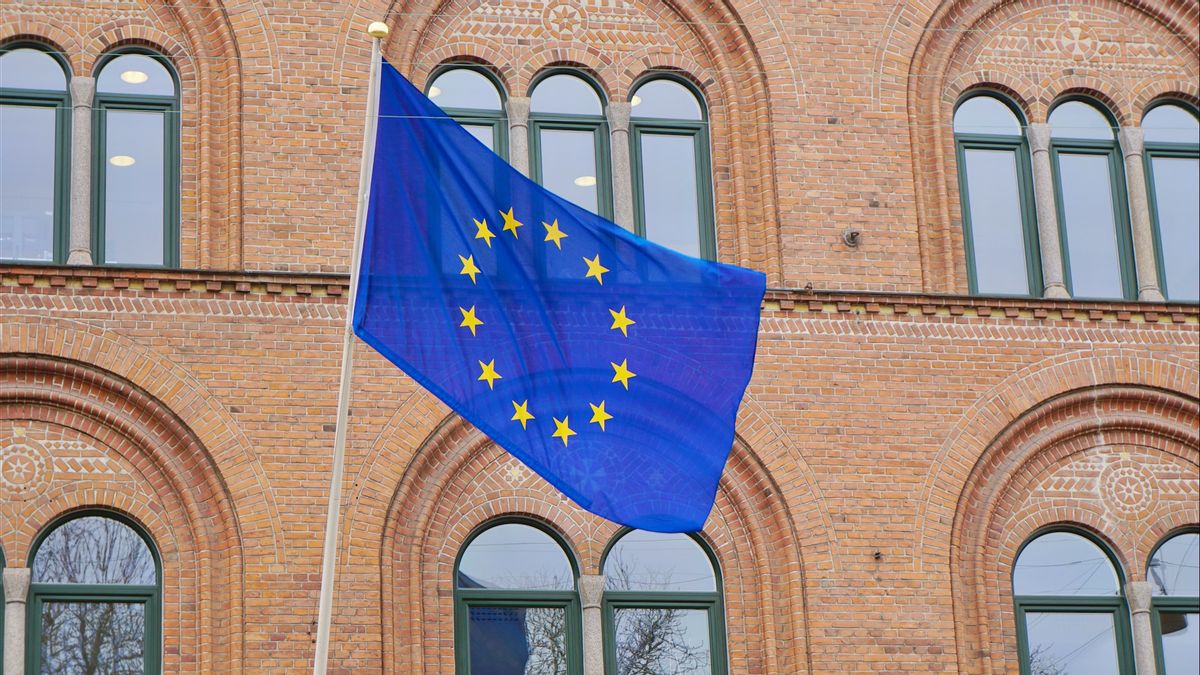
Based on the Anadolu report quoted via Antara, the EU called for self-restraint and increased diplomatic efforts to prevent further escalation in the Middle East and warned that a prolonged war could have serious global consequences.
The EU foreign ministers (ministers) held an emergency conference via video after the outbreak of hostilities to assess the situation in Iran and the surrounding region. In a joint statement, the bloc expressed "deep concern" and called for maximum restraint from all parties.
A European Commission spokesman said the EU would continue to support a diplomatic solution to prevent Iran from obtaining nuclear weapons.
The bloc also stressed the importance of protecting civilians and respecting international law, including the UN Charter and international humanitarian law.
EU Foreign Policy Chief Kaja Kallas warned that the escalating crisis reflected a weakening respect for international law.
"Without restoring international law and accountability, we will continue to witness lawlessness, disruption, and chaos," he said.
England take cautious stance
Britain adopted a cautious approach by combining criticism of Iran and calls for diplomacy.
Starmer defended the decision not to take part in the attack by saying the best solution was "a negotiated deal with Iran, where they give up their nuclear ambitions."
Britain had restricted the use of the Diego Garcia base by the US, but later allowed the facility to be used to support regional defense and Israeli security.
Britain has also increased its defensive military presence in the region by deploying additional Typhoon fighter jets to Qatar.
France stresses international law
French President Emmanuel Macron warned that military action outside international law could undermine global stability and called for an emergency discussion at the UN Security Council.
Paris is seeking to avoid direct confrontation with Washington, but has condemned Iran's retaliatory attacks.
France has allowed the temporary presence of US aircraft at a number of bases with the assurance that the aircraft will not be used to attack Iran and only support regional defense operations.
France has also deployed the aircraft carrier Charles de Gaulle and other military assets to the region to protect its interests, including a base in Abu Dhabi.
Dutch Prime Minister Rob Jetten also acknowledged the threat posed by Iran to regional security, but assessed that the US and Israeli attacks on Iran were not in line with international law.
Germany more in line with the US
German Chancellor Friedrich Merz described Iran as the main security threat and said decades of sanctions and failed diplomacy had failed to stop Tehran's destabilizing activities.
During his visit to the White House this week, Trump praised Merz as "a very good leader," while highlighting Berlin's decision to allow US troops to use Ramstein Air Base in Germany.
Merz said Western governments had a shared interest in preventing Iran from acquiring nuclear weapons, but warned of the risk of a protracted conflict.
"Endless war is not in our interest," Merz said, adding that the collapse of the Iranian state could have far-reaching consequences for Europe, including on energy supplies, security, and migration.
Spain criticises attack
Spanish Prime Minister Pedro Sánchez called the attack on Iran an "extraordinary mistake" and warned that the conflict could threaten global stability.
Madrid also refused to allow US forces to use air and sea bases in Spain to launch an attack on Iran. The decision triggered sharp criticism from Trump who threatened to sever trade relations with Spain.
Sanchez defended the decision by saying the alliance should make room for differences of opinion.
"We will not take a stance that goes against our values and principles because we are afraid of retaliation from the other side. We say 'no' to war," he said.
Italy highlights legal aspects
Italian Defense Minister Guido Crosetto said the US and Israeli military operations were "outside the rules of international law" and warned that the situation in the region could worsen.
Foreign Minister Antonio Tajani stressed that Italy was not at war and urged diplomacy to prevent a wider regional conflict.
PM Giorgia Meloni also warned the conflict could have "completely unpredictable consequences."
Eastern Europe supports the US
In contrast, a number of Eastern European countries have provided more explicit political support for the US-led operation.
Polish President Karol Nawrocki assessed Iran's actions as threatening international stability, although Poland confirmed that it was not directly involved in the military campaign.
Polish Defense Minister Władysław Kosiniak-Kamysz said Warsaw did not receive a request to participate in the US operation against Iran.
Czech Republic Prime Minister Petr Fiala called Iran's nuclear program a serious threat to international security and assessed that the US attack on three Iranian nuclear facilities could be understood as an attempt to prevent the development of nuclear weapons.
He also expressed optimism that the attack could push Iran back to the negotiating table and pave the way for de-escalation in the region.
The English, Chinese, Japanese, Arabic, and French versions are automatically generated by the AI. So there may still be inaccuracies in translating, please always see Indonesian as our main language. (system supported by DigitalSiber.id)
Most Popular Tags
#Prabowo Subianto #donald trump #firearm #8791 #giias 2026Popular


