


JAKARTA - Iran said it expects progress in a framework to restart nuclear talks with the United States.
Tehran said on Monday it was studying several diplomatic processes proposed by countries in the region to ease tensions with Washington, adding it expected a framework for talks in the coming days.
The announcement came as Tehran and Washington appeared to back down from threats of military action.
Previously, US President Donald Trump sent warships to the Middle East after Iran took firm action in dealing with the protests that followed the riots in January, but then he called on Tehran to make a deal to continue talks on its nuclear program, which was suspended in June when Iran was attacked by the US and Israel.
On Sunday, President Trump said the US was talking to Iran.
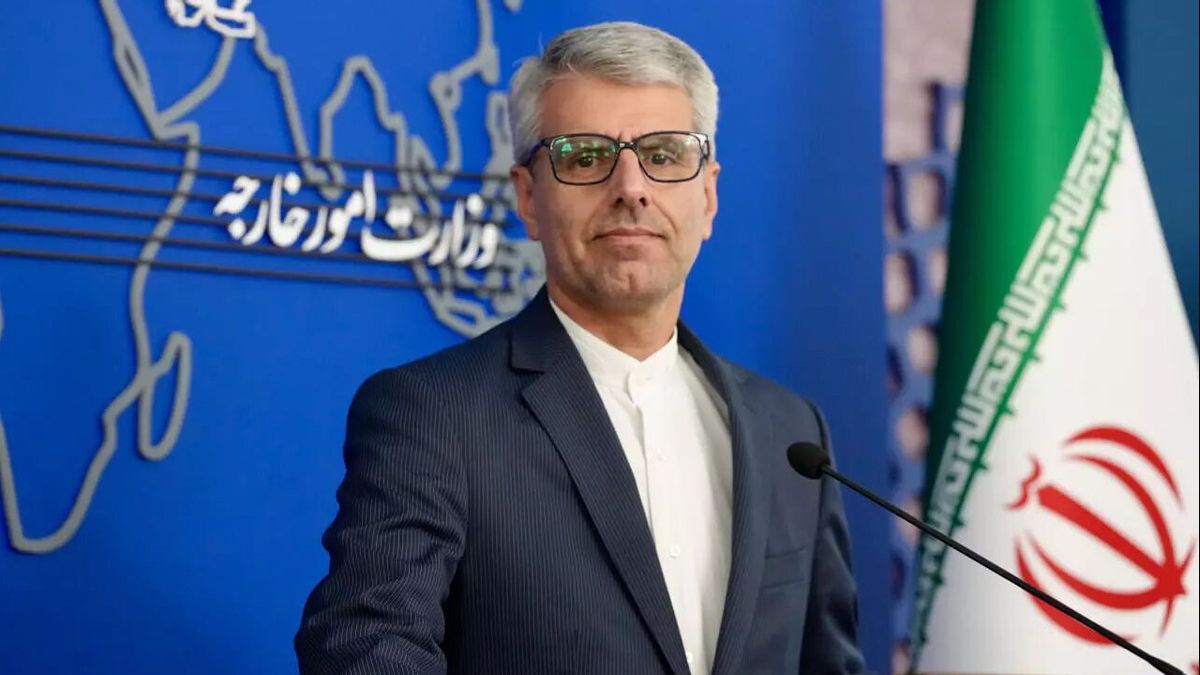
Tehran's Foreign Ministry spokesman, Esmaeil Baghaei, confirmed that indirect negotiations were underway.
"The countries in the region act as mediators in the exchange of messages," he said on Monday without giving details about the content of the negotiations, quoted by Al Jazeera (3/2).
"Several points have been discussed, and we are examining and finalizing the details of each stage in the diplomatic process, which we hope will be completed in the coming days," he added.
State news agency IRNA reported that Foreign Minister Abbas Araghchi had made phone calls to Saudi Arabia, Egypt, and Turkey to discuss the latest developments.
Then, the Fars news agency quoted an anonymous source as saying President Masoud Pezeshkian had ordered the resumption of nuclear talks.
"Iran and the United States will hold talks on the nuclear issue," Fars reported without specifying a date.
The report was also carried by Iran's state-run newspaper and reformist daily Shargh.
Foreign Minister Araghchi himself is scheduled to meet with US envoy Steve Witkoff for negotiations in this context, Iran's Tasnim news agency also reported on Monday.
President Trump threatened Iran after mass protests there that killed thousands of people in January. The demonstrations, sparked by economic hardships and the collapse of the country's currency, turned into a direct challenge to the government.
However, President Trump's approach has since turned to demands for a nuclear deal as the US and the EU are concerned that Iran is trying to develop nuclear weapons. Meanwhile, Tehran insists that its program is purely civilian.
Although Iran on Monday signaled they were closer to agreeing to reopen talks, it is understood that the US has set some conditions.
Iranian sources told Reuters that in order for the talks to continue, President Trump demanded that Iran agree to end uranium enrichment, reduce its missile program and stop supporting its allied armed groups network in the region.
In the past, Iran has shown flexibility in discussing nuclear issues, but missiles and regional allies have long been considered non-negotiable.
It is unclear whether Iran will change its position now as the country desperately needs the lifting of sanctions, to boost its economy and prevent future unrest.
The English, Chinese, Japanese, Arabic, and French versions are automatically generated by the AI. So there may still be inaccuracies in translating, please always see Indonesian as our main language. (system supported by DigitalSiber.id)
Popular


