
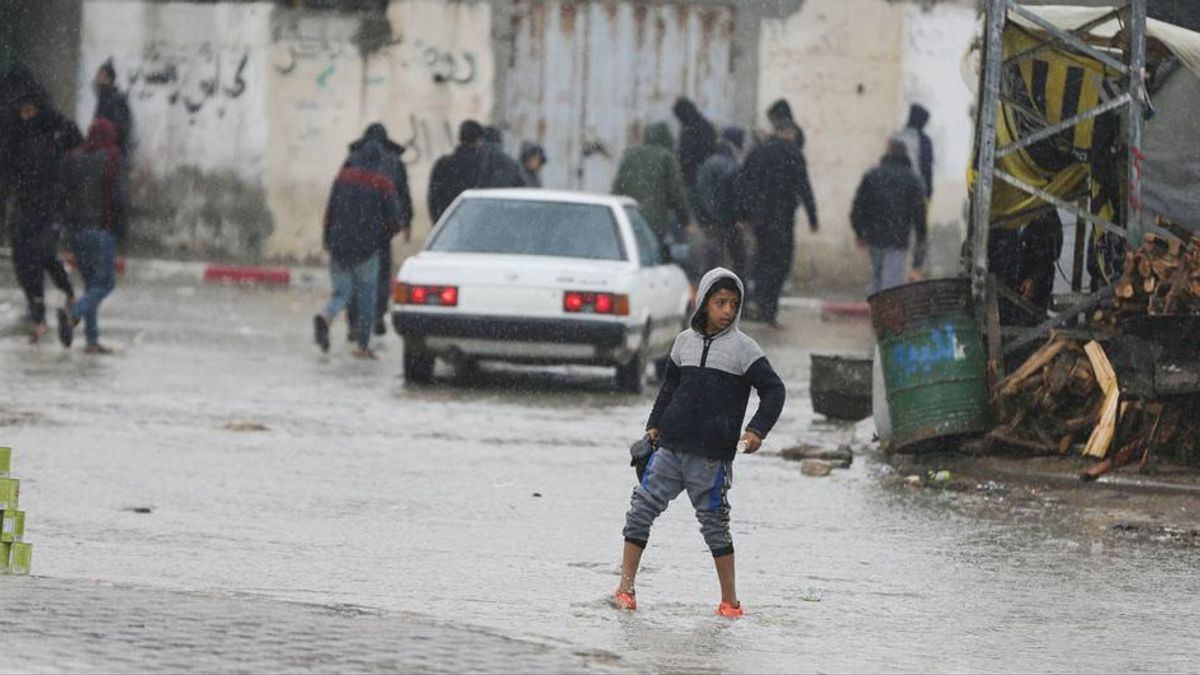


JAKARTA - The destruction and suffering caused by heavy rains and storms that hit Gaza are the predictable consequences of the genocide that Israel continues to commit and is a "tragedy that is entirely preventable," said Amnesty International.
In a statement Wednesday, the international rights group said the horrific scenes of flooded tents and collapsed buildings in Gaza that have emerged in recent days "cannot be entirely blamed on bad weather."
"These are the predictable consequences of the ongoing genocide carried out by Israel and the deliberate policy of obstructing the entry of shelters and repair materials for refugees," said Amnesty International's Senior Director for Research, Advocacy, Policy and Campaigns Erika Guevara Rosas, launching Anadolu (18/12).
Underlining how Israel only allows a very limited supply to reach the population in the area, the statement said this was further indication that the Israeli authorities continue "deliberately to impose on the Palestinian people in Gaza living conditions designed to cause their physical destruction - an act prohibited under the Genocide Convention."
"The destruction and death caused by the storm in Gaza is another warning to the international community, which is paid with the lives of people who have managed to survive the two years of genocide that Israel continues to carry out," Rosas said.
Furthermore, he called on the international community to immediately allow Gaza to prepare for the harsh winter conditions, urging Israel to end the blockade on Gaza and lift all restrictions on the entry of life-saving supplies, including materials for housing, nutritious food, and medical aid.
The statement stressed that after several evacuations, destruction or damage to at least 81 percent of buildings, and the designation of almost 58 percent of the total area of Gaza as a prohibited zone, most Palestinians now live in dilapidated tents or damaged shelters.
"I still can't accept the fact that we survived the bombing just for my children to die in the storm," said Mohammed Nassar, father of Lina and Ghazi, who died after their severely damaged house collapsed, as quoted in the statement.
Lina (18) and Ghazi (15) died when their severely damaged home in Sheikh Radwan collapsed on December 12 after the storm.
Earlier, the United Nations Relief and Works Agency for Palestine Refugees (UNRWA) on Wednesday warned that Cyclone Byron had further exacerbated the already dire living conditions for thousands of refugees in the Gaza Strip, many of whom are sheltering in tents or damaged buildings.
Since last week, thousands of tents that housed survivors of the Israeli war have turned into puddles, soaking beds, clothes and food supplies, leaving hundreds of Palestinian families exposed to the cold without warmth or shelter.
The Gaza Strip, according to the media office, needs about 300,000 tents and prefabricated housing units to meet the most basic housing needs for Palestinians after the destruction of the region's infrastructure as a result of Israeli attacks over the past two years.
The English, Chinese, Japanese, Arabic, and French versions are automatically generated by the AI. So there may still be inaccuracies in translating, please always see Indonesian as our main language. (system supported by DigitalSiber.id)
Most Popular Tags
#Prabowo Subianto #donald trump #Febrie Adriansyah #8791 #giias 2026Popular


