
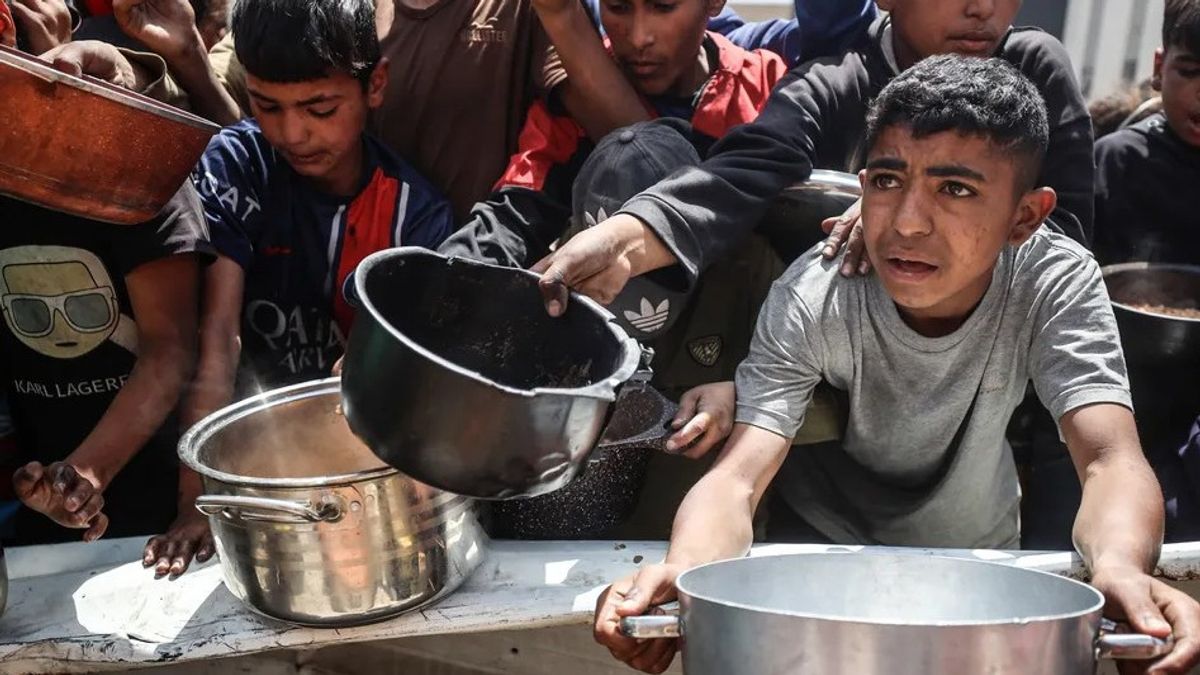


JAKARTA - The UN children's agency said on Tuesday thousands of children in the Gaza Strip, Palestine, were being treated for acute malnutrition since the ceasefire last October, which should have allowed a major increase in humanitarian aid.
UNICEF, Gaza's largest malnourished service provider, said some 9,300 children were treated for severe acute malnutrition in October, when the first phase of the agreement to end the two-year Israeli-Hamas war came into effect.
Although this number fell from its peak of more than 14,000 in August, the number was still much higher than the February-March brief ceasefire and showed that the flow of aid was still insufficient, UNICEF spokesman Tess Ingram said at a press conference in Geneva via video link from Gaza.
"The number is still very high," he said, according to Al Arabiya from Reuters (9/12).
"The number of children being treated is five times higher than in February, so we need to see the number continues to decline," he said.
Ingram described a meeting with thin babies weighing less than 1 kilogram born in hospital "but their small chest is crammed into trying to stay alive."
UNICEF was able to import more aid into the enclave than before the October 10 agreement, but obstacles remain, he said, citing delays and cargo rejection at crossings, route closures, to ongoing security challenges.
"We've seen some improvements, but we continue to call for all available crossings to the Gaza Strip to be opened," explained Ingram.
There is not enough commercial supply to enter Gaza, he added, adding that the price of meat is still very expensive, around 20 US dollars per kilogram.
SEE ALSO:
-
 | BERITA
Presiden Putin Tidak Ingin Memulihkan Uni Soviet dan Menyerang Negara Anggota NATO
09 Desember 2025, 21:15 -
 | BERITA
Pesawat Militer China dan Rusia Masuki Zona Pertahanan Udara, Korsel Kerahkan Jet Tempur
09 Desember 2025, 19:51 -
 | BERITA
Ada Penyelidikan Korupsi, Perusahaan Pertahanan Israel Ditangguhkan dari Tender NATO
09 Desember 2025, 17:00


"Most families cannot access it, and that's why we still see the high number of malnutrition," he said.
Earlier, UN-backed hunger monitors in August established hunger conditions affected about half a million people - or a quarter of Gaza's population.
Children were severely affected by hunger during the war, and experts warn that the impact could cause long-term damage.
The English, Chinese, Japanese, Arabic, and French versions are automatically generated by the AI. So there may still be inaccuracies in translating, please always see Indonesian as our main language. (system supported by DigitalSiber.id)
Popular


