
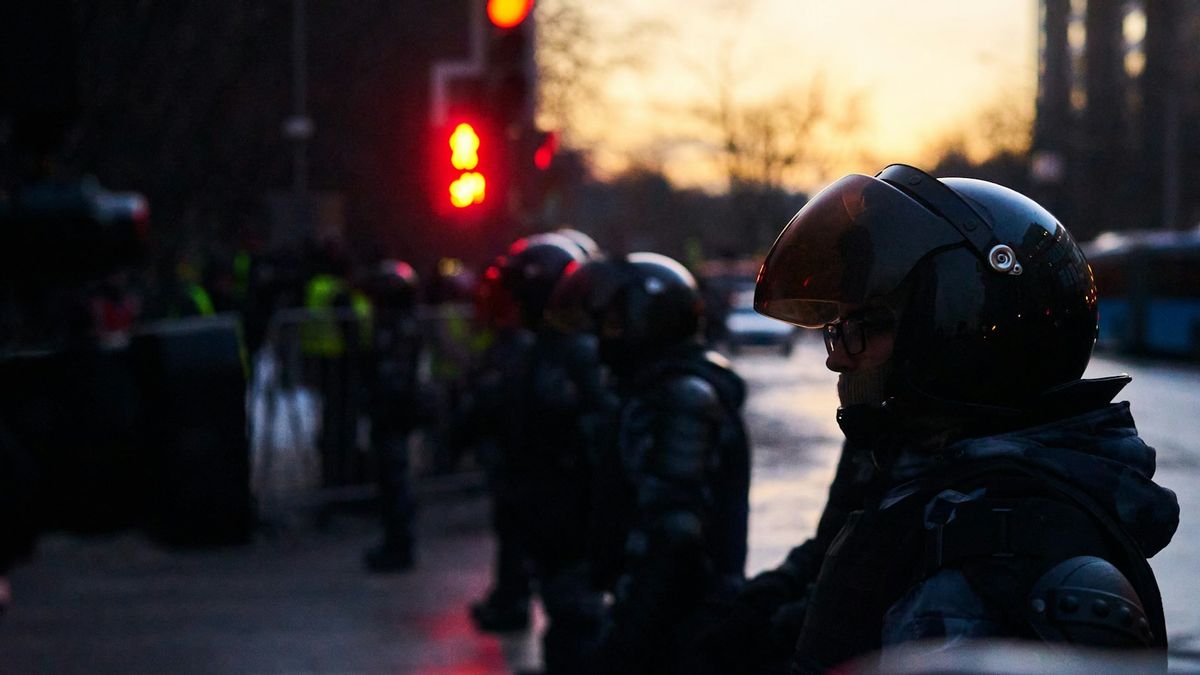


JAKARTA - The riots in Nepal for two consecutive days were triggered by a clash of gen Z masses with the United Lennis Marxist (CPN-UML), Nepal's Communist Party led by former Prime Minister KP Sharma Oli which was ousted in September.
The two masses of different calls held a demonstration in Simara on Wednesday. Clashes then broke out, including at a number of points near the airport, prompting authorities to impose curfews.
Nepal Police Spokesman Abi Narayan Kafle confirmed the situation in Nepal is currently conducive, including in Simara which is located about 100 kilometers south of Katmandu.
"The situation is normal," he said on Thursday, November 20, quoted from AFP.
The two different masses also clashed the day before, Tuesday, November 18.
After the first day of chaos, Nepalese Prime Minister Susila Karki held a meeting with more than 110 top party officials in Nepal on Wednesday.
He also asked all elements to refrain from maintaining security and conduciveness so that the wheels of the economy continue to run.
Karki also asked all parties to trust the democratic process ahead of the general election scheduled for March 5, 2026.
"We want this country to be in the hands of a new generation and managed by people who have vision," he said at the meeting.
Nepal was hit by a massive demonstration led by gen Z during the reign of Prime Minister (PM) KP Sharma Oli.
The demonstration was triggered by PM Sharma Oli's policy which was considered arbitrarily unfavorable to the wider community.
In addition to dissatisfaction with the government, the habit of many acting children in Nepal is also in the spotlight in the demonstration because they often show off their luxurious lives in the midst of the difficult economy of the Nepalese people.
The demonstration then led to the destruction of many government buildings, houses of officials, and detained powerful politicians being paraded together.
The emergence of the mass demonstration became increasingly unstoppable after the government blocked a number of social media. The government's decision is considered by the public, especially gen Z, as an attempt to silence so that demonstrations do not spread.
As a result of the state that is far from conducive, Sharma Oli decided to resign from his position as Prime Minister of Nepal. He then fled by military helicopter.
In the midst of a complicated situation, a military emergency was imposed. Nepal's military then took power over the government on Tuesday 9 September 2025.
SEE ALSO:
-
 | BERITA
Eks PM Nepal Oli Perdana Buka Suara Usai Digulingkan Rakyatnya, Bicara 73 Demonstran Tewas
19 September 2025, 19:41 -
 | BERITA
Soal Teroris Targetkan DPR, Komisi III: Keamanan Gedung Parlemen Sudah Cukup Maksimal
19 November 2025, 16:11 -
 | BERITA
KPK Sita Rumah, Mobil Mazda CX-3 hingga Vespa Terkait Korupsi Kuota Haji
19 November 2025, 16:51 -
 | BERITA
Junta Myanmar Gerebek Markas Scam Online di Perbatasan Thailand, 10 Ribu Ponsel Disita
19 November 2025, 14:51 -
 | BERITA
Resmikan RS Hibah UEA di Surakarta, Prabowo Minta Masyarakat Tak Berobat ke Luar Negeri
19 November 2025, 13:57 -
 | BERITA
Kebakaran Permukiman di Jepang: 170 Orang Mengungsi, Lansia 70 Tahun Hilang
19 November 2025, 13:33
The English, Chinese, Japanese, Arabic, and French versions are automatically generated by the AI. So there may still be inaccuracies in translating, please always see Indonesian as our main language. (system supported by DigitalSiber.id)
Most Popular Tags
#Prabowo Subianto #donald trump #firearm #8791 #giias 2026Popular


