
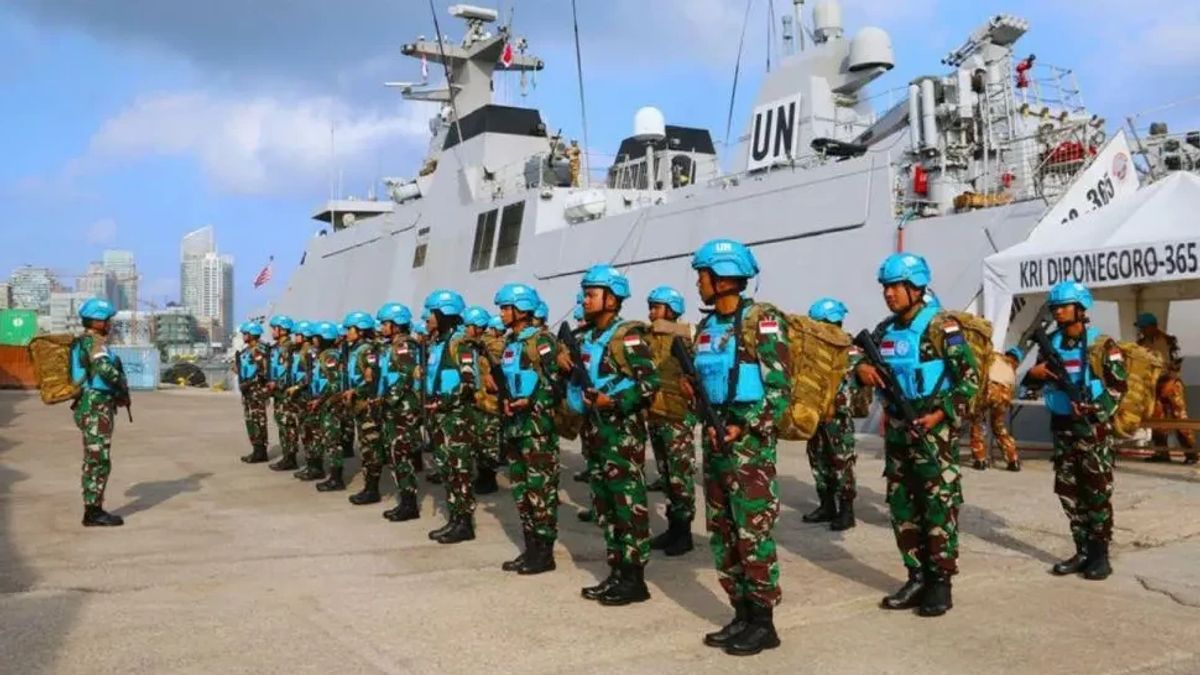


JAKARTA - The United Nations (UN) will cut 25 percent of peacekeeping troops and operations in many countries in response to US funding restrictions for the United Nations.
A senior UN official told AP on Thursday, October 9, the cuts forced thousands of world peacekeepers back to the barracks in the next few months.
The official, speaking on condition of anonymity in a closed meeting, said this was following the US as the largest donor of the United Nations, making changes to align with President Donald Trump's "America First" vision.
About 13,000-14,000 military and police personnel from more than 50,000 peacekeepers stationed on nine global missions will be repatriated to their home countries. The UN support office in Somalia was also affected.
As for the budget, the United Nations plans to reduce about 15 percent for this year.
The countries occupied by the United Nations world peacekeeping forces include Congo, the Republic of Central Africa, South Sudan, Lebanon, Cyprus, and Kosovo.
In its rules, each of the 193 UN member states is legally required to pay "receivables" for peace maintenance.
SEE ALSO:
-
 | BERITA
UU APBN Sudah Disahkan, Pramono Ragu Pemangkasan Dana Transfer ke Daerah Bisa Dibatalkan
08 Oktober 2025, 19:06 -
 | BERITA
Ukraina Rajin Serang Infrastruktur Energi-BBM Rusia, Begini Efek Jangka Panjangnya?
08 Oktober 2025, 14:22

According to UN Secretary-General Antonio Guterres, a budget "representing a fraction of the world peacekeeper's spending about half a percent UN peacekeeping remains one of the most effective and cost-effective tools to build international peace and security."
The massive reshuffle of the UN world peacekeeping force, known for its blue berets and helmets, came after Guterres met representatives from major UN donor countries, including the new US ambassador to the United Nations, Mike Waltz.
Waltz and other Trump administration officials assessed that the budget and posture of UN agencies were swelling and excessive. He stressed that the US did not make further contributions until the US State Department conducted an assessment of the effectiveness of each UN agency or program.
As is known, entering its second term of rule of the US in January 2025, Trump instructed a review of the United Nations and other multilateral institutions, which has resulted in the termination of US relations with UN cultural bodies UNESCO, the World Health Organization (WHO), and efforts to review its funding for other institutions.
The English, Chinese, Japanese, Arabic, and French versions are automatically generated by the AI. So there may still be inaccuracies in translating, please always see Indonesian as our main language. (system supported by DigitalSiber.id)
Most Popular Tags
#Prabowo Subianto #donald trump #Febrie Adriansyah #8791 #giias 2026Popular


