

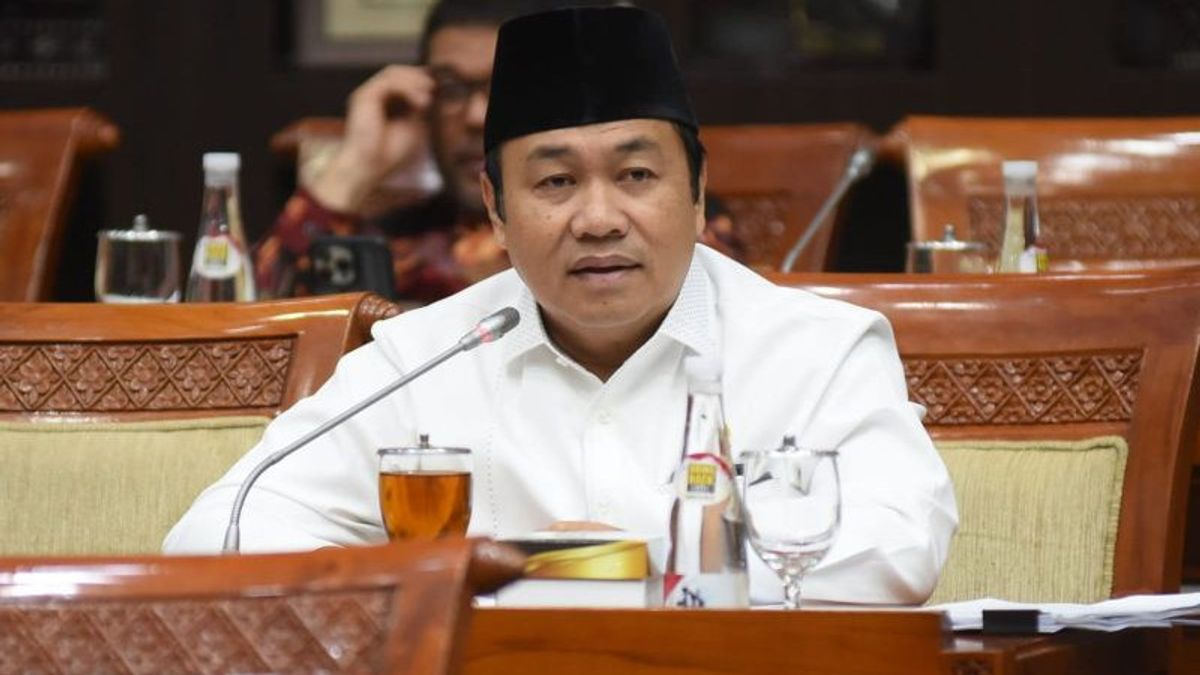


Member of Commission XII DPR RI Yulisman urged the Ministry of Environment (KLH) to immediately strengthen the management of oil and gas, mining, and oil palm plantation waste along with its derivatives, especially hazardous and toxic waste (B3).
Yulisman explained that Indonesia's 2024 Environmental Statistics data recorded that the oil and gas, mining and oil palm sectors produced 58.52 million tons of B3 waste throughout 2023 from 1,362 companies.
Of the total, only 53.72 million tons were managed, leaving around 4.8 million tons of waste that could potentially pollute the environment and disrupt public health.
"This data cannot be ignored. KLH must lead the national integration of oil and gas waste management, mining, palm oil and its derivatives. This is not just a regional technical issue, but a strategic agenda to protect our industrial environment, health, and competitiveness," said Yulisman in Jakarta, Wednesday, September 17.
According to Yulisman, oil and gas, mining and palm oil producing areas such as Riau, South Sumatra, East Kalimantan, Sulawesi, and Papua need serious attention because there is still imbalance in B3 waste management infrastructure outside Java.
"KLH must map the capacity of waste treatment facilities in every oil and gas, mining and palm oil producing area. Equitable facilities are very important so that no areas become victims because management infrastructure is lagging behind," he said.
In addition to data regulation and integration, Yulisman also highlighted the importance of auditing and strict supervision of oil and gas, mining, and palm oil companies. He requested a firm and transparent environmental audit system.
"Companies must report their volume of waste, processing methods, and regular utilization results. The DPR and KLH will ensure that there are sanctions for those who ignore and incentives for those who comply," he said.
He added that the management of oil and gas, mining, palm oil and derivative waste must be integrated with the agenda of energy transition, emission reduction, and green economy. With modern technology, some waste can be reprocessed into industrial raw materials or alternative energy.
SEE ALSO:
-
 | BERITA
Limbah Pabrik Ancam Sungai Brantas, KLH Pasang Garis Pengawasan di 5 Perusahaan Ini
28 Agustus 2025, 12:55 -
 | BERITA
Motif Penculikan dan Pembunuhan Kacab Ilham Pradipta: Ingin Kuasai Uang Rekening Dormant
16 September 2025, 13:44
“Limbah migas, tambang, sawit dan turunannya harus dilihat sebagai peluang, bukan beban. DPR siap mendukung regulasi, pengawasan, dan anggaran agar agenda ini benar-benar berjalan di semua daerah penghasil migas, tambang, dan sawit,” katanya.
- https://voi.id/berita/509486/limbah-pabrik-ancam-sungai-brantas-klh-pasang-garis-pengawasan-di-5-perusahaan-ini
- https://voi.id/berita/497043/cemari-lingkungan-pabrik-peleburan-baja-di-banten-disegel-klh
- https://voi.id/berita/515005/motif-penculikan-dan-pembunuhan-kacab-ilham-pradipta-ingin-kuasai-uang-rekening-dormant
- https://voi.id/berita/514136/peran-prajurit-tni-di-kasus-tewasnya-kacab-ilham-pradipta
The oil and gas, mining, palm oil and its derivatives must be seen as opportunities, not burdens. The DPR is ready to support regulations, supervision, and budget so that this agenda actually runs in all oil and gas, mining and palm oil producing areas," he said.
The English, Chinese, Japanese, Arabic, and French versions are automatically generated by the AI. So there may still be inaccuracies in translating, please always see Indonesian as our main language. (system supported by DigitalSiber.id)
Most Popular Tags
#Prabowo Subianto #donald trump #firearm #8791 #giias 2026Popular


