

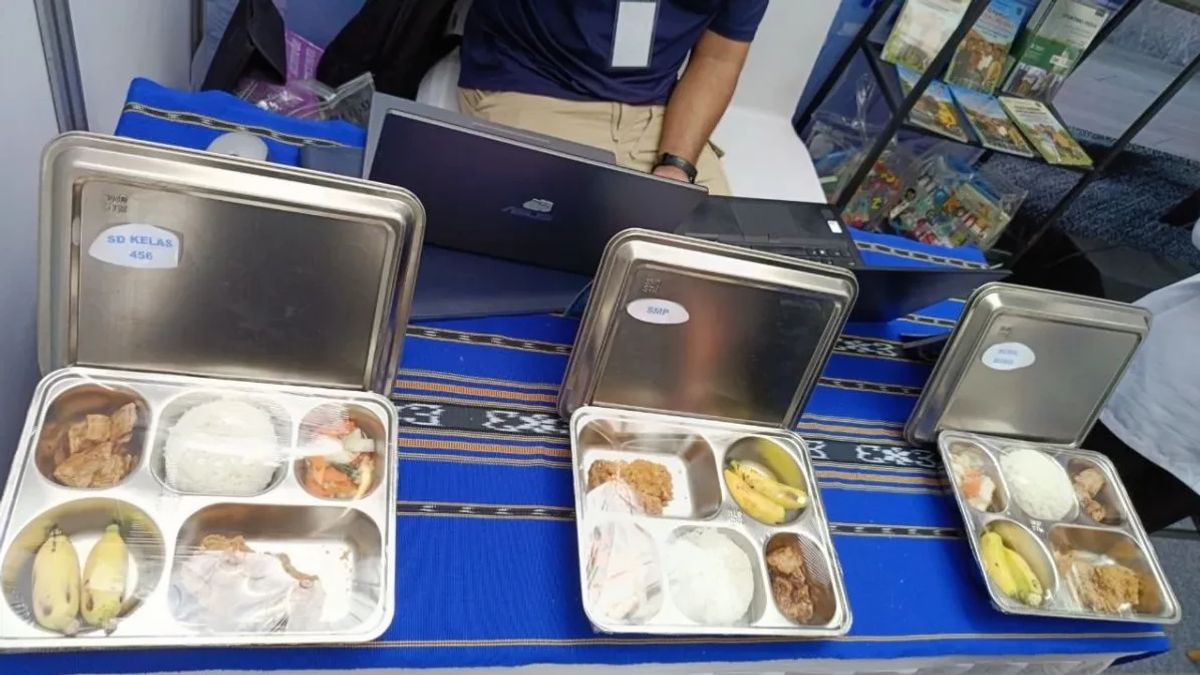


JAKARTA - Member of Commission IX DPR RI Nurhadi highlighted the existence of 5,000 kitchen points for the Gizi Fulfillment Service Unit (SPPG) of a fictitious Free Nutrition Eating Program (MBG). He asked the National Nutrition Agency (BGN) to act immediately so that this issue does not have an impact on fulfilling nutrition for children.
Nurhadi also urged BGN to immediately publish detailed data regarding location points, development status, and operational schedules for all SPPGs. He also asked BGN to improve the verification system to be carried out in parallel since the submission process, not after the problem arose.
"BGN must ensure the acceleration of development so that children's rights to nutrition do not continue to be delayed," said Nurhadi, Wednesday, September 17.
The surprising findings surfaced in a working meeting of Commission IX of the Indonesian House of Representatives with the National Nutrition Agency (BGN) on Monday, September 15, yesterday. This finding emerged when BGN restored its system. As a result, there are 5,000 MBG kitchen units that have no physical or fictitious kitchens.
"This figure triggers the allegation of a 'fictitious kitchen', although BGN said that the location had not been built even though it was recorded," said the legislator from the East Java VI electoral district.
Nurhadi said, in a working meeting with Commission IX of the DPR RI yesterday, BGN revealed that there were 5,000 MBG kitchen units that did not operate in the field where this case occurred because several individuals were suspected of knowing the intricacies of the SPPG establishment process in BGN.
So there are people who know the BGN system, know how to list it and use its foundation. After this person locked the point, it turned out that he didn't build up the kitchen, and when he headed to 45 days, the point was sold by being offered to investors," he explained.
Nurhadi also considered the findings to be non-trivial. Because the MBG program absorbs a jumbo budget whose value reaches trillions of rupiah.
"With such a large portion of the budget, transparency and accountability are absolutely necessary," he said.
"Thousands of kitchen points that are stalled are not just technical matters, but concerns the right of Indonesian children to get proper nutritional intake according to the program's mandate," continued Nurhadi.
Nurhadi also highlighted the weakness of the field verification and supervision mechanism from the start. He questioned BGN's explanation regarding locations where the kitchen had not yet been built for the MBG program but had already been recorded.
"How could thousands of locations have been registered, but did not show development progress even though they passed the 45-day deadline," said Nurhadi.
A loose system opens the gap in the practice of brokering, the dominance of large investors, to the misuse of public funds, such as the findings of alleged 'fundament conglomerates' by an independent monitoring agency," continued Nurhadi.
SEE ALSO:
-
 | BERITA
Trump Kunjungi Inggris Bawa Investasi Teknologi Rp689,9 Triliun, Ini Detailnya
17 September 2025, 12:13 -
 | BERITA
Pejabat Kemenag Era Yaqut Cholil Diperiksa KPK Hari Ini Terkait Dugaan Korupsi Kuota Haji
17 September 2025, 12:30 -
 | BERITA
Perdana Menterinya Bela Kemanusiaan di Gaza Disebut Pembohong, Spanyol Panggil Diplomat Israel
16 September 2025, 17:24 -
 | BERITA
KPK Sebut Khalid Basalamah Kembalikan Secara Bertahap Uang Diduga Terkait Korupsi Kuota Haji
16 September 2025, 14:43 -
 | BERITA
1 Veteran Tentara Inggris Diseret ke Meja Hijau Kasus Pembantaian Demonstran Irlandia 1972
16 September 2025, 16:26 -
 | BERITA
12 Tentaranya Tewas, Pakistan Tumbangkan 31 Militan Taliban di Perbatasan Afganistan
16 September 2025, 14:05

Nurhadi also asked the Supreme Audit Agency (BPK) to conduct performance and financial audits, not just assessing administrative reports. If it is proven that there are irregularities, the State must take firm action against both the partners and internal elements involved.
"The MBG program is a long-term investment for the nation's future, not a project that can be used as a business event. Any delay in kitchen development means delays in fulfilling Indonesian children's nutrition," said Nurhadi.
"The success of the program should not only be measured by the number of kitchens built, but from the quality of food that actually reaches the desks of school children," he concluded.
The English, Chinese, Japanese, Arabic, and French versions are automatically generated by the AI. So there may still be inaccuracies in translating, please always see Indonesian as our main language. (system supported by DigitalSiber.id)
Popular


