


JAKARTA - The increase in the pilgrimage is one of the pillars of Islam, so that Muslims around the world have the dream of coming to the holy city of Makkah and kissing Hajar Aswad on the southeast side of the Kaaba.
For Indonesian citizens who want to fulfill this obligation, the government provides a choice of two travel routes, namely regular and special routes. Regular is a route for pilgrims who want to get subsidies from the government. Meanwhile, special routes, or also known as Hajj plus, use personal costs and are held thanks to the help of the private sector such as Umrah travel agents and Hajj.
"The private sector is not only helping, but the plus Hajj authority is indeed in the private sector," said Abdul Wahid, Treasurer of the Indonesian Hajj Brotherhood Association (IPHI) in Jakarta, quoted on Saturday, August 16.
To determine the quota for the pilgrimage, the Indonesian government will follow the quota given by the Government of Saudi Arabia. At the Hajj pilgrimage in 2025, King Salman bin Abdulaziz Al Saud gave a quota of 221,000 pilgrims to Indonesia.
The government, through the Law on the Implementation of Hajj and Umrah, regulates the distribution of the quota to 92% for regular lanes and the remaining 8% for Special Hajj Organizers (PIHK).
After going through discussions at Commission 8 of the DPR RI, on January 7, 2025, the government and the DPR agreed to provide a quota of 203,320 for regular pilgrims, and 17,680 special quotas for pilgrims.
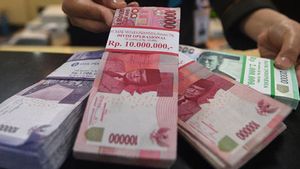
For the implementation of the Hajj in 2025, the total amount of BPIH Hajj is set at Rp. 89,410,258.79. This figure shows a decrease of Rp. 4,000,027.21 compared to BPIH in 2024 which reached Rp. 93,410,286. However, the hajj costs that must be paid by the congregation are agreed to be Rp. 55,431,750.78.
"Regularly, the remaining costs outside that have been agreed are subsidized by the government. The implementation uses the state budget," said Wahid.
The determination of the cost of Hajj and quota for pilgrims is done to provide certainty for prospective pilgrims in preparing for their departure to the Holy Land.
In addition to the predetermined quota, under certain conditions, the government can get additional Hajj quotas from the Government of Saudi Arabia, through a diplomatic process as a form of friendly relations between the two countries.
"This is like what happened in 2024, where the Government of Saudi Arabia provided an additional quota of 20,000 pilgrims to Indonesia," Wahid explained.
According to Wahid, the determination of this additional quota is often non-discussable with Commission 8 of the DPR, because it is given from the King of Saudi sometimes after the discussion between the Government and Commission 8 of the DPR.
"For example, in 2024, the government will decide, use a ministerial decision," said Wahid.
According to Wahid, the involvement of the private sector in organizing Hajj through travel agents is very helpful for the congregation. Because, although the regular hajj quota has a larger portion, the queue for pilgrims to leave for the Holy Land is still long.
The hajj queue has an estimated waiting time that varies depending on the region, ranging from dozens to decades. This queue is due to the high interest of the Indonesian people to perform the pilgrimage, while the existing quota is limited.
For Jakarta residents, it will take 28 years, Acehnese to 34 years, the longest is South Sulawesi with an estimated waiting time of up to 47 years or almost half a century.
The presence of the private sector with a special pilgrimage can cut the time to a quarter of that time. If you register for Hajj plus, the estimated departure waiting time usually ranges from 5 to 9 years. However, the length of the queue can vary depending on the policies of each PIHK.
SEE ALSO:

In addition, Hajj plus has better facilities than regular Hajj.
"Hajj plus you can choose hotels, three stars, or five. They can also choose lodging whose positions are in front of the Grand Mosque, so ring one and two positions," Wahid explained.
The same thing was also expressed by Asnawi Bahar, the Association of Indonesian Tour and Travel Agents (ASITA). According to him, travel agents have more experience in providing services in the hospitality or hospitality industry.
"The main task and work function of travel agents are in collaboration with all industries in Saudi Arabia," explained Asnawi.
Emotional relationships that have been built between travel agents include many components, ranging from airlines, hotels, transportation, to logistics and consumption. This gives the private sector more value to provide better quality.
The English, Chinese, Japanese, Arabic, and French versions are automatically generated by the AI. So there may still be inaccuracies in translating, please always see Indonesian as our main language. (system supported by DigitalSiber.id)
Most Popular Tags
#Prabowo Subianto #donald trump #2026 World Cup #venezuela #konflik timur tengahPopular


