

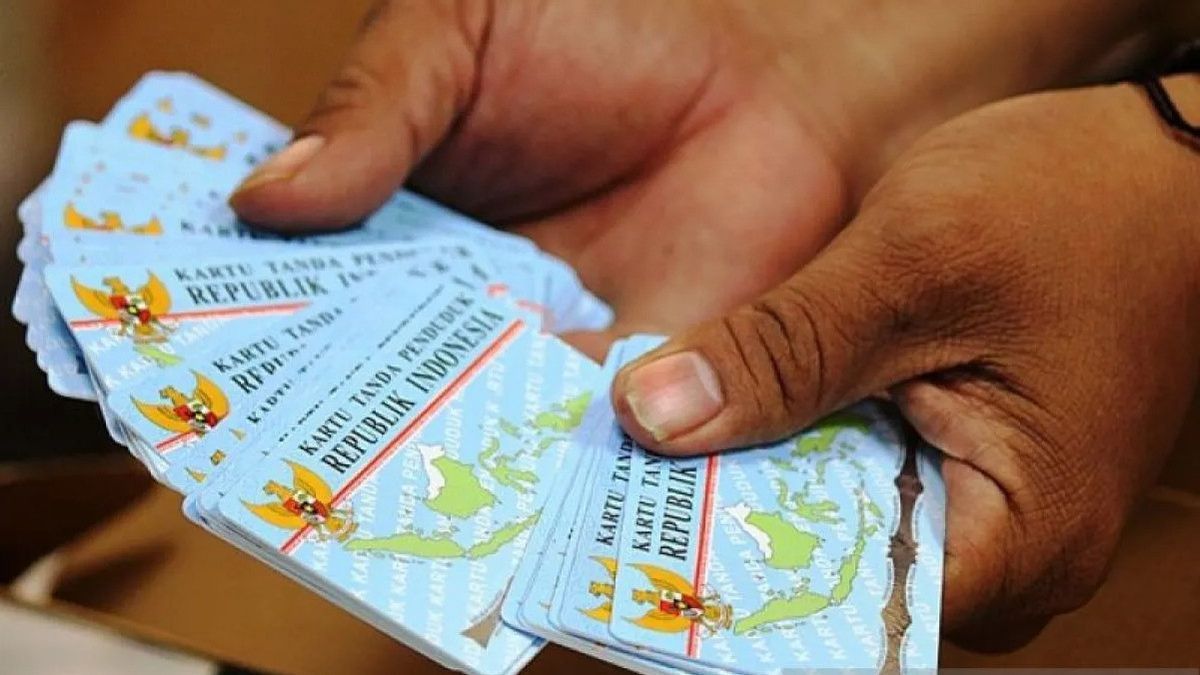


JAKARTA - Deputy Chairman of Commission I DPR RI Sukamta responded to the issue of managing personal data of Indonesian citizens (WNI) to the United States (US), as part of a trade agreement between the two countries. He reminded Indonesian negotiators to comply with Law Number 27 of 2022 concerning Personal Data Protection (PDP) and the constitution.
Initially, Sukamta appreciated the achievement of the negotiation process for the Indonesian delegation to the US which resulted in several agreements, especially the decline in Indonesia's export rates to the US to 19 percent.
However, he highlighted one of the points in the agreement that stated that Indonesia would provide certainty about the ability to transfer personal data out of its territory to the United States.
Sukamta also warned the Indonesian negotiator team not to get caught up in the exchange scheme offered by the US and violate the PDP Law. Moreover, Uncle Sam's country does not yet have a law that protects citizen data.
"The Indonesian negotiator team should not approve a cross-border data transfer scheme without adequate legal protection guarantees," said Sukamta, Friday, July 25.
"Especially because the US does not yet have a data protection law at the federal level such as the GDPR (General Data Protection Regulation) in Europe, there are only PDP laws in several US states," he continued.
Sukamta emphasized that the Indonesian Negotiator Team must understand that personal data transfer is not just a trade issue, but also concerns digital sovereignty, national security, and economic justice.
"The Indonesian negotiator team must understand the data transfer mechanism, and must comply with the PDP Law that we already have, as regulated in Article 56," said Sukamta.
Sukamta also emphasized that every data transfer to the US must be accompanied by equal conditions. Such as mutual legal protection, including audit rights for Indonesian authorities, and full control over citizen strategic data.
If these things are not fulfilled, explained Sukamta, then Personal Data Managers must obtain permission from data subjects for CBDT (crossband data transfer) or cross-border personal data transfer.
"Well, we encourage the Indonesian negotiators to understand the context as I mentioned earlier, and of course understand the PDP Law. So we hope that negotiators can negotiate data transfer issues in more detail and in accordance with the PDP Law that we have," he explained.
The leadership of the Commission in the DPR in charge of foreign relations, communication and informatics added that one thing that also needs to be emphasized in the trade agreement by Indonesia is data sovereignty. This, said Sukamta, is to ensure that citizen data remains in the jurisdiction of national law.
"Even if it is processed abroad, as stipulated in Article 2 of the PDP Law," said the legislator from the Yogyakarta Special Region (DIY) electoral district.
Sukamta assessed that this is also a momentum for Indonesia to immediately complete the preparation of derivative regulations from the PDP Law, such as the PDP Government Regulation (PP) and Presidential Regulation (Perpres) regarding the establishment of the OPDP Institution.
"Because the time for the institution to be formed is 9 months from the maximum of last October 2024," concluded Sukamta.
As is known, this issue was busy after the White House said that the Indonesian government would provide legal certainty related to the management of Indonesian citizens' personal data to the United States. This is part of a trade agreement between the two countries which was officially released on Monday, July 22, US time.
Meanwhile, the Indonesian government stated that negotiations with the United States after the decline in trade rates by President Donald Trump were still ongoing.
SEE ALSO:



The Coordinating Ministry for Economic Affairs, through its spokesperson on Wednesday, July 23, also confirmed that the transfer of data in question as part of the tariff agreement between Indonesia and the US, only includes commercial data, not personal data or state-owned strategic data.
Personal data includes information such as name, age, or phone number, while the commercial data referred to in the issue includes data from the company's sales or data from field research.
The English, Chinese, Japanese, Arabic, and French versions are automatically generated by the AI. So there may still be inaccuracies in translating, please always see Indonesian as our main language. (system supported by DigitalSiber.id)
Most Popular Tags
#Prabowo Subianto #donald trump #Febrie Adriansyah #8791 #giias 2026Popular


