
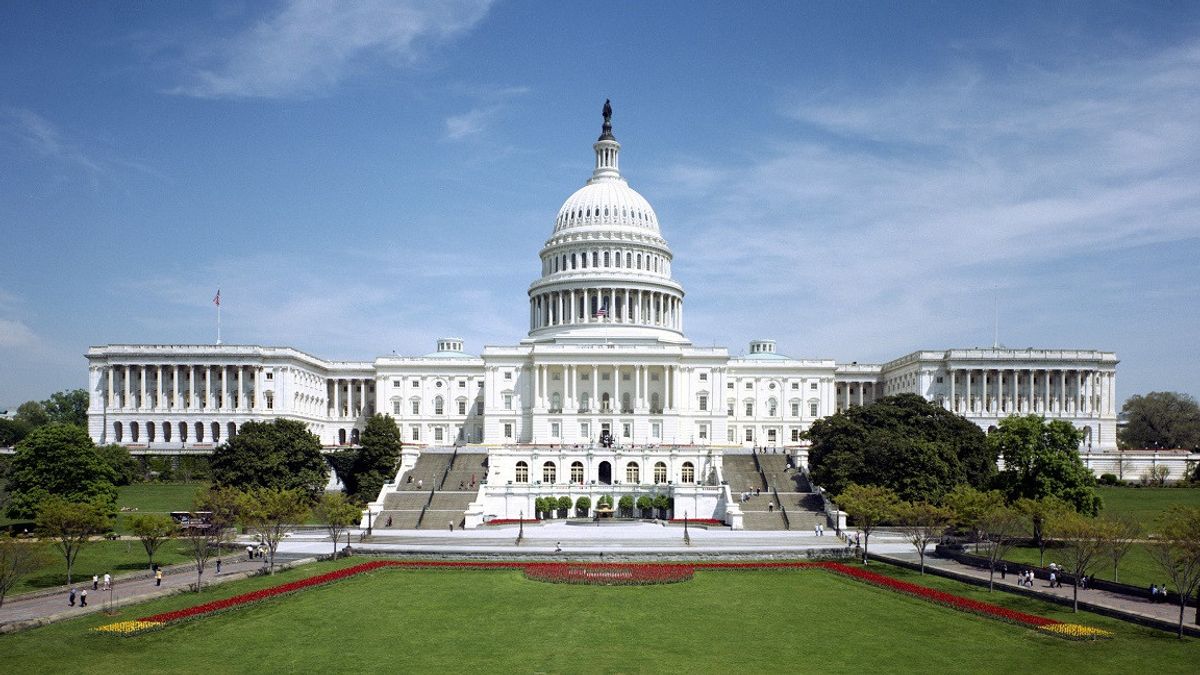


JAKARTA - A number of US lawmakers on Sunday called on Congress to control the use of military force by President Donald Trump in Iran, preventing the country's involvement in the deepening Middle East conflict.
With Republican leaders in the Senate and House of Representatives strongly supporting the US attack on Iran's main nuclear site, it seems unlikely any resolution asserting Congressional powers to declare war and limiting President Trump's actions could be passed by the two assembly.
US Democratic Senator Tim Kaine of Virginia said he hoped to force the Senate to vote this week on its actions requiring President Trump to stop hostilities towards Iran, unless explicitly permitted by war statements from Congress.
Meanwhile, Republican politician Thomas Massie of Kentucky and Democratic politician Ro total from California said they wanted a vote on a similar law they filed in the House of Representatives.
"This is a US action that plunged into the war over Donald Trump's insistence, without a strong national security interest for the United States to act in this way, particularly without debate and a vote in Congress," Kaine told CBS's "Face the Nation" program. June 23.
The White House did not respond to a request for comment on criticism from lawmakers.
Meanwhile, US House Speaker Mike Johnson and Senate Majority Leader John Thune were both notified of previous US military actions, according to sources familiar with the matter.
It is known that members of Congress are expected to be briefed on Tuesday.
The attack on Iran's nuclear facilities on Saturday broke apart the populist movement of MAGA Trump, with several leaders supporting the president and others calling for an end to hostilities after the so-called "lasting war" of the US in Iraq and Afghanistan following the September 11, 2001 attacks on US soil.
"I represent some of the coalitions that voted for President Trump. We are tired of an endless war," Massie told CBS.
"We were promised that we would prioritize our veterans, immigration policies and infrastructure," he continued.
Massie and Kaine said, respectively, there is no urgency that requires President Trump to act unilaterally.
"There is no direct threat to the United States. We have not been briefed," Massie said.
Another Trump Presidential loyalist, Republican politician Marjorie Taylor Greene, also criticized President Trump's decision on Sunday, but insisted he was not loyal.
"I can also support President Trump and his great government in many of the great things they did while disagreeing to bomb Iran and engage in the heat war started by Israel," he wrote on X.
Another Ally of President Trump dismissed claims of his actions against Iran violated the US Constitution and federal law restricting presidential unilateral action on conditions involving attacks on the United States.
"He has all the powers he needs based on the Constitution. They are wrong," said Senator Lindsey Graham, a staunch ally of President Trump who has long been at the forefront of US foreign policy issues at Congress.
"If you don't like what the president is doing in terms of war, you can stop funding," the Republican from South Carolina told NBC's "Meet the Press" program.
However, the attack on Iran generally reaped praise from Republican lawmakers who stated that the operation hampered Iran's ability to acquire nuclear weapons.
"The president made the right decision, and did what he needed to do," Johnson said in a post on X.
"The Supreme Commander considers that a threatening danger is greater than the time Congress needs to act," he continued.
SEE ALSO:

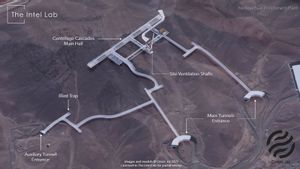

Separately, intelligence reports and analysts have different conclusions about how close Iran is to making nuclear bombs.
Tulsi National Intelligence Director Gabbard said on Friday the US had intelligence stating that if Iran decided to do so, the country could make nuclear weapons within weeks or months. US officials say they do not believe Iran has decided to make bombs.
Iran claims its nuclear ambitions are peaceful and focused on energy production and medical research. But its program, which began in the late 1950s with US support, has been suspected in recent years, with Tehran increasing enrichment by up to 60 percent, just below the 90 percent gun level and limiting international inspector access to its location.
It is known that the US Constitution divides war powers in federal rule with the president as commander-in-chief of the armed forces, but the authority to declare war is in Congress.
The balance has shifted, with Congress handing over the use of military power to the presidents of both parties in recent years.
The English, Chinese, Japanese, Arabic, and French versions are automatically generated by the AI. So there may still be inaccuracies in translating, please always see Indonesian as our main language. (system supported by DigitalSiber.id)


