
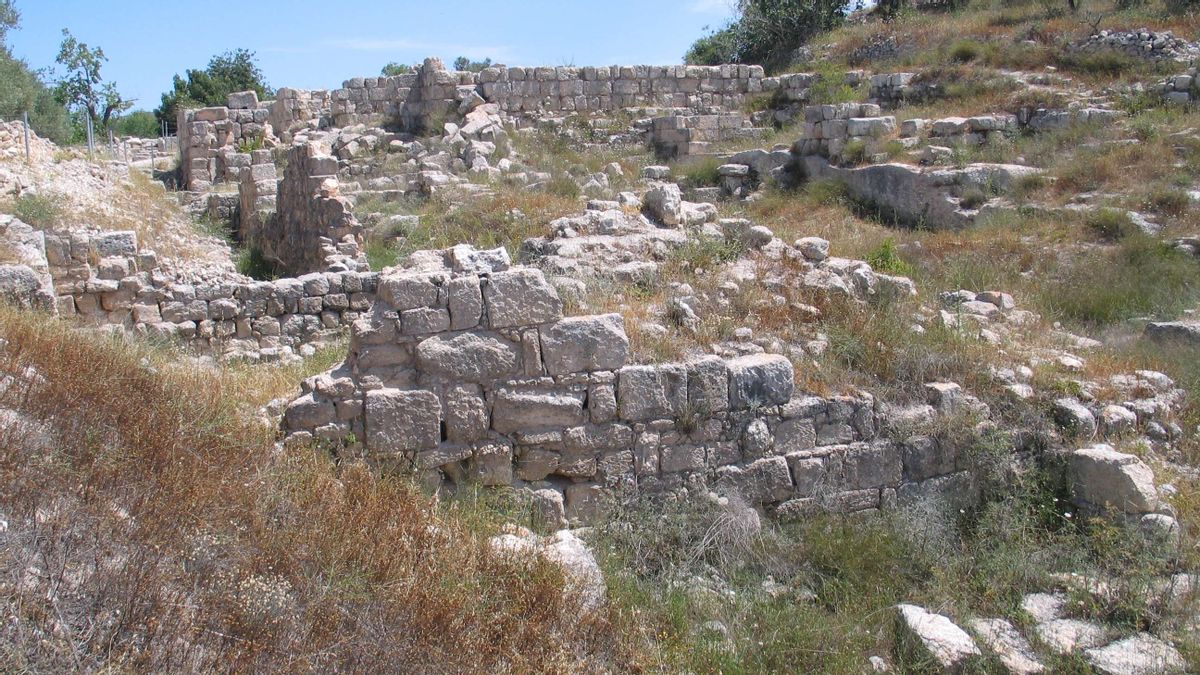


JAKARTA - UNESCO called on Israel to refrain from any action that could undermine Sebastia's archaeological site in Nablus, West Bank, Palestine, emphasizing collective responsibility to protect the historical and cultural values of the site for the present and future generations.
After receiving information about ongoing development and development projects, as well as archaeological activities carried out by the Israeli Ministry of Heritage on the site, UNESCO stressed that all such work must comply with international law and be carried out with the approval and cooperation of all relevant parties, in accordance with 1956 Recommendations on International Principles Linked to Archaeological Excavation and the principles of the relevant UNESCO convention, quoted from WAFA 22 May.
Ali Abu Zuhri, a member of the Executive Committee of the Palestinian Liberation Organization and Chair of the National Committee for Intangible and Intangible Heritage, welcomed UNESCO's position, stressing this is an important step in the right direction to protect Palestinian cultural heritage, especially given the growing threat facing the Sebastia site.
He also expressed his appreciation for UNESCO's willingness to continue coordination and take the necessary steps within its mandate.
Zuhri further noted that UNESCO's position is constructive, encouraging practical measures, including sending urgent monitoring missions to the site to assess the imminent threat and strengthening cooperation with relevant Palestinian authorities, in line with the mandate of international organizations and obligations.
He stressed that a committee is needed to continue working closely with UNESCO to ensure the protection of the Sebastia website and all threatened cultural sites, reaffirming the Palestinian State's ongoing commitment to preserving heritage as part of the integral of the Palestinian people's national identity and collective memory.
He also condemned the excavation and unilateral development of the Israeli Antiquities Authority in occupied territories, without the approval of the occupation authorities and completely ignoring the relevant international law and UNESCO resolutions.
"This activity is a striking violation of the obligation to control the occupation and pose a direct threat to the site's identity and historical properties," he said.
SEE ALSO:





It is known, Sebastia, who has been on the Palestinian State temporary list since 2012, is a site with strong cultural significance, reflecting the succession of civilizations in Palestine.
This is a cultural site protected by several international legal instruments, especially the 1954 Hague Convention for the Protection of Cultural Property in Armed Conflict Events, 1999 Second Protocol, and 1972 World Heritage Convention.
The English, Chinese, Japanese, Arabic, and French versions are automatically generated by the AI. So there may still be inaccuracies in translating, please always see Indonesian as our main language. (system supported by DigitalSiber.id)
Most Popular Tags
#Prabowo Subianto #donald trump #Febrie Adriansyah #8791 #giias 2026Popular


