

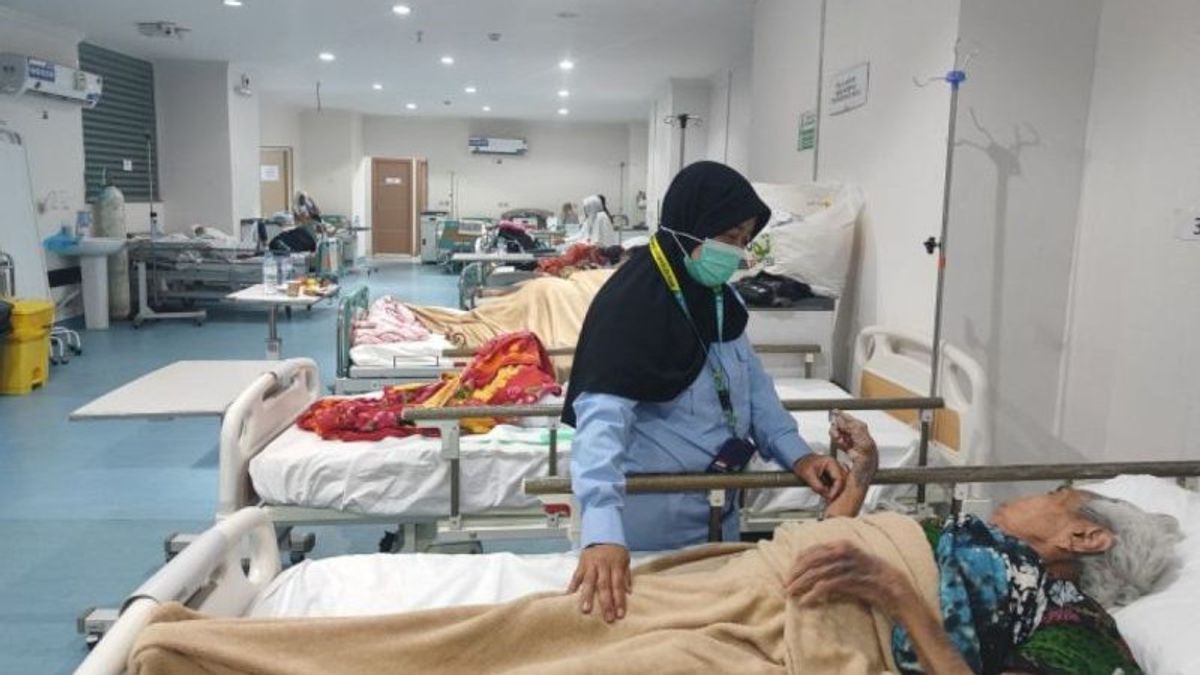


JAKARTA - The Ministry of Health (Kemenkes) said that his party noted that as many as 99 Indonesian Hajj candidates were reported to have pneumonia during their service in the Holy Land, and one died from the acute respiratory infection.
"This is a condition that must be watched out for, because it can develop more seriously, if it is not handled quickly and appropriately," said Head of the Haji Liliek Health Center Marhaendro Susilo in a statement received in Jakarta, Thursday, May 22, quoted by Antara.
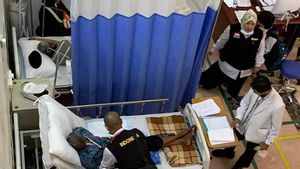
He said the data compiled by the Indonesian Hajj Health Clinic (KKHI), both the Makkah and Madinah Working Areas as of May 20, 2025, cut-off at 16.00 WAS, showed that pneumonia-affected pilgrims were scattered in various sectors and groups. They are currently undergoing intensive treatment at referral hospitals in Makkah and Medina, Saudi Arabia.
According to him, this disease can be fatal, especially for pilgrims with health conditions that are vulnerable or have comorbidities. Pneumonia is inflammation of air bags in the lungs (alveoli) that can be caused by bacteria, viruses, or fungi.
"In a crowded hajj environment and with extreme hot temperatures, the risk of respiratory infection transmission is higher," Liliek said.
His party identified several risk factors that refer to as the originator of pneumonia cases among pilgrims, including extreme hot temperatures. Based on KKHI's real-time data, he said, the temperature on Thursday in Makkah and Medina ranged from 41-47 degrees Celsius. If there is a lack of fluid intake in conditions like this, it can cause dehydration that can make the body more susceptible to infection.
"Physical fatigue. A series of dense Hajj services, from the length of the trip, mandatory Umrah to the peak in Armuzna, requires strong physical stamina, so fatigue can reduce the immune system," he said.
Then, he said, there was a crowd. According to him, the transmission of diseases with a density of up to millions of pilgrims can increase the risk of transmission of viruses or bacteria that cause pneumonia. He also highlighted the risks of a history of comorbidities or comorbidities. Pilgrims with a history of diabetes, hypertension, heart disease have a higher risk of pneumonia.
We remind the congregation not to get bored with being vigilant. Use a mask when coughing and coughing in a crowded area. Wash your hands with soap/hand sanitizer before and after your activities. Drink water/zam-zam little by little up to 2 liters a day. Those who have comorbidities and have taken regular medicines, don't forget to drink the medicine regularly," he said.
SEE ALSO:

He also reminded that at the peak of the pilgrimage when Armuzna requires high stamina, pilgrims to reduce sunnah worship such as Umrah repeatedly. Save energy, he said, and don't get too tired. He also reminded you not to smoke in any place and respect other people who don't smoke.
"Immediately report and check yourself when you are not feeling well to the Hajj health workers and health posts. Congregational health is our top priority. Let's take care of it together so that the pilgrimage runs smoothly and all pilgrims return to the country in good health," he said.
The English, Chinese, Japanese, Arabic, and French versions are automatically generated by the AI. So there may still be inaccuracies in translating, please always see Indonesian as our main language. (system supported by DigitalSiber.id)


