


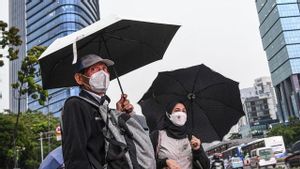
JAKARTA - The hot temperature has hit Bengkulu in the last few days. BMKG Baai Island Climatology Station explained that the incident was due to a significant increase in the evaporation intensity.
The absorption is due to the accumulation of direct solar energy and heat energy on the earth's surface, so that the temperature on the surface becomes high.
"In the morning before noon, the image of clouds in the sky is very small, so sunlight immediately shines on the earth without a hitch," said Head of Data and Information at the Baai Island Climatology Station, Bengkulu Anang Anwar, quoting ANTARA, Sunday, May 18.
For this reason, he appealed to all people in Bengkulu Province to use sunscreen to avoid direct exposure to sunlight.
Then, maintain adequate body fluids, especially for those who are active outside the room during the day so that dehydration, fatigue, and other bad effects do not occur.
The public is also asked to be aware of the possibility of heavy rain accompanied by strong winds and lightning, stay away from open areas when there is rain accompanied by lightning, and stay away from trees, buildings and infrastructure that are already fragile when there is rain accompanied by strong winds.
SEE ALSO:

Always be ready to face potential hydrometeorological disasters, such as floods, flash floods and landslides, which can occur at any time.
Furthermore, the public is advised to always monitor the latest weather information through the official BMKG channels, such as official websites, remain calm and alert to face extreme weather changes, and understand evacuation steps if needed.
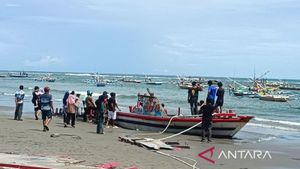
Meanwhile, the wind conditions in the waters of Bengkulu Province, which generally blows from Southwest to Northeast, have wind speeds ranging from 2 to 20 knots.
"With the convergence and wind bend areas, it increases the potential for rain cloud growth in Bengkulu waters," said Anang.
With the strong wind conditions in the waters of Bengkulu Province, there is the potential for high waves to reach 2.5 meters in a number of waters such as the waters of North Bengkulu. Then, the waters of Bengkulu, the waters of southern Bengkulu, and the waters of the island of Enggano.
The English, Chinese, Japanese, Arabic, and French versions are automatically generated by the AI. So there may still be inaccuracies in translating, please always see Indonesian as our main language. (system supported by DigitalSiber.id)
Most Popular Tags
#Prabowo Subianto #donald trump #Febrie Adriansyah #8791 #giias 2026Popular


