
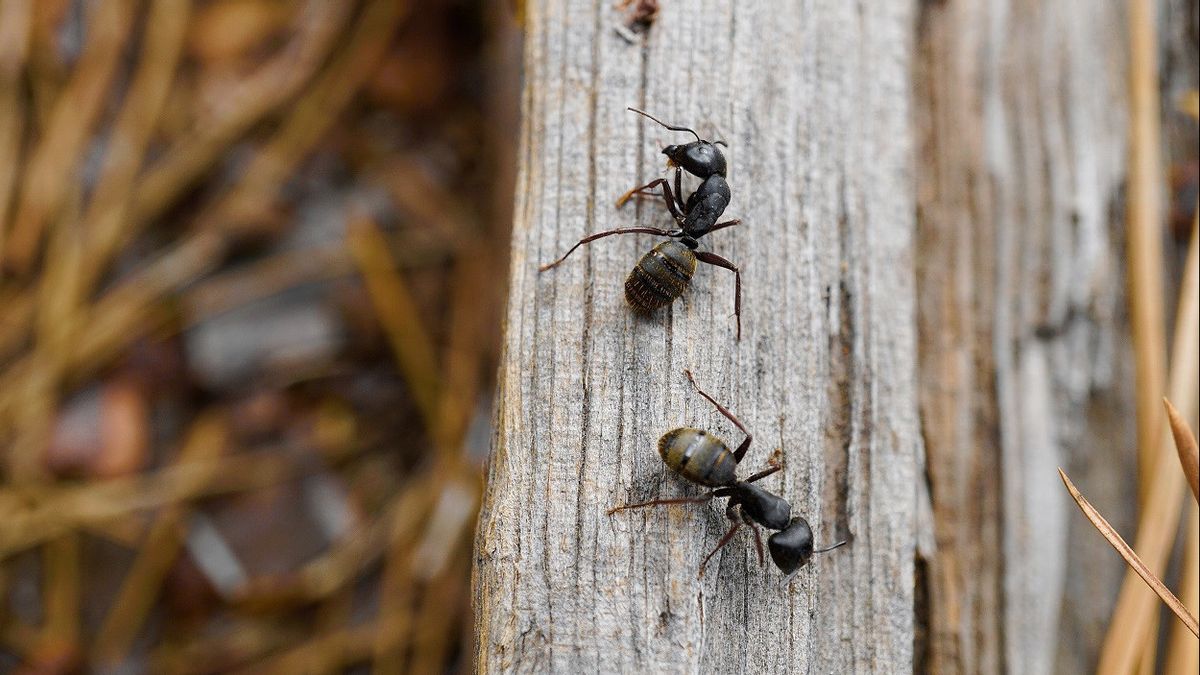


The four people who tried to smuggle thousands of queen ants from rare species were fined up to Rp127 million each by the court, which experts say indicates a shift in Biopiracy or piracy of genetic resources from valuables such as elephant tusk to less known species.
The Kenyan court on Wednesday fined four people 7,700 US dollars (Rp 127,207,080) each for trying to trade thousands of valuable ants to the country's ecosystem.
Authorities arrested two Belgians, a Vietnamese man and a Kenyan national on April 5, accusing them of two separate cases trying to smuggle about 5,440 giant African antenna queens.
Judge Njeri Thuku said the ants could sell for more than 800.000 euros or 900.000 dollars online in Europe, Asia and parts of North America, where ant keeping the colony in a large transparent container known as the Formicarium to observe their cooperative behavior.
Queen ants are appreciated because they are the only ones capable of laying eggs that grow into worker ants, soldiers, and potential ants queens, meaning illegal trade can harm colonies that are important to the Kenyan wildlife ecosystem.
Thuku sentenced traders to trade wildlife species alive, and ordered them to pay fines or face a 12-month prison sentence.
The defendants all pleaded guilty in this case.
The cases have raised questions about whether the alleged trade is linked to a wider network.
Thuku said Duh Heng Nguyen, from Vietnam, was sent to Nairobi to meet with Kenyan resident Dennis Nanga, gathering ants in a complicated scheme that has "all the characteristics of illegal wildlife trafficking and possibly biopiracy".
Nguyen is what is known in the world of drug trafficking as a "curror or courier", said Thuku, describing his role as a person with signs of organized crime.
Nguyen and Ngaga said they did not know their actions violated the law, according to the judge's characterization of their defense.
Meanwhile, two Belgians, identified in court documents as Lornoy David and Seppe Lodewijckx, were both fans of ants claiming in court that they were acting due to naiveness, Thuku said.
David's Lornoy phone reveals he is a member of a group known as the "Geng Ant", and initially bought 2,500 ant queens for $200, Thuku said in his ruling.
"There is no justification to be found to have such a large number of ant queens," said Thuku.
"This is more than just a hobby," said Thuku.
"Indeed, if that happened to a larger species with 5,000 specific types of ants taken, it would be a proportion of genocide," he explained.
Ants are appreciated by fans for their working together, carrying out tasks such as building nests, collecting seeds, or making collective decisions without leaders, in what experts describe as superorganism.
"Over time, if you raise ants or observe them, you will be able to witness the growth of this colony from just one individual, the queen, to finally become thousands of individuals (functing) together as if they were one unit," said Dino Martins, one of Kenya's leading ant experts.
SEE ALSO:




Separately, Kenya Wildlife Service (KWS) said the species of messenger cephalotes ants are important in maintaining soil health and ecosystem balance, and are intercepted by authorities at Jomo Kenyatta International Airport (JKIA) in the capital.
It said in a statement the ants "are meant for the trade of exotic European and Asian pets, where colonies of rare and ecologically unique species can be valued at up to 1,200 euros each."
"Today's decision sends a firm message: Kenya will not tolerate looting of biodiversity. Whether it's ants or elephants, we will pursue smugglers without stopping," said KWS Director General Erustus Kanga.
Ant exports are permitted from Kenya by license, although the regulations are difficult to comply with, experts say.
The English, Chinese, Japanese, Arabic, and French versions are automatically generated by the AI. So there may still be inaccuracies in translating, please always see Indonesian as our main language. (system supported by DigitalSiber.id)
Most Popular Tags
#Prabowo Subianto #donald trump #2026 World Cup #Febrie Adriansyah #8791Popular


