
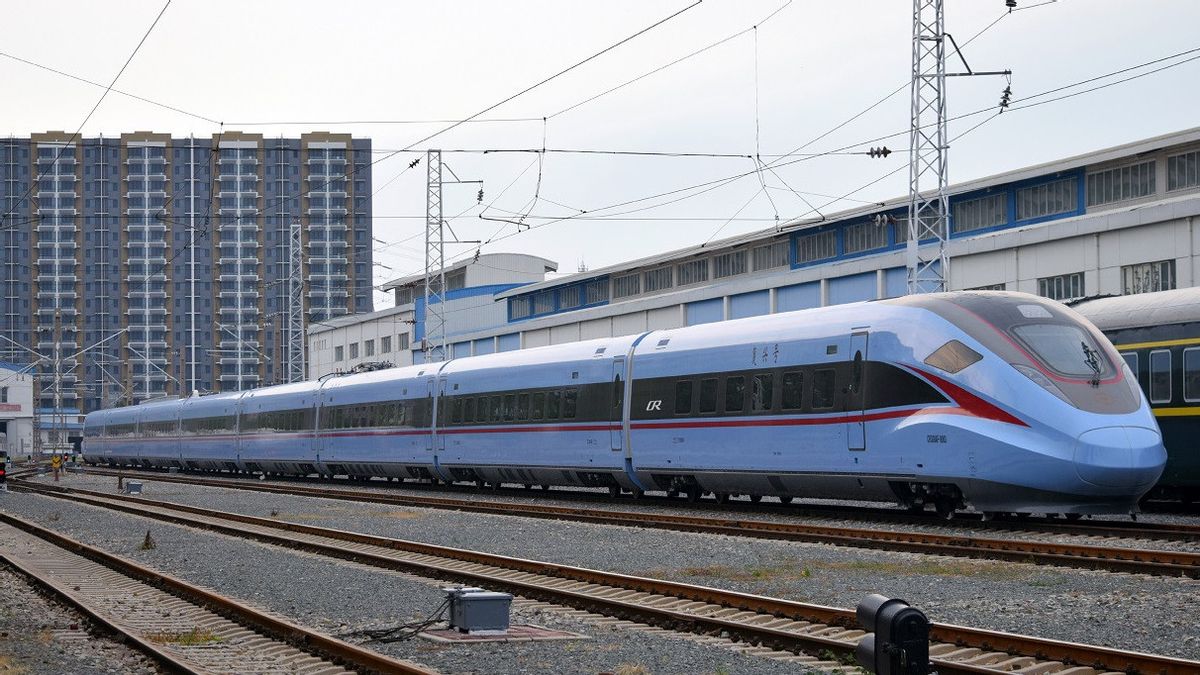


JAKARTA - Thai authorities expect high-speed rail lines 609 km (378 miles) that will connect with China via Laos to start operating by 2030, nearly a decade later than originally planned.
More than a third of constructions have been completed in segments connecting the capital Bangkok with Nakhon Ratchasima City, about 220 km away and the entire route to Nong Khai on the border with Laos will be ready by 2030, Thai government spokesman Jirayu Houngsub said last month.
The $6 billion rail line from the capital Laos Vientiane to Kunming City in southwest China will start operating in 2021, a joint venture whose 70 percent stake is owned by Beijing. The line will connect with Nong Khai in Thailand via Vientiane, about 25 km away.
"This is an opportunity for Thailand to connect with the global economy," Jirayu said, adding it would bring Thailand closer to its goal of becoming a logistics hub.
The announcement comes a year after China urged Thailand to accelerate the construction of the railway line.
Discussions on the railway line began nearly two decades ago. Thailand and China signed a construction agreement in 2017 with plans to start operating in 2021.
However, development was delayed due to disagreements on financing and design, as well as disruptions due to the COVID-19 pandemic.
SEE ALSO:
-
 | BERITA
Kunjungi 42 Museum Kurang dari 12 Jam, Pria Ini Pecahkan Rekor Guinness World Records
08 Februari 2025, 21:00 -
 | BERITA
Restoran Indonesia Hadir di Oslo, Dubes Faizasyah: Dari Rasa Turun ke Hati
08 Februari 2025, 18:00 -
 | BERITA
Awak Pesawat Tidak Sengaja Buka Perosotan Darurat, Penerbangan ke Hawaii Dibatalkan
08 Februari 2025, 15:00 -
 | BERITA
Resmikan Kampung Indonesia di Hatay Turki, Dubes RI: Wujud Persaudaraan dan Solidaritas
08 Februari 2025, 12:00

The plan is part of China's President Xi Jinping Belt and Road trade initiative, which includes plans for three routes that start with Kunming passing through Myanmar, Thailand, and Vietnam.
Vietnam plans to build a 1,541 km (958 miles) high-speed rail line connecting its two largest cities, Hanoi and Ho Chi Minh City, costing more than 67 billion US dollars, with the target starting operations by 2035.
The country is also planning a 7.2 billion dollar train line from its border with Yunnan Province in China to Hanoi, the port city of Haiphong and Ha Long City.
The English, Chinese, Japanese, Arabic, and French versions are automatically generated by the AI. So there may still be inaccuracies in translating, please always see Indonesian as our main language. (system supported by DigitalSiber.id)
Most Popular Tags
#Prabowo Subianto #donald trump #firearm #8791 #giias 2026Popular


