
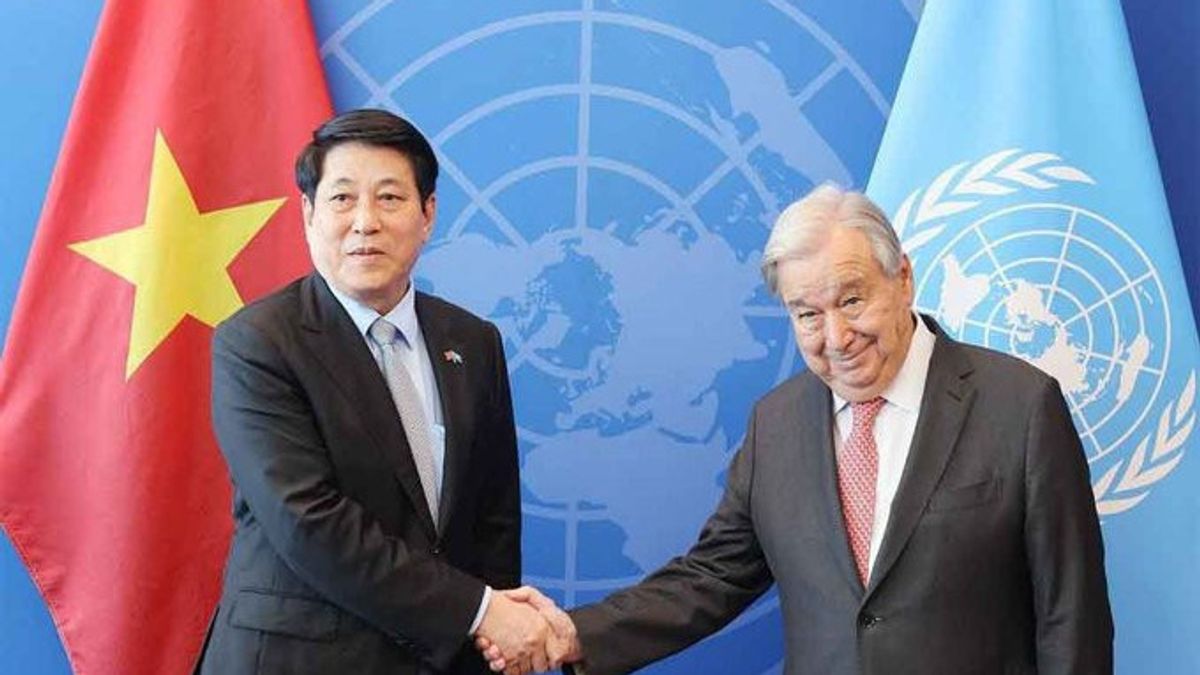


JAKARTA - A historic United Nations (UN) agreement to combat cybercrime which is estimated to cost the global economy up to trillions of dollars per year will be signed this weekend in Hanoi, Vietnam. However, behind this major step, serious concerns arise regarding potential human rights violations.
This Convention will take effect after it is ratified by at least 40 countries. The United Nations calls it a precautionless move that is expected to accelerate and strengthen the handling of cross-border cybercrimes.
However, a number of activists, major technology companies, and the UN High Commissioner for Human Rights warned of a language in the agreement manuscript that was too vague. They fear the provision could be used to suppress freedom of expression or even expand the practice of government oversight.
SEE ALSO:
-
 | TEKNOLOGI
Pangeran Harry dan Meghan Ikut Serukan Larangan Pengembangan AI Superintelligent
22 Oktober 2025, 17:35 -
 | TEKNOLOGI
Menkomdigi Meutya Percaya Startup Indonesia Masih Bisa Tumbuh Lebih Pesat
22 Oktober 2025, 17:05 -
 | TEKNOLOGI
Samsung Hentikan Distribusi One UI 8, Ini Perangkat yang Terdampak
22 Oktober 2025, 16:35

The European Union and Canada have stated that they will sign this pact, confirming the existence of a human rights protection mechanism' in it. Meanwhile, the United States State Department declined to comment on whether to send representatives to the signing ceremony.
Vietnam's election as the host drew criticism for poor human rights records. The US State Department's report last August highlighted "serious violations of freedom of expression online" in the country.
According to Human Rights Watch, at least 40 people have been arrested in Vietnam so far this year on charges of spreading content deemed against the government. However, Hanoi officials said the hosts saw this agreement as an opportunity to strengthen national cyber defense and improve its international reputation.
The UN Secretary-General, Antonio Guterres, is scheduled to attend the signing ceremony on Saturday.
The Cybersecurity Tech Accord Coalition consisting of tech giants such as Meta and Microsoft calls this pact a surveillance treatment' or surveillance agreement, as it allows exchange of personal data between countries and risks making it easier, not making it difficult, cybercriminals.
The convention includes various crimes, ranging from phishing and ransomware to online trading and hate speech. The United Nations estimates cybercrime will cause global economic losses of up to trillions of dollars per year.
However, the UN High Commissioner for Human Rights warns that the definition of cybercrime is too widespread is often used to limit excessive freedom of expression.
Raman Jit Singh Chima from the advocacy agency Access Now assessed that this agreement could be used to extradite individuals his government is pursuing for political reasons. "The fact that this agreement was signed in Vietnam actually gave a bad signal for human rights defenders," he said.
Vietnam's Ministry of Public Security acknowledged the increase in cyber attacks on vital infrastructure and large corporations. The head of cybersecurity division, Le Xuan Minh, said that international cooperation through this agreement could help identify cross-border actors.
However, tech activists and companies warn of other risks: this agreement has the potential to criminalize ethical hackers'' security researchers who find system loopholes to increase security, not to steal data.
The United Nations Office for Drugs and Crime (UNODC), which led the agreement negotiations, confirmed that the convention text had included protection against human rights and authorized the state to reject requests for cooperation that were contrary to international law.
UNODC also added that the agreement encouraged countries to facilitate legitimate cybersecurity research.
This agreement could be a global milestone in countering cybercrime or vice versa, opening up a new era of digital surveillance that goes beyond the limits of human privacy.
The English, Chinese, Japanese, Arabic, and French versions are automatically generated by the AI. So there may still be inaccuracies in translating, please always see Indonesian as our main language. (system supported by DigitalSiber.id)


