

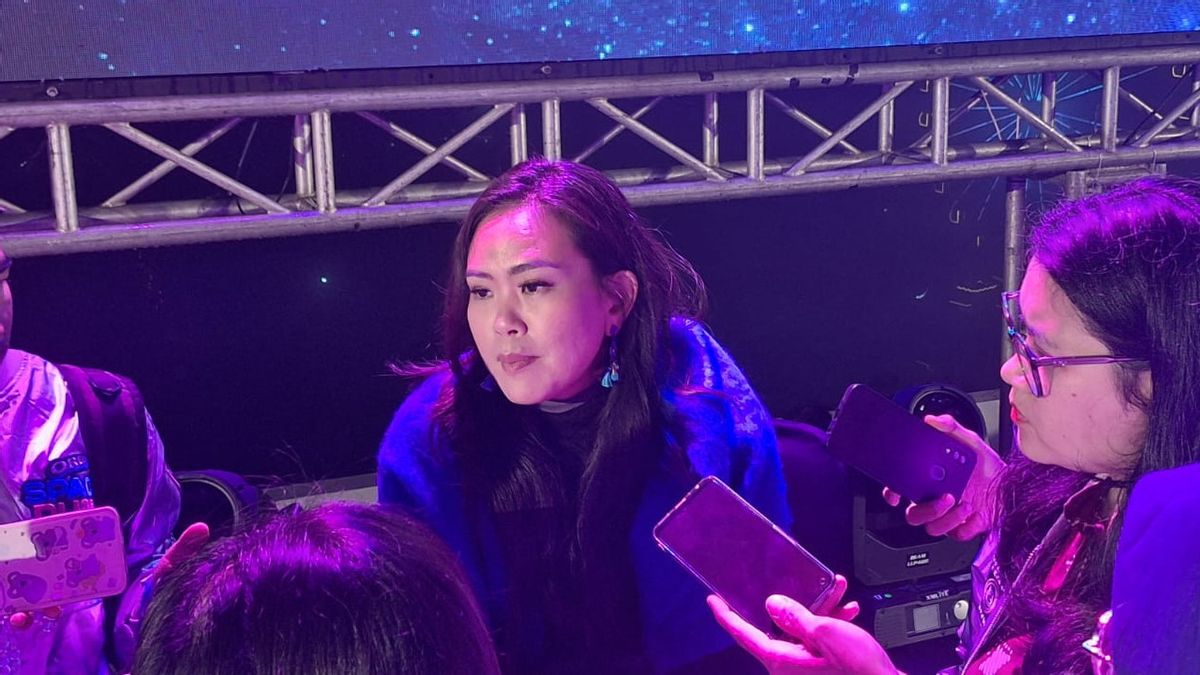


JAKARTA - A space expert from Indonesia who has also gone global, as well as the Founder & CEO of Antarexa Space Global, Ann Cammaro, highlighted the importance of space independence for Indonesia.
One of the main needs in this regard is the development of satellite infrastructure, which functions to provide access to communication for the entire community, wherever they are, considering that Indonesia is an archipelagic country.
According to him, if the government only relies on the construction of a Based Transceiver Station (BTS) and submarine cables, it is not enough to meet these needs, given the great risk.
"In terms of national needs, we do need satellites, because we are an archipelagic country, which, for example, we have to install BTS, which is eventually corrupted, especially in Papua which is always problematic. So satellite is the only option that is really critical to our infrastructure needs," Ann said at the launch of the OREO Space Dunk campaign in Bandung, some time ago.
According to Ann, so far Indonesia has always bought technology from the United States or Europe for satellite projects. He emphasized that this dependence should be avoided.
"So we never make, but we only buy, then operate ourselves, and then sell for all of you on these cellphones," he said.
Not without reason, Ann stressed that this dependence would be very risky, especially in conditions of the global crisis. He referred to the Ukraine war as a concrete example.
SEE ALSO:
-
 | TEKNOLOGI
Jelang Peralihan Gemini, Google Assistant Hilang dari Aplikasi Google
14 April 2025, 11:35


"We need space technology, and we must be able to have access to our own space, because if for example we have to bring other people, and if for example there will be a war, it will be difficult," he said.
Although the challenges of funding and HR limitations are still obstacles, Ann assesses that Indonesia still has opportunities. The key is collaboration between the government, the private sector, and the international community.
Currently, Indonesia through the Telecommunication and Information Accessibility Agency (BAKTI) from the Ministry of Communication and Digital Affairs has owned and launched the SATRIA-1 Satellite (Satellite Republik Indonesia-1) thanks to the collaboration with PT Satelit Nusantara Tiga (SNT).
The English, Chinese, Japanese, Arabic, and French versions are automatically generated by the AI. So there may still be inaccuracies in translating, please always see Indonesian as our main language. (system supported by DigitalSiber.id)


