
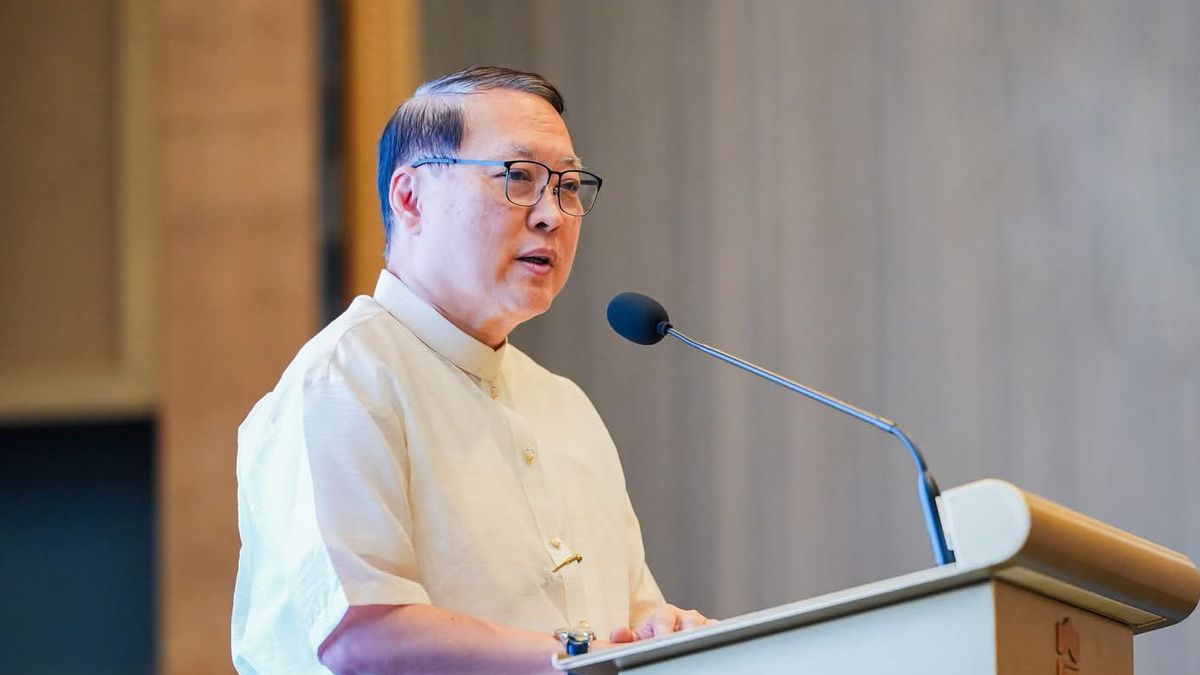


JAKARTA The Philippines has detected hacking attempts by foreign parties targeting the country's intelligence data. However, the Minister of Information and Communication, Ivan Uy, stated on Tuesday, February 18, that so far no leaks have occurred.
According to Uy, this hacking attempt was very widespread and involved a high-level cyber threat or Advanced Persistent Threats (APT). These groups, which are often supported by certain countries, have repeatedly tried to penetrate the Philippine government system but have so far unsuccessful.
"This threat has been around for a long time and comes from various actors, but most of it comes from abroad," Uy said.
He revealed that some of these threats, which he described as "sleepers", had been embedded in the government system before being finally detected through strengthened cybersecurity efforts.
Uy emphasized that until now there has been no indication of cyber attacks targeting important infrastructure in the Philippines. "Hopefully this is because our cyber defense and security is quite strong," he said.
However, he acknowledged that it was very difficult to identify exactly who was behind this attack because many hacking attempts deliberately left a misleading digital footprint.
The Philippine government is now continuing to strengthen its defenses by sharing intelligence with the military and working with other countries through diplomatic channels to validate threats and improve security.
Last year, the Philippines managed to thwart a hacking attempt allegedly from China, which targets presidential websites and email systems and a number of government agencies, including those related to maritime security.
SEE ALSO:
-
 | TEKNOLOGI
Moto Gestures, Fitur Sederhana di Motorola untuk Akses Alat dengan Gerakan
18 Februari 2025, 20:10 -
 | TEKNOLOGI
Motorola Resmi Rilis moto g45 5G di Indonesia, Harganya Rp2 Jutaan
18 Februari 2025, 19:30 -
 | TEKNOLOGI
Indonesia Terus Hadapi Ancaman Siber, Kaspersky Bagikan Strategi Perlindungan
18 Februari 2025, 18:31 -
 | TEKNOLOGI
IAIS Soroti Tren Perkembangan dan Tantangan Implementasi AI di Sektor Kesehatan Indonesia
18 Februari 2025, 17:35

World War III In Cyber World
Uy described the increasing cyber threat as part of a global arms race, in which countries and criminal organizations exploit digital loopholes for financial or strategic gain.
"World War III is taking place and this is a cyber war," he said. "The weapons used are not physical, but digital and virtual. Attacks and defenses take place at any time without any physical manifestations."
In addition to the threat of hacking, Uy also highlighted the increasing spread of deepfakes and fake news that was deliberately created to manipulate public opinion ahead of the interim elections in the Philippines in May.
The Philippine Ministry of Information and Communication has now implemented a number of tools to prevent the spread of misinformation.
"Misinformation and disinformation are much more dangerous for democracy such as the Philippines, because we depend on elections, and elections are based on public opinion," he concluded.
The English, Chinese, Japanese, Arabic, and French versions are automatically generated by the AI. So there may still be inaccuracies in translating, please always see Indonesian as our main language. (system supported by DigitalSiber.id)


