

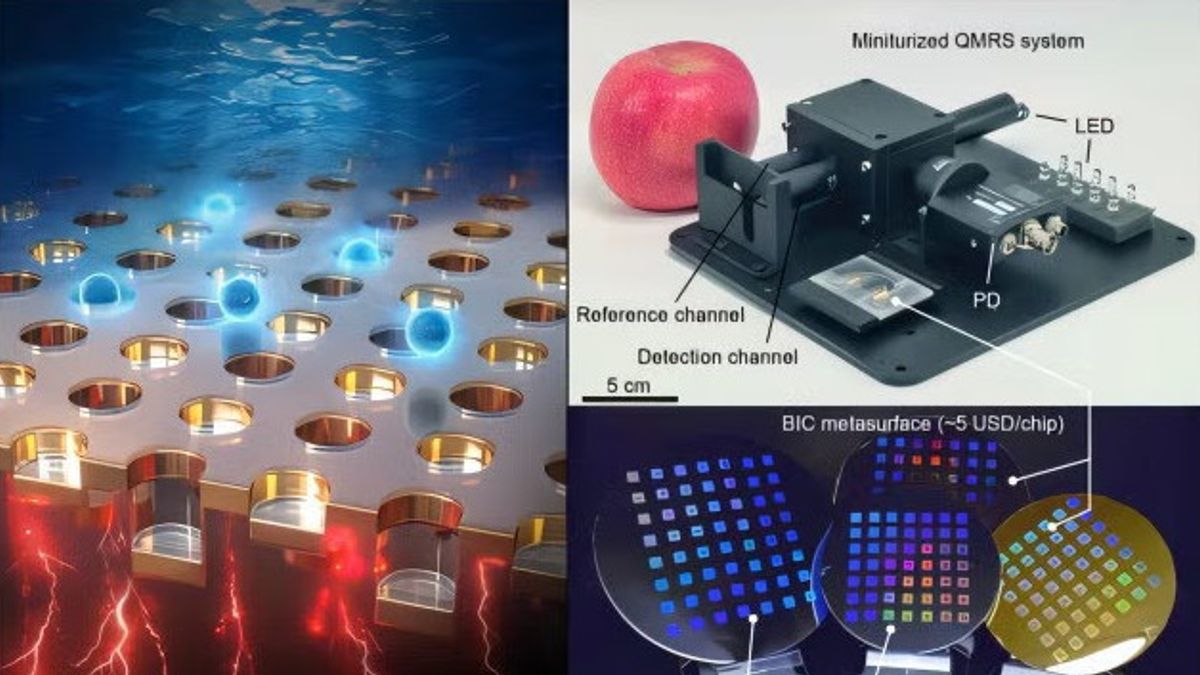


JAKARTA - Chinese scientists have developed a handheld device to detect early signs of lung cancer from just a drop of blood. This prototype is claimed to be able to give results with an accuracy of up to 95 percent.
Quoted from The Independent, Tuesday, May 26, the device is designed so that cancer detection does not always depend on large devices in laboratories or hospitals.
Until now, cancer screening has required sensitive tools to read small changes in light due to the presence of molecules in a sample. The problem is, such devices are generally large and not easy to carry.
The new device uses a sensor that reads how molecules bend light. The sensor uses a 3D chip of a special material that can manipulate light.
The device also features a light emitter, light detector, and engineering material made on an 8-inch semiconductor wafer. A wafer is a thin slab of semiconductor material commonly used to make chips.
The researchers say this approach could pave the way for a cheaper cancer detection system that can be used outside the laboratory.
"This greatly simplifies the design of the instrument and makes the detection process more suitable for portable diagnosis systems," the researchers wrote in Science X Dialog.
To test the device, the researchers used it to detect vesicles, which are very small bubble-shaped cell components found in blood and other body fluids. The rate of vesicles can indicate early stage diseases.
The new sensor is able to detect vesicles in very low concentrations in just 15 minutes. Its sensitivity is said to be almost 10,000 times better than standard laboratory tests.
The Independent reported that researchers also tested the device on 170 human serum samples. The results, the device can distinguish early stage lung cancer samples from healthy tissue.
The accuracy of the device reaches 95 percent. For comparison, the traditional Elisa laboratory method is in the range of 75 percent. Elisa is a laboratory test method to detect certain substances in biological samples, such as blood.
However, this tool is not ready to enter clinics or homes. Researchers remind that the prototype still has a "long way" before it can be widely used as a medical device.
They called for larger studies in more patient groups to make sure the technology is truly reliable.
"This system also still requires further engineering before it can be used routinely in clinics or at home," the researchers wrote in a study published in the scientific journal Nature Photonics.
The English, Chinese, Japanese, Arabic, and French versions are automatically generated by the AI. So there may still be inaccuracies in translating, please always see Indonesian as our main language. (system supported by DigitalSiber.id)
Most Popular Tags
#Prabowo Subianto #donald trump #2026 World Cup #Febrie Adriansyah #8791Popular


