
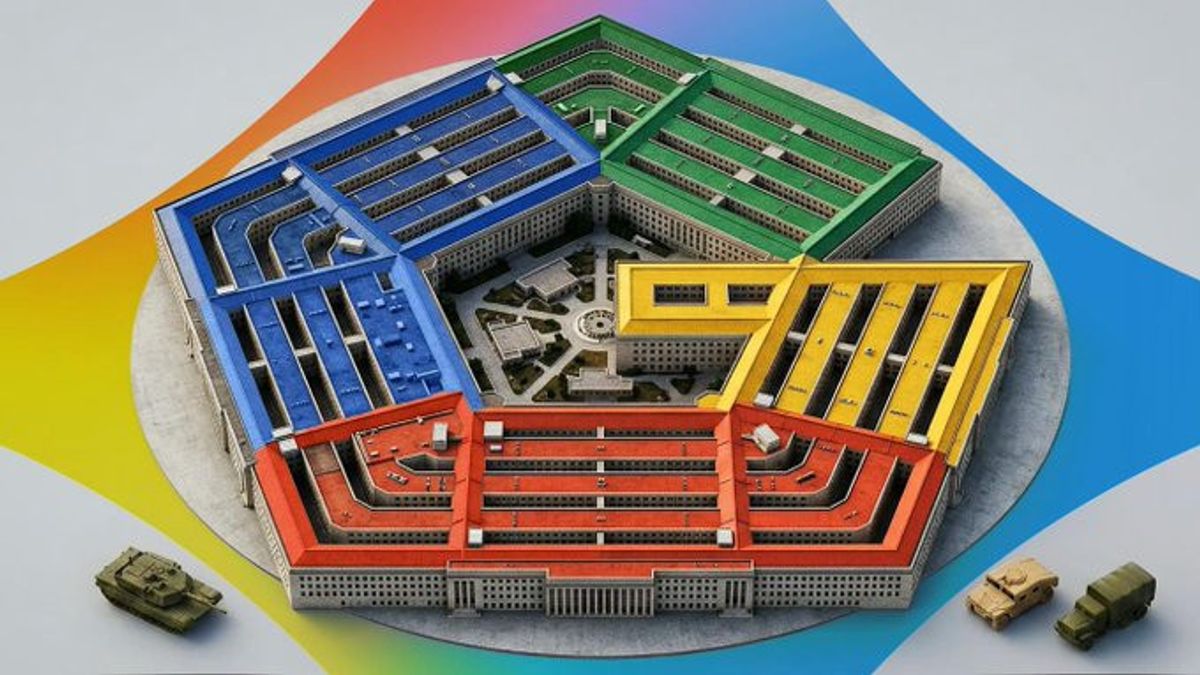


Jakarta - Google is reportedly exploring a strategic partnership with the Department of Defense to bring the Gemini artificial intelligence model into the military's confidential environment. This move is a strong signal of the company's shift in strategy to expand its cloud and AI business into the defense sector.
According to reports, the talks include plans to provide high-capacity computing infrastructure, including the use of Google's proprietary special chips, namely Tensor Processing Units (TPU), as well as a large number of GPUs to support large-scale AI operations in the Pentagon environment.
The Role of TPU and Gemini in Military Infrastructure
Google's TPU chips have been the backbone of training and performance for AI models such as Gemini. If the deal is reached, this will be the first time that TPUs have been placed directly in military secret computing systems.
The integration is believed to significantly increase the capacity of data analysis, image processing, to strategic scenario simulation. In the context of modern military, this ability is crucial for real-time data-based decision-making.
Ethical Boundaries Line as a Key Issue
Behind the big opportunity, this negotiation is also colored by sensitive issues related to the use of AI. Google is said to be pushing for a restrictive clause that prohibits the use of its technology for domestic mass surveillance and the development of autonomous weapons without human control.
This approach reflects the company's efforts to maintain a balance between business expansion and ethical pressures that have long overshadowed the AI industry. Previously, similar debates also involved other companies such as Anthropic in their relationship with the US government.
Change of Attitude from the Past
Google's move contrasts with its stance in 2018, when the company pulled out of Project Maven after a wave of internal protests from employees. The project at the time aimed to develop AI for the analysis of military drone imagery.
Since then, Google has slowly rebuilt its presence in the public sector, including through the establishment of a dedicated division for government services in 2022. This effort is part of a strategy to pursue dominance in the government cloud market, which is currently dominated by competitors such as Amazon Web Services and Microsoft.
New Fight in the Era of AI
If realized, cooperation with the Pentagon could be a turning point for Google in the global AI competition, as well as strengthening its position in the multibillion-dollar government contract market.
However, this move also opens a new chapter in the global debate: how far AI technology can be used in a military context, and who sets the limits.
In the midst of an increasingly intense AI race, one thing is clear - technology is no longer just a tool, but a strategic asset in modern geopolitics.
Follow VOI Whatsapp Channel
The English, Chinese, Japanese, Arabic, and French versions are automatically generated by the AI. So there may still be inaccuracies in translating, please always see Indonesian as our main language. (system supported by DigitalSiber.id)
Most Popular Tags
#Prabowo Subianto #donald trump #firearm #8791 #giias 2026Popular


