

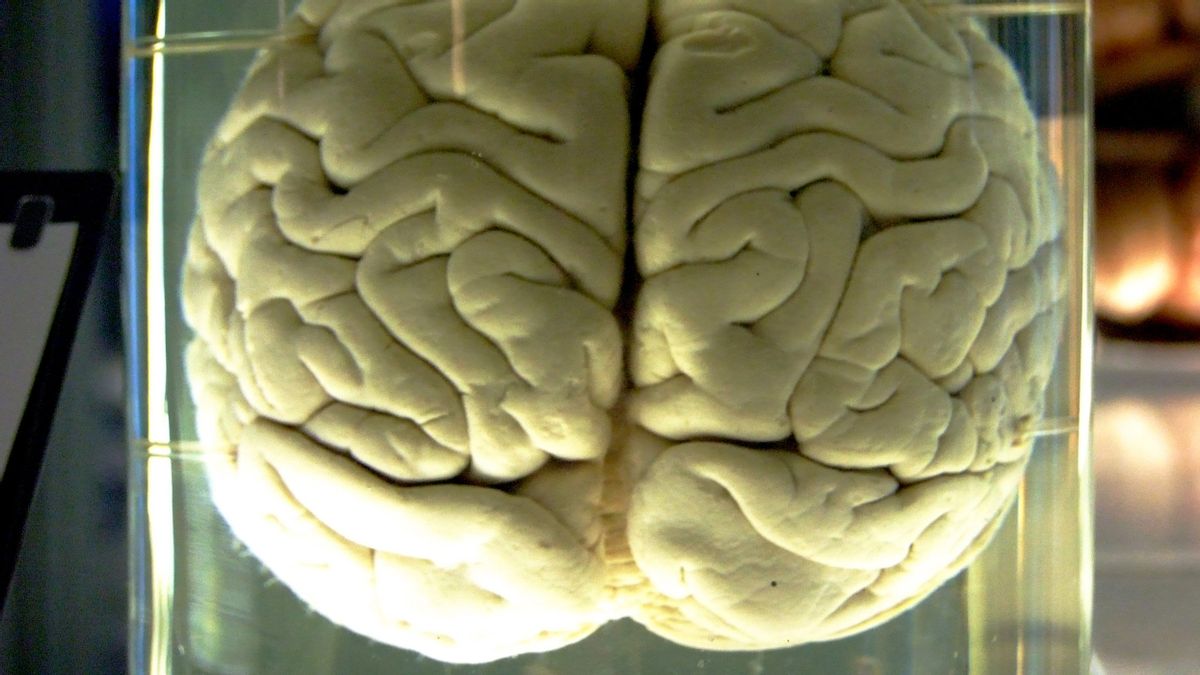


JAKARTA - Scientists have discovered a distinctive pattern in the brain when a person is under the influence of psychedelic drugs such as LSD, psilosibin, DMT, mescaline, and ayahuasca. Psychedelics are a group of substances that can change a person's perception, thoughts, inner mood, and consciousness. The Guardian, in its report quoted, Tuesday, April 7, said, in the study, the pattern was referred to as a "neural fingerprint", namely the trace of changes when the substances change the way various brain systems communicate with each other.
This finding was born from a large study that combined 11 groups of brain imaging data from various countries. Researchers analyzed more than 500 brain scan results from 267 people in five countries. The study, published in the journal Nature Medicine, is said to be the largest study to date on psychedelics and the human brain.
The results show a striking pattern. Although each substance works in a way that is not entirely the same, there is a strong similarity in its impact on communication between brain regions. Brain networks that play a role in high-level thinking are seen to communicate more strongly with networks associated with vision and sensation.
According to a report by The Guardian, the senior author of the study from McGill University, Dr. Danilo Bzdok, said the five substances were equally disruptive to the normal order of the brain's work. "The five drugs break down the general order, the usual hierarchy of the brain system," said Bzdok. According to him, the hierarchy becomes flatter, and the condition is likely related to strong changes in consciousness in users.
Scientists have long tried to understand how psychedelics trigger hallucinations and a sense of "dissolution of self", when a person feels their identity boundaries are fading. However, many previous studies were small in size, so the conclusions were often not solid.
The study also found changes in deeper parts of the brain, particularly in regions associated with habits, learning, and movement. However, the research did not find strong evidence that certain brain networks actually "disintegrate" when a person is under the influence of psychedelics, as has appeared in a number of previous claims.
This finding is considered important because psychedelic research is now increasingly associated with therapy for severe mental and neurological disorders, such as depression, schizophrenia, and post-traumatic stress disorder.
Still referring to The Guardian, the study's senior co-author from the University of Cambridge, Dr Emmanuel Stamatakis, said the field was moving fast and needed large-scale, coordinated evidence to develop responsibly.
The English, Chinese, Japanese, Arabic, and French versions are automatically generated by the AI. So there may still be inaccuracies in translating, please always see Indonesian as our main language. (system supported by DigitalSiber.id)
Most Popular Tags
#Prabowo Subianto #donald trump #2026 World Cup #Febrie Adriansyah #8791Popular


