
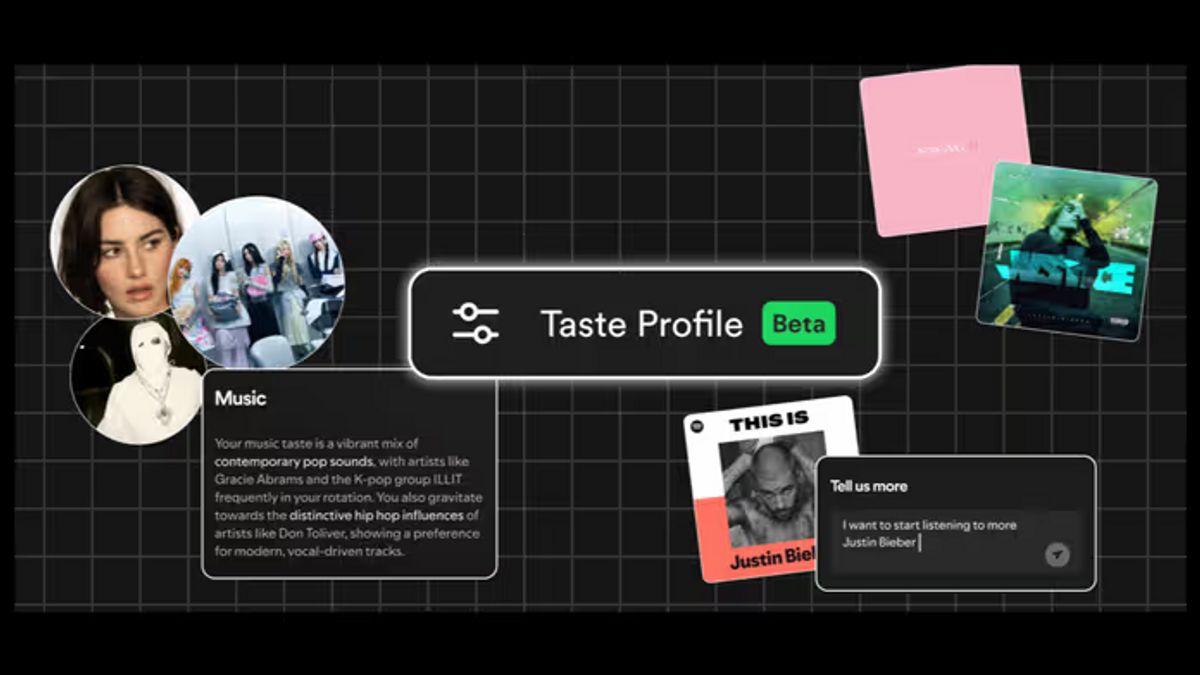


JAKARTA - Music streaming platform Spotify has launched a new feature called Taste Profile which is designed to give users greater control over the music recommendation system within the application.
The feature allows users to directly tell the Spotify algorithm about the type of music, podcast, or audio content they want to listen to. That way, the recommendation system does not only rely on playback history, but also on preferences manually entered by users.
In this update, users can access the Taste Profile menu through the application sidebar. There, they can edit music preferences and listening habits that reflect daily activities. Spotify will then customize recommendations on the main page based on this information.
The feature combines various signals from user activity, including music, podcasts, audiobooks, as well as listening habits throughout the day. For example, if a user is preparing for a marathon race and needs a fast-tempo song for morning practice, they can signal it to the system so that the algorithm prioritizes high-energy songs.
Users can also ask for more or fewer recommendations from a specific genre if the content that appears is considered less appropriate. Spotify says the input helps the algorithm determine which content needs to be prioritized and which needs to be reduced in recommendations.
According to the company, this approach will open a new dimension in personalization, because a person's musical tastes are not always static and often change depending on mood or daily activities.
The Taste Profile feature is currently in beta. Spotify plans to start rolling it out to Premium subscribers in New Zealand in the coming weeks before possibly expanding to other markets.
This launch also complements Spotify's other recent experiments, including a Prompted Playlist feature that allows users to guide the algorithm in creating playlists based on a specific listening history or mood.
The move marks Spotify's efforts to strengthen its artificial intelligence-based recommendation system, while giving users more control over how the algorithm understands their musical tastes.
The English, Chinese, Japanese, Arabic, and French versions are automatically generated by the AI. So there may still be inaccuracies in translating, please always see Indonesian as our main language. (system supported by DigitalSiber.id)
Most Popular Tags
#Prabowo Subianto #donald trump #Febrie Adriansyah #8791 #giias 2026Popular


