
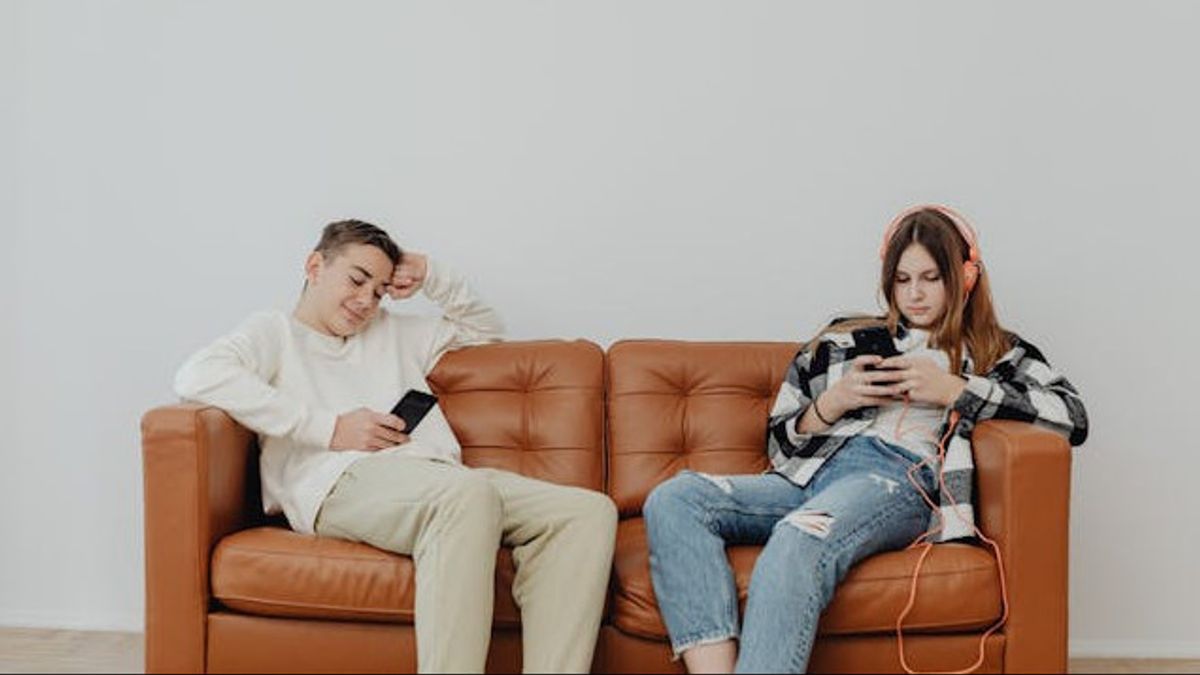


JAKARTA - The discussion of restricting social media for children under the age of 16 has sparked debate in the UK. Many teenagers in the country reject the ban plan as implemented in Australia, although they admit that digital platforms can have a negative impact on mental health and online behavior.
The UK government is currently studying the possibility of implementing stricter rules on children's use of social media. The government is opening a public consultation that allows the public to provide input before the policy is decided, with the consultation period scheduled to end in May.
In a discussion conducted by Reuters with students from two schools in Wimbledon, south London, teenagers aged 16 to 18 said social media played an important role in their daily lives. Platforms such as Snapchat, Instagram, and TikTok help them communicate with friends, build new connections, and obtain information on various global issues.
However, students also admit that there is a dark side to social media. They call the phenomenon of "doom scrolling" or the habit of scrolling content endlessly makes users spend hours on the phone screen. One student even admitted to spending up to eight hours a day just watching videos on TikTok during the summer vacation.
In addition to addiction to use, teenagers also mention other risks such as online bullying, exposure to harmful content, and pressure related to body image. Some students say that content that displays unrealistic beauty standards can affect the confidence of young users.
On the other hand, social media companies say they have implemented various security features for teenage users. Snapchat, for example, provides special protection for users aged 13 to 17, including automatically setting a private account and restricting access to public profiles.
Instagram also provides sensitive content control settings and monitoring tools for parents. Meanwhile, TikTok implements an automatic screen time limit of 60 minutes for teen accounts and a reminder to stop using the app after 22.00.
Even so, a number of students said that the restrictions were relatively easy to bypass by young users who are technologically savvy.
A number of experts also doubt the effectiveness of a total ban on social media. Researcher from the University of Cambridge, Amy Orben, said the impact of social media on teenagers is very diverse. For some children, digital platforms do carry a big risk, but for others social media is an important means to build social relationships.
Debate over the effectiveness of the ban also emerged after industry data showed about a fifth of teenagers in Australia under the age of 16 were still using social media two months after the ban was imposed. This raises questions about the ability of platforms to actually verify user age.
Julia Davidson, a child digital security expert from the University of East London, assessed that enforcing the ban would be very difficult because many teenagers have built a vast social network on the internet since they were young.
Data from the UK communications regulator Ofcom in 2022 showed that six out of ten children aged 8 to 12 already have a social media account, although most platforms require a minimum age of 13.
Another researcher from the London School of Economics, Sonia Livingstone, assessed that a total ban was not the right solution. He described the approach as a "big hammer to solve a small problem".
According to him, policymakers should encourage technology companies to build a "safety by design" system, which is a platform design that is inherently safer for children, without having to completely close their access to the digital world, which is now an important part of the social life of the younger generation.
The English, Chinese, Japanese, Arabic, and French versions are automatically generated by the AI. So there may still be inaccuracies in translating, please always see Indonesian as our main language. (system supported by DigitalSiber.id)


