

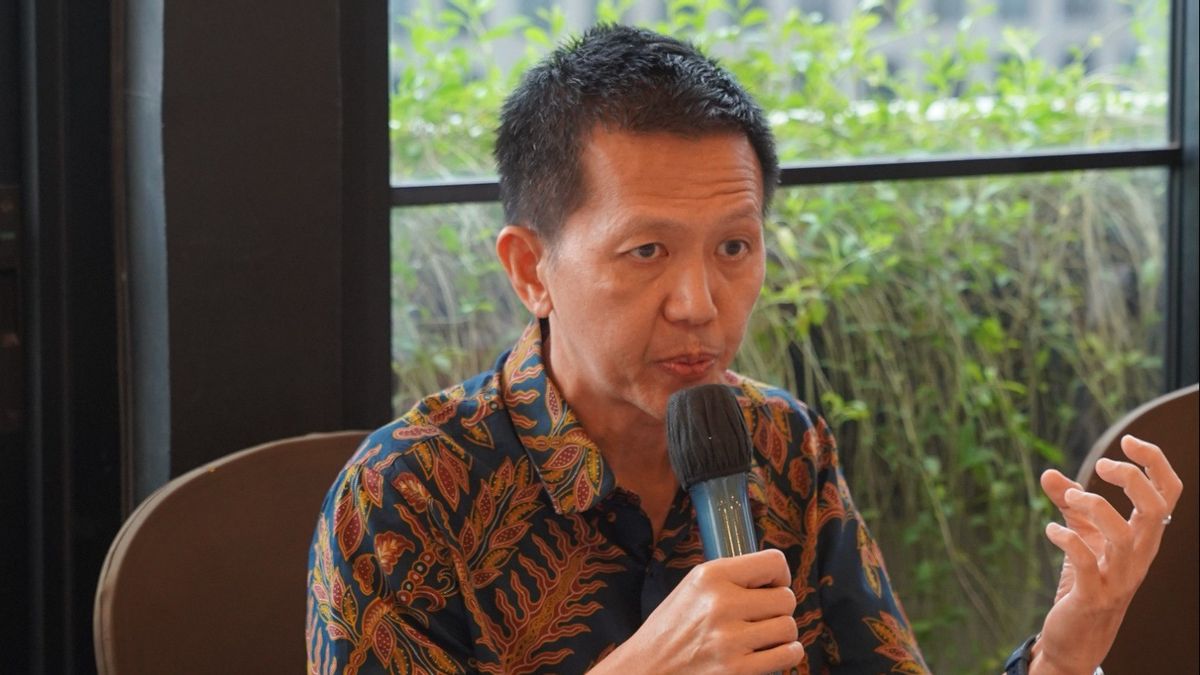


JAKARTA - Information technology and cyber security observer, Alfons Tanujaya, said that child protection in the digital world requires the active involvement of parents.
According to him, the community cannot only rely on educational institutions or rely on government-issued rules alone. He emphasized that the policy needs to be supported by various parties.
"Even though there are PP Tunas regulations, parents must still accompany and supervise children in using social media," said Alfons in his statement quoted Friday, March 13.
Alfons also mentioned several threats that often arise in the digital space, including exposure to violent and pornographic content, online bullying (cyberbullying), digital addiction, to the misuse of children's personal data.
The Minister of Communication and Digital Regulation (Permen Komdigi) Number 9 of 2026 concerning the Implementation Regulation of Government Regulation Number 17 of 2025 concerning the Governance of the Implementation of Electronic Systems in the Protection of Children or PP Tunas itself regulates the age limit for access to digital services.
Children under the age of 13 are only allowed to access platforms designed specifically for children. Internet use must also be accompanied by parental permission and supervision and is not allowed to have a social media account.
Meanwhile, children aged 13 to 15 years can still use certain digital services, but must have the consent and guidance of parents. At this stage, digital platforms are required to curate content to suit the age of the user.
Meanwhile, teenagers aged 16 to 17 years are allowed to access social media and digital platforms with a high risk level. However, account creation must still go through a stricter age verification process as well as parental or guardian approval.
Alfons believes that this arrangement is intended so that children can get to know the digital world gradually according to their level of maturity.
In addition, continued Alfons, PP Tunas also gives greater responsibility to the organizer of the electronic system or digital platform.
"The main principle of this regulation is to put the best interests of children above the commercial interests of digital platforms. Even though the government has established regulations, child protection in the digital world is not only the responsibility of the state or technology companies," he said.
He appealed, parents are expected to actively guide children in using the internet and increase digital literacy in the family. Schools also play a role by including digital literacy education into the learning process.
The English, Chinese, Japanese, Arabic, and French versions are automatically generated by the AI. So there may still be inaccuracies in translating, please always see Indonesian as our main language. (system supported by DigitalSiber.id)
Popular


