
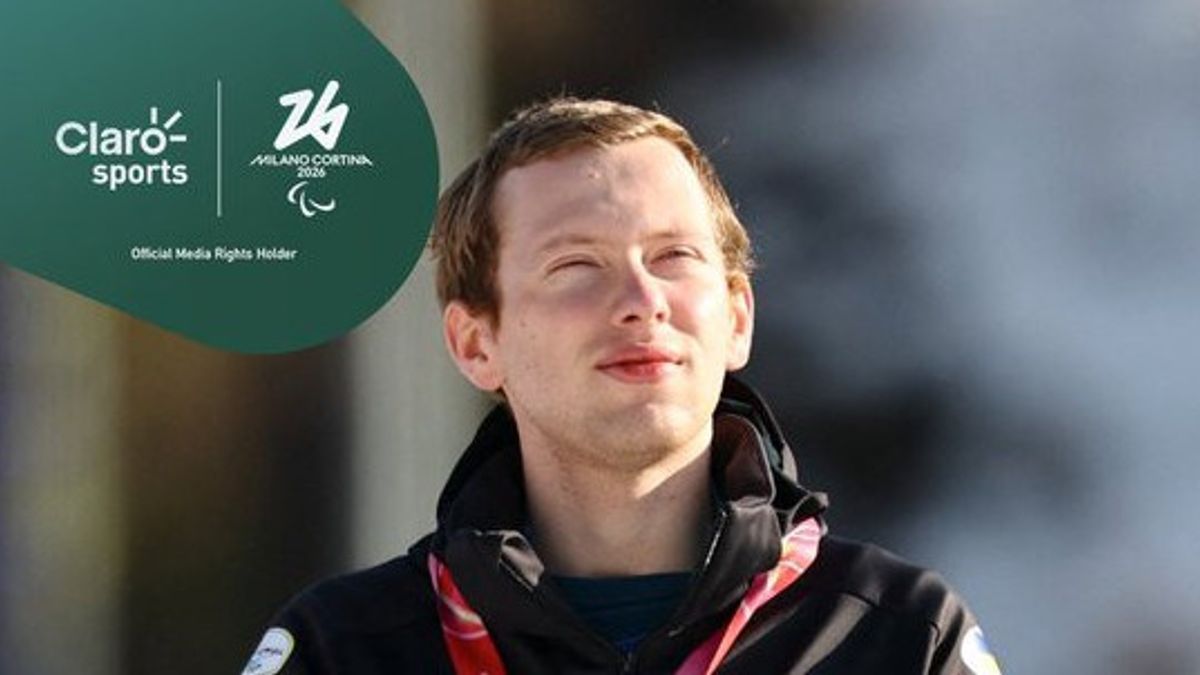


JAKARTA - Ukrainian biathlon athlete Maksym Murashkovskyi revealed that artificial intelligence played a big role in his success in winning a silver medal at the 2026 Milan Cortina Winter Paralympics. The 25-year-old athlete even called AI technology "revolutionary" after finishing in second place in the blind biathlon race.
Murashkovskyi, who previously won a bronze medal at the 2023 World Championships, had to settle for being behind the Chinese athlete, Dang Hesong, who won the gold medal in the race held at the Tesero Cross-Country Skiing Stadium, Italy.
In a press conference after the race, Murashkovskyi said that over the past six months he has incorporated AI technology into his training routine.
"For the past six months I have been training with ChatGPT," Murashkovskyi told reporters.
He explained that AI is not only used to formulate race strategies, but also becomes an important part of his overall training program.
"It's not just tactics. About half of my training plan comes from there, including motivation and many other things. So this is a big part of my overall training," he said.
According to him, artificial intelligence also helps from the mental and health side, something that is usually done by professional coaching teams.
"I use it as a psychologist, coach, and sometimes as a doctor," Murashkovskyi said.
He even assessed that in the next few years AI technology could take over some of the functions of human coaches, although not completely.
"Not entirely in the next five to ten years. But some of the tasks, it can definitely be replaced," he said. "I believe in this technology, it's really revolutionary."
Murashkovskyi competed with race guide Vitaliy Trush in the blind category of biathlon, where the coordination between the athlete and the guide is crucial in determining performance.
His success also added to Ukraine's medal haul at this year's Winter Paralympics. As of early this week, the Ukrainian contingent had collected at least 10 medals from various sports.
Murashkovskyi's story provides an interesting glimpse of how technology is beginning to infiltrate the world of professional sports. If in the past athletes relied on coaches, physiotherapists, and sports psychologists, now algorithms are beginning to enter the locker room and training tracks.
This phenomenon is reminiscent of a small paradox of the modern world: humans train harder than ever, but secretly are also starting to train with machines that never tire, never sleep, and are always ready to answer every strategy question. In elite sports, the margin of victory is often only a fraction of a second - and sometimes, the tactical ideas of algorithms can be the difference.
The English, Chinese, Japanese, Arabic, and French versions are automatically generated by the AI. So there may still be inaccuracies in translating, please always see Indonesian as our main language. (system supported by DigitalSiber.id)
Most Popular Tags
#Prabowo Subianto #donald trump #firearm #8791 #giias 2026Popular


