


JAKARTA - The government has officially enacted Government Regulation Number 17 of 2025 concerning the Governance of the Implementation of Electronic Systems in the Protection of Children (PP TUNAS) which is strengthened through the Minister of Communication and Digital Regulation (Permenkomdigi) Number 9 of 2026 as the technical rules for its implementation.
This policy regulates the restriction of account ownership on digital platforms that are high risk for children under the age of 16 as a step to protect against various threats in the digital space.
The rules will be implemented gradually starting March 28, 2026, with adjustments to a number of popular digital platforms such as YouTube, TikTok, Facebook, Instagram, Threads, X, Bigo Live, and Roblox.
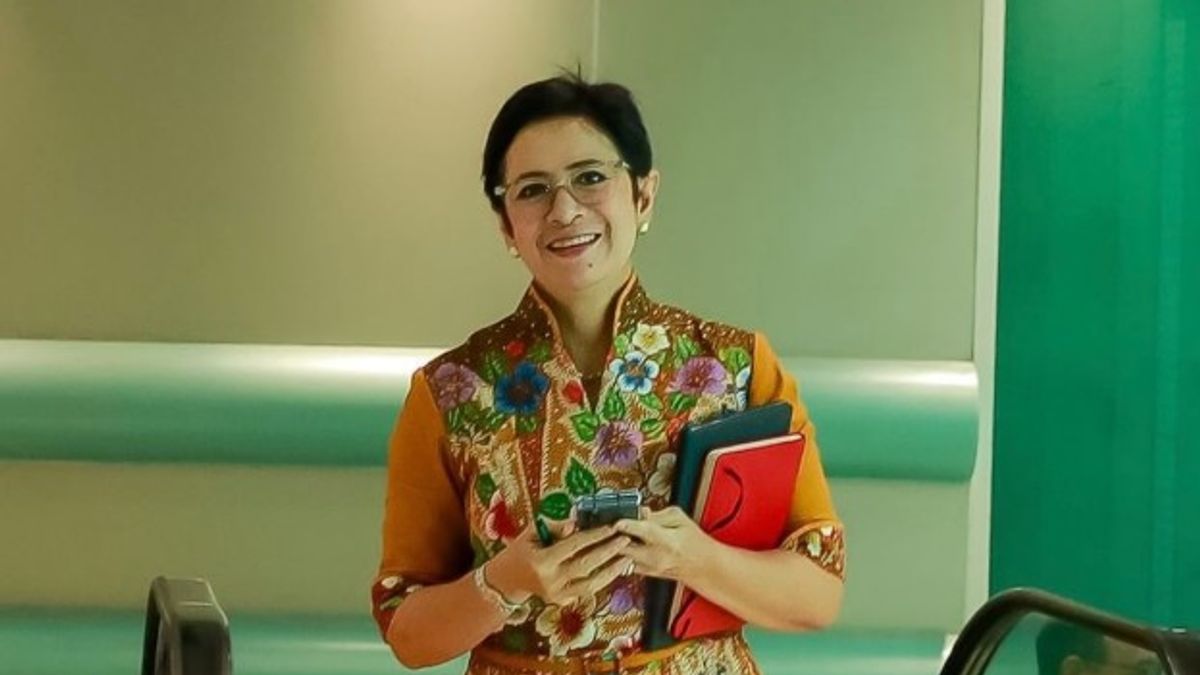
Responding to the policy, member of Commission I of the Indonesian House of Representatives from the Golkar Party Faction, Nurul Arifin, expressed his support for the government's steps in strengthening child protection in the digital space.
"The digital space today is no longer just a place to find information or entertainment. There are also various potential threats for children, ranging from exposure to pornography, cyberbullying, to digital fraud. The state must be present to provide protection," said Nurul Arifin in his statement, Sunday, March 8 in Jakarta.
As the Head of the Media and Opinion Gathering (MPO) of the Golkar Party, he assessed that PP TUNAS is an important policy response in the midst of the increasing number of Indonesian children who are connected to the internet.
According to him, regulating the age of access to high-risk digital platforms is not aimed at limiting children from using technology, but rather ensuring that technology is used safely and in accordance with the stage of age development.
"This is not a ban on children using the internet. What the government is doing is delaying access to high-risk digital platforms until a safer age. This is a protective measure, not a restriction on freedom," said Nurul.
The member of the Indonesian House of Representatives from the West Java I electoral district also assessed the importance of the involvement of digital platforms in efforts to protect children. So far, according to him, the responsibility for maintaining children's safety on the internet has often been entirely borne by parents. In fact, he said, technology companies have a big role through the algorithms and design of the platforms they build.
"Parents often have to deal directly with very powerful social media algorithms. Therefore, the state needs to ensure that digital platforms also bear responsibility in protecting child users," he said.
Nurul added that the minimum age regulation in the use of digital platforms is a practice that has also begun to be implemented in various countries. With the PP TUNAS and Permenkomdigi as the technical rules, Indonesia is considered to have taken a progressive step in strengthening the governance of a safer digital space.
He hopes that the implementation of this policy can run effectively and accompanied by an increase in digital literacy for the community, especially parents and children.
"Child protection in the digital space is not enough with regulations. It must be accompanied by strong digital literacy so that our children can use technology in a healthy and productive way," he said.
Nurul emphasized that the Indonesian young generation must remain part of the national digital transformation, but in a safe and responsible ecosystem.
"We want Indonesian children to remain creative, innovative, and technologically literate. But all of this must be in a healthy digital space and protect their future," said Nurul Arifin.
The English, Chinese, Japanese, Arabic, and French versions are automatically generated by the AI. So there may still be inaccuracies in translating, please always see Indonesian as our main language. (system supported by DigitalSiber.id)
Most Popular Tags
#Prabowo Subianto #donald trump #2026 World Cup #Febrie Adriansyah #8791Popular


