

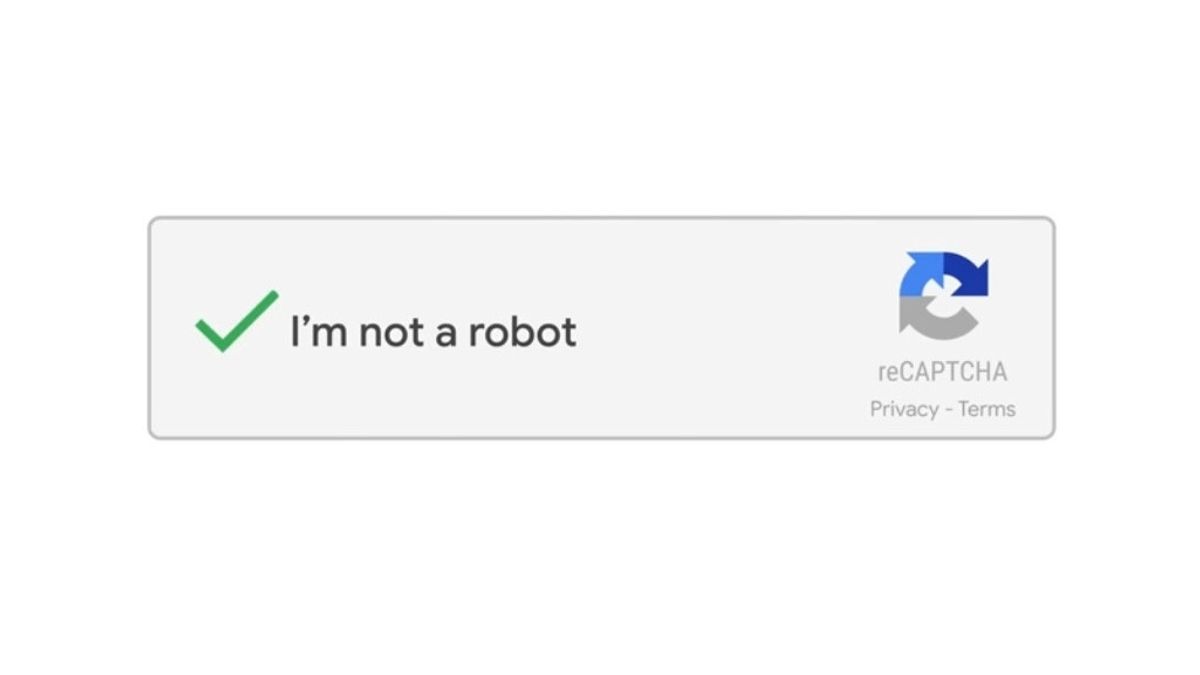


CAPTCHA has been around for a long time to protect users while surfing the internet. This verification system has undergone many developments, ranging from text to bot identification.
CAPTCHA, short for Fully Automated Public Turing Test to Tell Computers and Humans Apart, was designed to ensure that the web was interacting with humans. The reason is that, in the early 2000s, many malicious bots were rampant.
Launching from How to Geek, internet protection at that time was not as sophisticated as it is now so that CAPTCHA was born to prevent access abuse. Without this protection, sites will be vulnerable to spam attacks, data theft, and DDoS attacks.
In the early generations, users were often asked to retype distorted and blurry text. Although effective against simple bots, this method is very annoying for the normal human eye.
As time went on, character reader technology or OCR came into being because bots were able to penetrate the text that became a CAPTCHA verification tool. Therefore, CAPTCHA presents a new verification method that is much more complex.
Google then introduced reCAPTCHA which utilizes human power for other productive purposes. When you solve the code, you are actually helping the process of digitizing old books that are not readable by computers.
After the book project was completed, the focus of verification shifted to identifying objects on the highway through images. Users are asked to select a box containing a traffic light, zebra crossing, or bicycle to prove that they are indeed human.
As time goes on, CAPTCHA is getting better and better. This verification system comes with the latest version that runs in the background and users don't have to solve images or rewrite confusing text.
This technology monitors the pattern of mouse movement and typing speed without disturbing user comfort. Bots tend to move the cursor in a straight line, while human hand movements have unique micro-vibrations and are difficult to imitate by machines.
Later, users only need to check the box with the writing 'I'm not a robot'. This version of CAPTCHA has been widely used and you may have often found it, but the first and second versions are still widely used.
The English, Chinese, Japanese, Arabic, and French versions are automatically generated by the AI. So there may still be inaccuracies in translating, please always see Indonesian as our main language. (system supported by DigitalSiber.id)


