


JAKARTA - Chinese AI startup DeepSeek is suspected of training its latest model using Nvidia's Blackwell chips that are on the US export restriction list. This claim was made by a senior US government official and immediately sparked new concerns about the effectiveness of high-tech trade controls.
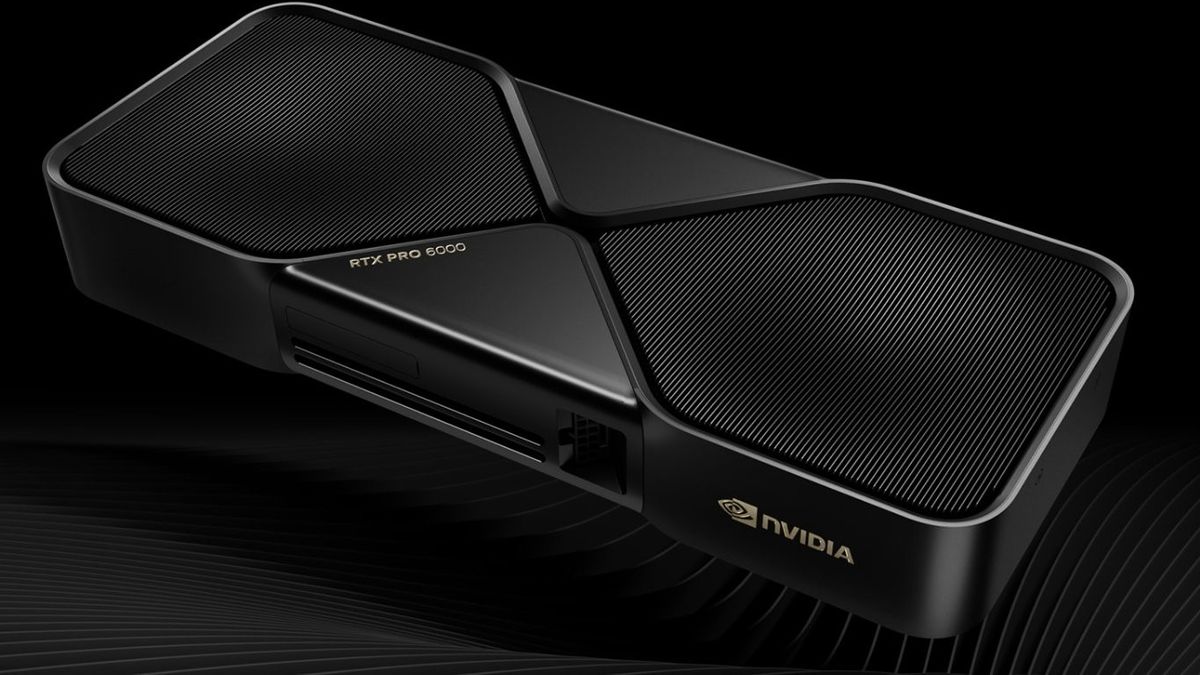
According to a Reuters report, DeepSeek is said to operate the Blackwell chip - Nvidia's latest and most advanced generation - in a data center in Inner Mongolia. The chip is included in the category that is prohibited from being sent to China under US export control rules.
Making the situation even hotter, US officials suspect DeepSeek is trying to disguise the use of American-made silicon by removing certain technical indicators that can usually track the origin of hardware. Until now, it is not clear how the company obtained the chips.
This case occurred amid tensions that had already emerged. The US AI company, Anthropic, previously accused DeepSeek and a number of Chinese AI firms of using "distillation" techniques to absorb the capabilities of the Claude model.
Distillation is a method in which a new AI model learns from the output of a larger and more mature model, so that it can "distill" knowledge without having to train from scratch with data and equivalent computing.
If this accusation is accurate, then DeepSeek is not only utilizing limited hardware, but also accelerating its model development by utilizing the work results of American models such as OpenAI, Google, and Anthropic.
In Washington, the debate is immediate. Some officials, including the White House AI adviser and Nvidia's leadership, argue that a total ban on the export of advanced chips could backfire. The logic: the tighter the restrictions, the greater the incentive for Chinese companies such as Huawei to develop domestic alternatives that are completely independent of US technology.
But the national security establishment sees this as a big red light. They are concerned that high-performance chips like Blackwell can be diverted from commercial AI projects to military applications, ranging from intelligence analytics to autonomous systems.
In their view, the alleged DeepSeek case shows that Chinese companies may not comply with international trade restrictions, so any export of advanced chips is a potential strategic risk.
DeepSeek itself is rumored to be preparing to release its new model in the near future, even said to be launching next week. If the startup is successful in building a world-class model with a combination of cutting-edge chips and distillation techniques, the global AI competition map could change faster than expected.
At stake is not just one AI model, but the effectiveness of the US export control regime. In a silicon-based economy, chips are not just electronic components, but instruments of geopolitical power.
Blackwell, as one of America's "crown jewels" of technology, is designed to be a competitive advantage. If the hardware can still break through the limits, then the rules of the game may indeed need to be rewritten.
In the era of AI, trade wars are no longer about steel or soybeans. It's about transistors, GPU architectures, and algorithms that learn from each other. As usual in the history of technology, when one side tries to close the door, the other side will look for a window.
The English, Chinese, Japanese, Arabic, and French versions are automatically generated by the AI. So there may still be inaccuracies in translating, please always see Indonesian as our main language. (system supported by DigitalSiber.id)
Most Popular Tags
#Prabowo Subianto #donald trump #2026 World Cup #Febrie Adriansyah #8791Popular


