

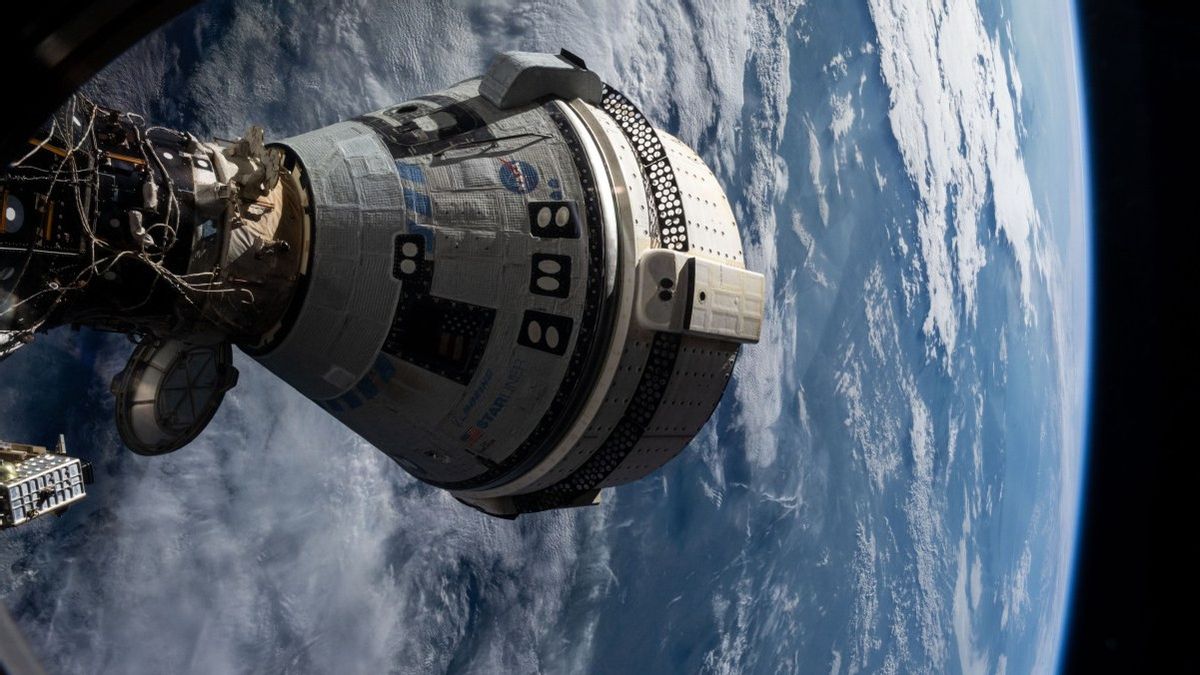


NASA released an investigation report of the Boeing CST-100 Starliner flight failure. The report revealed technical problems during the mission.
The Starliner manned mission was launched in June 2024 and was originally planned to last two weeks. However, the plane carrying two astronauts experienced problems that caused the plane to not be able to return as planned.
The plane had a problem with its propulsion system so it had to stay at the International Space Station (ISS) for 93 days. When it was confirmed that its condition was better, the plane returned to Earth without carrying the two astronauts.
The astronauts, Butch Wilmore and Suni Williams, were only able to return safely to Earth in March 2025 with the Crew-9 mission. They were forced to wait for months on the ISS because of the unsafe conditions of the Starliner.
NASA admitted that Starliner did experience problems and according to NASA Administrator, Jared Isaacman, transparency towards this failure is very important. By admitting the mistake, NASA can prevent similar incidents from happening in the future.
"We have to admit our mistakes and make sure it won't happen again," Jared Isaacman said, quoted from a NASA report on Saturday, February 21, 2026.
The results of the investigation showed that there was a link between hardware failure and cultural work damage in the internal organization. This creates a risk that is considered not in accordance with the standards of safety for manned space flight.
NASA classifies this Starliner incident as a Type A accident. This is the highest level classification given due to the potential for harm and the financial losses it causes.
NASA is now committed to taking corrective action with Boeing to correct all of the deficiencies found. Their main focus is to resolve the root cause of the technical problems on the vehicle.
The English, Chinese, Japanese, Arabic, and French versions are automatically generated by the AI. So there may still be inaccuracies in translating, please always see Indonesian as our main language. (system supported by DigitalSiber.id)


