
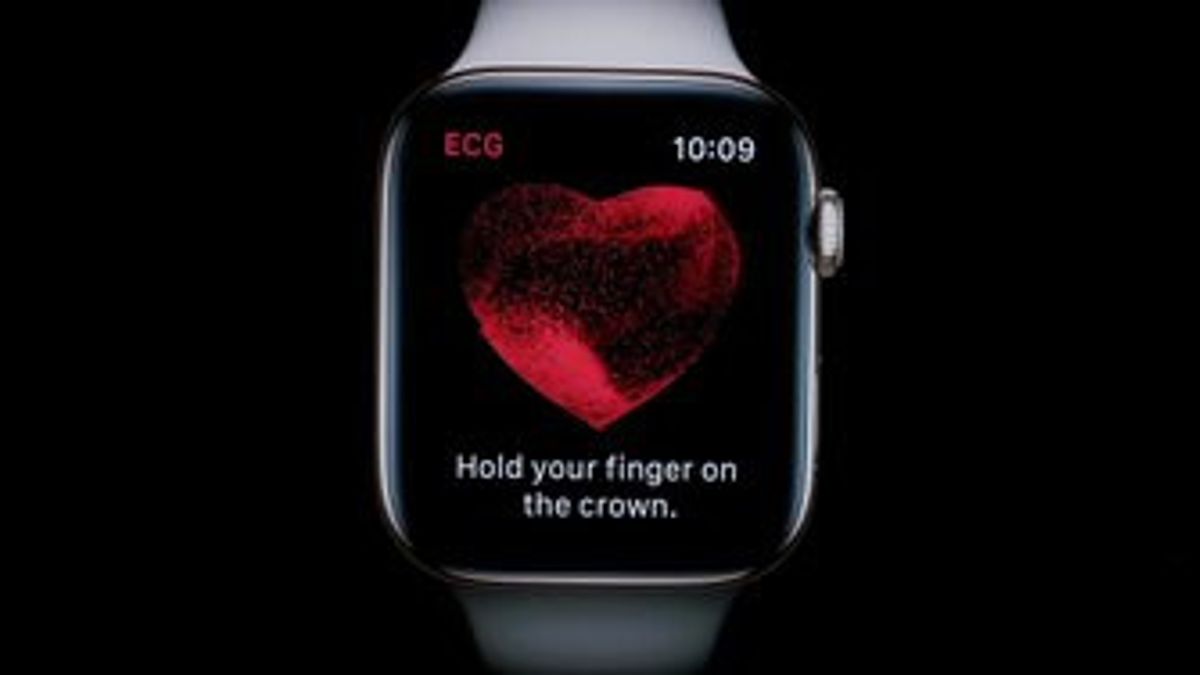


JAKARTA - A recent study revealed that the Apple Watch can be a useful tool for patients who have undergone atrial fibrillation (atrial fibrillation/AFib) treatment, especially after undergoing ablation procedures. This smart watch is considered capable of helping detect recurrence of heart rhythm disorders while reducing the risk of unplanned hospitalization.
The research was conducted by St Bartholomew's Hospital in London and published in January 2026. The study complements previous research highlighting the role of the Apple Watch in detecting undiagnosed AFib, with a new focus on monitoring post-treatment patients.
This clinical trial involved 168 patients who had undergone atrial fibrillation catheter ablation, a minimally invasive procedure that aims to restore a normal heart rhythm by creating small scars in the heart tissue using heat or freezing.
Participants were divided into two groups. The first group was loaned an Apple Watch Series 5 and asked to perform an electrocardiogram (ECG) every day, as well as whenever the device gave a notification, during a 12-month monitoring period. Meanwhile, the control group only underwent routine clinical examinations at months 3, 6, and 12 with an atrial fibrillation specialist.
The results of the study showed that patients using Apple Watch had a higher rate of detection of AFib recurrence compared to the control group. The median time to detect recurrence was also shorter, 116 days in the Apple Watch user group, compared to 132 days in the group receiving only standard care.
Atrial fibrillation recurrences were detected in 52.9 percent of patients using the Apple Watch, much higher than the 34.9 percent in the control group. Researchers said this difference was mainly influenced by the increased detection of paroxysmal AFib cases, which is a heart rhythm disorder that appears and disappears episodically.
In addition, the number of unplanned hospitalizations was also recorded as lower in the Apple Watch user group. There were 22 hospitalizations in the group of device users, compared to 47 cases in the control group. Researchers believe this is because the Apple Watch is able to help quickly distinguish between atrial fibrillation and mild arrhythmia or other harmless symptoms.
"Apple Watch-based monitoring reduces the time to detect recurrence of arrhythmia, improves overall detection rates, and is associated with fewer unplanned hospitalizations compared to standard care," the researchers wrote in their conclusion. These findings are considered to support the integration of patient-owned wearable devices into a structured monitoring system after ablation.
The results of this study strengthen the reputation of the Apple Watch as a reliable health device. Previously, this smart watch has been widely credited with being able to save the lives of its users, including detecting undiagnosed cases of atrial fibrillation.
In the future, Apple Watch is expected to continue to develop health monitoring capabilities, including more advanced medical condition predictions with artificial intelligence support. This opens up greater opportunities for wearable devices to play a role in long-term health monitoring.
The English, Chinese, Japanese, Arabic, and French versions are automatically generated by the AI. So there may still be inaccuracies in translating, please always see Indonesian as our main language. (system supported by DigitalSiber.id)
Most Popular Tags
#Prabowo Subianto #donald trump #2026 World Cup #Febrie Adriansyah #8791Popular


